Ldo Oscillations

Thread Starter

naspilla

Joined Jun 8, 2023
10
1748542393562.png

Hi everyone,

I’m currently working on a circuit design and would appreciate your insights and suggestions. Here’s my current setup:

  • I’m planning to use two buck converter modules( LM2596 ). One outputs 6 V and the other outputs 1.24 V. I’ve simulated both converters using the datasheets provided and added filters to reduce ripple.
  • Additionally, I’ve designed an LDO regulator that outputs a stable 3.3 V supply. This voltage will power a Tof (VL53L0X)
    sensor and a PYNQz2 board.

My questions are:

  1. Is this configuration sufficient for stable and reliable operation?
  2. Can the design be further improved for better performance or efficiency?
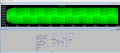
  3. In my simulations, I’m noticing a slight oscillation at the LDO output. Is this oscillation within a reasonable range, or should I take additional measures to mitigate it?

Any advice or insights would be greatly appreciated.

Thanks in advance!


ResponderReenviar

Añadir reacción
 

Attachments

Papabravo

Joined Feb 24, 2006
22,058
Before drawing any conclusions, I would simulate first order effects in the inductor(s) and capacitor(s) of the SMPS (Switch Mode Power Supplies). In particular the DC resistance in the coil(s) and ESR in the output capacitor(s).

ETA: You may or may not be aware that:

\( 1.3\text{ mf}\;=\; 1.3\times10^{-3} \text{ farads} \)

That seems a bit large for this application.
 

WBahn

Joined Mar 31, 2012
32,703
That depends on what you need. How stable and precise does your application need your 3.3 V supply to be? How much noise can you tolerate? And at what frequency?

The plot you show indicates that the output is your simulations show the output to be 3.2857 V ± 1 mV.

If you need better than that, you almost certainly have a lot of work to do, including using better models for your simulations because the basic ones you are probably using can't be counted on to be sufficiently accurate to give reliable results to that level. You simulation is based on perfect inductors, capacitors, and resistors. It is also using a perfect 12 V DC supply and perfect sine generators with perfect DC offsets and perfect 15 mV amplitude sine waves that are perfectly in phase. How realistic are any of those conditions?
 

Ian0

Joined Aug 7, 2020
13,097
Just make life easy for yourself and use a LP2951.
If you must use and op-amp and transistor, make it an n-channel or npn transistor, the extra gain and phase shift of a common-source/common-emitter stage will almost certainly make it unstable.
 

Papabravo

Joined Feb 24, 2006
22,058
That depends on what you need. How stable and precise does your application need your 3.3 V supply to be? How much noise can you tolerate? And at what frequency?

The plot you show indicates that the output is your simulations show the output to be 3.2857 V ± 1 mV.

If you need better than that, you almost certainly have a lot of work to do, including using better models for your simulations because the basic ones you are probably using can't be counted on to be sufficiently accurate to give reliable results to that level. You simulation is based on perfect inductors, capacitors, and resistors. It is also using a perfect 12 V DC supply and perfect sine generators with perfect DC offsets and perfect 15 mV amplitude sine waves that are perfectly in phase. How realistic are any of those conditions?
I'll hazard a guess and say: "not very".
 
Top