Latching DOWN a voltage comparator

Thread Starter

Steve200

Joined Jun 22, 2024
68
How about this option, which would replace the solenoid with a small gearmotor driving a cam to provide the same displacement, but over a time of a few seconds, That could be nearly silent and not have much of an inrush, and consume much less current.
Probably not easily achieved with the way it is constructed, but your idea has some merit. A linear actuator of the motor driven variety could possibly fit in place of the coil, but does such a thing exist as a gear driven DC motor?
 

eetech00

Joined Jun 8, 2013
4,705
From the pendulum master clock. It sends DC pulses out every 30 seconds. The idea is to have each slave clock fitted with some sort of circuitry to reduce the noise. Ive experimented with the output pulses in the past, but trying to get multiple different clocks of varying sizes and construction to all operate reliably and quietly proved a bit too hard, hence why i'm looking at the individual control of them and why they are to be connected in parallel as opposed to series. It also means i can use the network of telephone sockets around the house to power them instead of running wires everywhere.
The object is to have a soft impact (or maybe none) with the backstop during energisation, and then a method to slow down the release. I have already crudely achieved this in the past using a reed switch and a shunt resistor, i was simply exploring potentially better ways.

regards steve
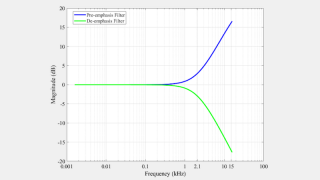
Is this the DC current waveform your looking for to drive the solenoid? It peaks at about 180mA.

1720721931502.png

Or do you need it to also hold at 70mA? If so, why?
 

MisterBill2

Joined Jan 23, 2018
27,553
Consider that at some point in the travel the solenoid is going to meet a bit of resistance in order to do some work, and then consider that we have no clue presented as to how much or at what point in the travel it happens. So just provide a variable resistor to reduce the delivered power to whatever the task for that clock requires. Not as efficient as a switcher but much simpler and a whole lot cheaper. And also a good resistor will last a very long time and not generate any RFI at all.
 

crutschow

Joined Mar 14, 2008
38,522
So just provide a variable resistor to reduce the delivered power to whatever the task for that clock requires.
That's okay as long as the driver can deliver the required current to ten clock solenoids in parallel.

The switcher is to reduce that current, and the example switcher module I posted is slightly over US$1 each, so not a big added expense.
 
Last edited:

eetech00

Joined Jun 8, 2013
4,705
So just provide a variable resistor to reduce the delivered power to whatever the task for that clock requires. Not as efficient as a switcher but much simpler and a whole lot cheaper. And also a good resistor will last a very long time and not generate any RFI at all.
That is close to what I would propose. But for each of the solenoids to operate at the currents the TS mentioned, the resistors would be a 1W hold resistor, and maybe 4W hit resistor (but hit resistor is only "hot" for duration of pulse)) if operating at 24vdc.
 
Last edited:

Thread Starter

Steve200

Joined Jun 22, 2024
68
Consider that at some point in the travel the solenoid is going to meet a bit of resistance in order to do some work, and then consider that we have no clue presented as to how much or at what point in the travel it happens. So just provide a variable resistor to reduce the delivered power to whatever the task for that clock requires. Not as efficient as a switcher but much simpler and a whole lot cheaper. And also a good resistor will last a very long time and not generate any RFI at all.
The work is done by the return spring after the solenoid is de-energised. Its a ratchet and pawl setup.
steve
 

MisterBill2

Joined Jan 23, 2018
27,553
The work is done by the return spring after the solenoid is de-energised. Its a ratchet and pawl setup.
steve
OK, very much like the old mechanical car clocks. So the effort required increases as the armature closes the air-gap, which increases the force. The difference being that there is no switch to cut off the power at the end of the stroke. It may also mean that the accuracy of the clock indication is limited to the accuracy of the pulse timing, and that in reality the clock is simply advancing 30 seconds with each pulse. so the series resistor is quite valid as an impact reduction scheme. OR reducing the 24 volts supply to the pulse distribution system. The 24 volt requirement was to overcome the single-loop wiring resistance and could have been set to a lower value.
 

Thread Starter

Steve200

Joined Jun 22, 2024
68
This was how I arrived at my own idea which was the original basis of this post (i have since worked out the answer to my original question).
We use a hall sensor to monitor the position of the armature (this is easily mounted) and use the signal to reduce the base of the coil drive transistor so that the further it moves, the less current it is receiving. Once the armature goes beyond the point at which the drive pawl has engaged onto the next tooth of the count wheel, a voltage comparator which is monitoring hall sensor output switches off the base to the drive transistor via another transistor/optocoupler/pcb relay or whatever, which allows the armature to release, hopefully before it hits the backstop (backstop is adjustable). The comparator latches and remains in this state until the drive pulse is gone and everything repeats with the next incoming pulse. The next idea was to include a capacitor to slowly ramp down the drive transistor base to give a slower release and less impact with the 'resting' backstop.
The clocks do indeed advance 30 seconds on receiving each pulse, the accuracy is dictated by the pendulum driven master clock sending out these pulses.
The 24v requirement is my own requirement due to the fact they are to be operated in parallel as opposed to series. The series system is current driven at 220ma regardless of the amount of clock dials in the circuit (until you reach the limit of supply voltage), not voltage driven which is what I will need to control whatever circuitry I choose to employ.
Things that have already been tried are--
Reducing the clock current to as little as i can get away with.
'Padding' the armature backstops.
Ramping pulse voltages up and down slowly.
Whilst these things certainly helped, I feel I can go even further to achieve almost silence.
Regards steve
 
Top