Is this Zeta Converter Will work?

Thread Starter

RIskiZeta

Joined Dec 6, 2025
31
Hi,

I wasn't sure if he was talking about the power output inversion or the signal to output inversion so I was asking about that.
Usually, if it is he signal to output and the control come from a uC chip, I would think it would be easy to change the programming that little bit.
changing inverting PWM in program will be easy if the driver and FET work perfectly fine
 

Thread Starter

RIskiZeta

Joined Dec 6, 2025
31
One version has both options. You might try that so you can go either way. Put in two caps or resistors on the output. Populate one for inversion or the other cap for non-inversion.
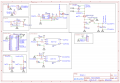
i tried P MOSFET application with IR4426 driver its work but there is several problem. when my zeta converter tried to increase voltage input (boost converter) its work but then suddenly P MOSFET is breakdown.
schematic :
Schematic_Zeta_IR4426.png
i tried two different mosfet IRF9540 and IRF4950. both of them breakdown in like 1-2 minutes when converter is operating.
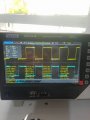
here the PWM signal in osiloscop.
WhatsApp Image 2026-02-11 at 11.03.48.jpegyellow (PWM INPUT) & blue (PWM in Gate).
i tried measured VGS MOSFET using osiloscop. when PWM signal HIGH, vs is 20 V and VG is 21 V. so the VGS is 1 volt (basically MOSFET is OFF) and wgen PWM signal LOW VG is 9,2 V (VGS=11.8=MOSFET on). but i still dont understand why my P channel MOSFET is always breakdown even the switching driver is good. Is it because MR1560 doesnt have fast recovery or i used capacitor electrolit. i dont find any capacitor film with the value of 330uf with the 50 V rated voltage.
this is my simulation on lt spice using IR4426 driver ;
 

Attachments

MrAl

Joined Jun 17, 2014
13,711
i tried P MOSFET application with IR4426 driver its work but there is several problem. when my zeta converter tried to increase voltage input (boost converter) its work but then suddenly P MOSFET is breakdown.
schematic :
View attachment 363338
i tried two different mosfet IRF9540 and IRF4950. both of them breakdown in like 1-2 minutes when converter is operating.
here the PWM signal in osiloscop.
View attachment 363337yellow (PWM INPUT) & blue (PWM in Gate).
i tried measured VGS MOSFET using osiloscop. when PWM signal HIGH, vs is 20 V and VG is 21 V. so the VGS is 1 volt (basically MOSFET is OFF) and wgen PWM signal LOW VG is 9,2 V (VGS=11.8=MOSFET on). but i still dont understand why my P channel MOSFET is always breakdown even the switching driver is good. Is it because MR1560 doesnt have fast recovery or i used capacitor electrolit. i dont find any capacitor film with the value of 330uf with the 50 V rated voltage.
this is my simulation on lt spice using IR4426 driver ;
Hello again,

I just saw your upper comment.

If the MOSFET blows out, it's usually either too high a voltage D to S or too high current D to S.
Since you have this partially working that makes it a little easier to diagnose.

Replace the bad parts, then run up again a little bit. Check for:
* High voltage spikes across the MOSFET D to S,
* High current through the MOSFET D to S possibly caused by:
* Inductor L1 saturating.
* After running for a while, check the MOSFET temperature.

An inductor that saturates in a new design is very common, but then so are spikes D to S across the MOSFET.
While you are at it, make sure the gate voltage is adequate. It has to turn the MOSFET on and off fast enough to prevent overheating.

You have to be most careful when checking for L1 saturation because it can enter saturation all of a sudden, once you reach a certain point as you adjust the output voltage. The current should look triangular, but if it starts to saturate one section will shoot up and that means you need a different inductor or some other change in the design such as faster switching frequency.
 
Top