I had not heard of this guy, he's very experienced in this problem domain and as a software engineer myself its interesting to hear about the history of these tools from him.
I've only skimmed the prior responses, so this may have already been addressed.
The issue of current direction at a component pin and how to designate it predates simulators. Nearly all data sheets adopt the convention that a current specification at a pin is the current flowing INTO the pin.
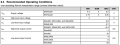
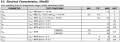
For example:
Notice that I_OL and I_IH are positive, while I_OL and I_IL are negative. This is consistent with the current at an input and output pin being positive when current is flowing into the pin.
When we have a two-terminal component, such as a resistor, this convention means that the current at one pin is always the opposite of the current at the other pin. This is something that we have to take into account when doing circuit analysis and a common source of mistakes is when people are sloppy with defining the direction of the current through a resistor (or other two-terminal device) and using it inconsistently in their work.
So, since we humans love to think in terms of the current THROUGH a two-terminal device instead of the current INTO a particular terminal of that device, how can we resolve this?
Simple, for a two-terminal device, nearly all simulators define the current through the device as being the current into Pin #1 of the device.
But, that means that when we place a symbol on a schematic -- or when we look at a schematic that has parts already placed on it -- we need to know which pin is Pin #1. Unfortunately, the people that create symbol libraries often overlook this little fact and make it difficult, if not impossible, to do that (particularly the part about needing to make the determination when viewing a schematic), which is why many people customize their component symbols in some way to add an unobtrusive Pin 1 indicator.

 Facebook
 Google
 GitHub
 Linkedin