Interlocking between manual switches

MisterBill2

Joined Jan 23, 2018
27,519
This seems a lot more complex than the string of DPDT toggle switches, which would allow revising the sequence whenever you wanted to, and required zero standby power. And were totally immune to most static discharge damage, except for actual lightning strikes.
 

Thread Starter

sab201

Joined Nov 18, 2023
297
eetech00,

I have another small doubt about the switch connections here.
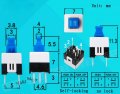
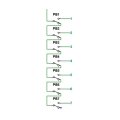
sketch-1722009987083.jpgWhy are these shown with three terminals and the normally closed contact of the switch connecting to the next one. Is that the way it should be connected. So I need momentary no locking push button switches with normally closed and normally open contacts like the one I have shown in post#31

https://roboticsdna.in/product/7mmx7mm-tactile-push-button-switch-no-locking-5-pcs-white/
Tact-Switch-Self-Locking-Cap-6 (1).jpg
 

MisterBill2

Joined Jan 23, 2018
27,519
WRONG!! that scheme would use latching switches, toggle types preferred because they indicate their position with no power consumption.So it is not exactly like the "radio button" scheme, but it will provide the same "only one selected" output. WHAT IS the fascination with the radio button switching scheme???
 

eetech00

Joined Jun 8, 2013
4,705
eetech00,

I have another small doubt about the switch connections here.
View attachment 327906Why are these shown with three terminals and the normally closed contact of the switch connecting to the next one. Is that the way it should be connected. So I need momentary no locking push button switches with normally closed and normally open contacts like the one I have shown in post#31

https://roboticsdna.in/product/7mmx7mm-tactile-push-button-switch-no-locking-5-pcs-white/
View attachment 327907
The switches are momentary with one form C contact or one NO and NC contact wired as a Form C.

They are wired that way to prevent more than one switch output from being active at the same time.
 

Thread Starter

sab201

Joined Nov 18, 2023
297
They are wired that way to prevent more than one switch output from being active at the same time.
When the switches are no locking momentary push button switches that release after our finger is removed then more than one switches cannot be active at the same time unless there is a mechanical jamming in the switch.
 

eetech00

Joined Jun 8, 2013
4,705
When the switches are no locking momentary push button switches that release after our finger is removed then more than one switches cannot be active at the same time unless there is a mechanical jamming in the switch.
yes.. but more that one output can be active if more than one is pressed which is not what I want.
 

Thread Starter

sab201

Joined Nov 18, 2023
297
I don’t want to use latching switches.
Ok so I will wire the switch connections as shown in the circuit using the switch in post #122. With the normally closed contacts connected in series. That should prevent any problems arising when more than one switch is pressed at the same time for some crazy reason.
 
Top