Instability on output sinewave of Wein Oscillator

Thread Starter

rowbo768

Joined Nov 20, 2024
9
Hello
I am a novice hobbyist and need some help with interpretation of what I see on my pocket size FNIRSI oscilloscope.

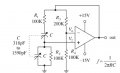
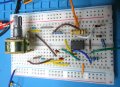
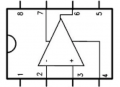
Setting the triggering point on this cheap scope is not easy and not very good. I rely on an Auto setting mostly otherwise its a handy gadget for audio frequency playing around. I built a Wein oscillator on breadboard and used a 100K ganged pot in place of the two 100k resistors in the circuit design attached.

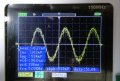
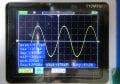
I obtained stable oscillation as I varied the pot from about 5KHz to 20KHz but the display on the scope was really messy (noisy). Normally I don't see this level of what I am calling noise but I need help on interpreting what the cause of the noise is. The funny thing is that if I switch the power off the oscillation remain for a few seconds and the trace is very clean just like you would want with the power on.

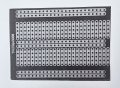
Is the "noise" I see with power on just due to poor triggering on the scope? I was not using an supressing capacitors on the power supply rails but the power supply has a low ripple and normally this has not been a problem. Since I am only interested in low frequencies I used a 741 op amp. I attached scope trace with the power on and then with the power off.
Thanks for any help
 

Attachments

Last edited by a moderator:
sghioto

Joined Dec 31, 2017
8,633
Certainly appears to be from the power supply.
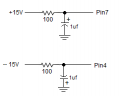
Add caps on both rails and see if that helps.
Additionally a decoupling circuit might work better as well.
1740757987044.png
 
Last edited:

MisterBill2

Joined Jan 23, 2018
27,180
I suggest that IN ADDITION to the capacitors shown, that ALSO larger capacitors, be added in parallel with those shown.
What I see looks like noise rather than instability, which is a form of oscillation.
NOISE may also be caused by inadequate shielding or even incorrect circuit arrangement.
 
Last edited:

BobaMosfet

Joined Jul 1, 2009
2,211
Hello
I am a novice hobbyist and need some help with interpretation of what I see on my pocket size FNIRSI oscilloscope.

Setting the triggering point on this cheap scope is not easy and not very good. I rely on an Auto setting mostly otherwise its a handy gadget for audio frequency playing around. I built a Wein oscillator on breadboard and used a 100K ganged pot in place of the two 100k resistors in the circuit design attached.

I obtained stable oscillation as I varied the pot from about 5KHz to 20KHz but the display on the scope was really messy (noisy). Normally I don't see this level of what I am calling noise but I need help on interpreting what the cause of the noise is. The funny thing is that if I switch the power off the oscillation remain for a few seconds and the trace is very clean just like you would want with the power on.

Is the "noise" I see with power on just due to poor triggering on the scope? I was not using an supressing capacitors on the power supply rails but the power supply has a low ripple and normally this has not been a problem. Since I am only interested in low frequencies I used a 741 op amp. I attached scope trace with the power on and then with the power off.
Thanks for any help
These will help you:

Title: Understanding Basic Electronics, 1st Ed.
Publisher: The American Radio Relay League
ISBN: 0-87259-398-3

The Art of Electronics 3rd Ed.
Author(s) Horowitz & Hill
ISBN-10: 9780521809269

Inductance Calculations
Author: Frederick W. Grover
ISBN-10: 048647440-2

Active Filter Cookbook; 2nd Ed.
Author: Don Lancaster
ISBN-13: 978-0750629867
ISBN-10: 075062986X
 

Thread Starter

rowbo768

Joined Nov 20, 2024
9
I suggest that IN ADDITION to the capacitors shown, that ALSO larger capacitors, be added in parallel with those shown.
What I see looks like noise rather than instability, which is a form of oscillation.
NOISE may also be caused by inadequate shielding or even incorrect circuit arrangement.
Thanks I will tinker about with capacitors on voltage rails
 

atferrari

Joined Jan 6, 2004
5,001
Recheck every single connection while keeping power on.

Or even better, disassemble it and reasemble it, taking the oportunity to make it tidy and neat.
 

sparky 1

Joined Nov 3, 2018
1,218
Another picture of a working variant that shows breadboard layout detail,
Use 2 100uF and 2 100nF on each +/-12V rail.
There are more than two good replicators that showed it works, Why would they use diodes?
Wien Bridge Oscillator Construction and Performance - Equipment, Tools & Supplies / Test and Measurement - Electronic Component and Engineering Solution Forum - TechForum │ DigiKey

Study specifically done on the the use of anti parallel diodes in Wien bridge oscillator
Outreach_ProjCircWienBridgeOsc
 
Last edited:

Thread Starter

rowbo768

Joined Nov 20, 2024
9
Recheck every single connection while keeping power on.

Or even better, disassemble it and reasemble it, taking the oportunity to make it tidy and neat.
Thankyou for your comments. Usually I reassemble several times before I get any breadboard circuit to work. This is partly because implementing a circuit design on a breadboard where the connections are different from an electronic circuit diagram leads to lots of mistakes initially and I guess at age 70 my eyesight is not as good as it was but its great once a circuit does function and by that time I have understood how it functions (I think).
 

atferrari

Joined Jan 6, 2004
5,001
I am not sure I actually understand you but I implement the circuit following a schematic that at end will not diverge.

I cannot imagine other way.
 

Hrehory

Joined Mar 20, 2025
3
Hello
I am a novice hobbyist and need some help with interpretation of what I see on my pocket size FNIRSI oscilloscope.

Setting the triggering point on this cheap scope is not easy and not very good. I rely on an Auto setting mostly otherwise its a handy gadget for audio frequency playing around. I built a Wein oscillator on breadboard and used a 100K ganged pot in place of the two 100k resistors in the circuit design attached.

I obtained stable oscillation as I varied the pot from about 5KHz to 20KHz but the display on the scope was really messy (noisy). Normally I don't see this level of what I am calling noise but I need help on interpreting what the cause of the noise is. The funny thing is that if I switch the power off the oscillation remain for a few seconds and the trace is very clean just like you would want with the power on.

Is the "noise" I see with power on just due to poor triggering on the scope? I was not using an supressing capacitors on the power supply rails but the power supply has a low ripple and normally this has not been a problem. Since I am only interested in low frequencies I used a 741 op amp. I attached scope trace with the power on and then with the power off.
Thanks for any help
Having had some experience with wein bridge oscillators, I notice that you are not using amplitude control. Unless you are an engineer with specific experience you would not know that an oscillators output will grow to infinity if unchecked. I assume you do not know the mathematics of this phenomena, to be brief, once an oscillation that has started it will continue to infinity. So for a stable sine wave to occur gain control must be established. If you continue your research into this matter you will probably notice that in the feedback circuit there will be a light bulb (very low wattage) as a control element to constantly control the feedback to the amplifier. Without knowing your circuit I can't make suggestions. Good luck!
 

sparky 1

Joined Nov 3, 2018
1,218
The photo of the circuit https://forum.allaboutcircuits.com/data/attachments/331/331104-8fcc81202bcb534e74a69dd268087646.jpg
given shows it uses anti parallel diodes that take care of the amplitude gain control.
The oscillator will not be ultra low distortion but it worked for him in what he needed, maybe less than 1% THD
A link to the study on that variety of Wien Bridge Oscillator below

https://ctools.ece.utah.edu/_Outrea...nBridgeOsc/Outreach_ProjCircWienBridgeOsc.pdf
A link to a light bulb Wien Bridge Osc, suggested using 100uF Ecaps on the rails, he said a that proper supply was used. It was shared as working.
https://forum.digikey.com/t/wien-bridge-oscillator-construction-and-performance/37970
 
Last edited:

MisterBill2

Joined Jan 23, 2018
27,180
What I see on the waveform shown in post #1 is not the sort of distortion that comes from an oscillator going into hard limiting, which is what will happen without any level control. It looks like some sort of high frequency oscillation. A very low value capacitor from the inverting input to the output should clear it up, if that is the problem. Possibly 100Pf or whatever small cap the TS has on hand.
 
Top