Facebook
 Google
 GitHub
 Linkedin
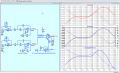
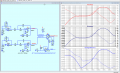
The schematic shows 2 transimpedance amplifier circuits on the first stage, for reference and sample photodiodes. The outputs are then connected to sallen-key butterworth circuits for low pass filtering. The output of these 2 are then connected to a differential amplifier to obtain its difference.
When testing out stage 3, instability arose from differential amplifier output and the problem was determined to lie with the FB pin of AD8237. I had tried to switch between different capacitors in order to improve stability but nothing worked. Could anyone help to suggest a solution?
If more information is required ill be more than happy to share!
I have attached .asc file for simulation but I had to download OPA333 spice model in order to run the component in LTSpice.
Some additional information that may help: Im using a single lithium ion battery of 3.7V connected to a voltage regulator to output 3.3V and bpw21r photodiodes to replace input sources. I used a single battery as this circuit design is meant to be placed in a watch and thus is the most practical battery option.
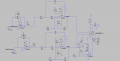
When testing out stage 3, instability arose from differential amplifier output and the problem was determined to lie with the FB pin of AD8237. I had tried to switch between different capacitors in order to improve stability but nothing worked. Could anyone help to suggest a solution?
If more information is required ill be more than happy to share!
I have attached .asc file for simulation but I had to download OPA333 spice model in order to run the component in LTSpice.
Some additional information that may help: Im using a single lithium ion battery of 3.7V connected to a voltage regulator to output 3.3V and bpw21r photodiodes to replace input sources. I used a single battery as this circuit design is meant to be placed in a watch and thus is the most practical battery option.
Attachments
-
8.3 KB Views: 2