ICE (Internal Combustion Engine) technologies

Thread Starter

cmartinez

Joined Jan 17, 2007
8,762
No.
The diode's polarity (D1) is cathode towards the battery, so it will conduct for any positive transients from the alternator, but block any current from the battery.
I think I understand. I forgot to add, the switch is disconnecting the negative pole of the battery. If I were to use the diode, would that make a difference other than the diode's change in direction?
 

Thread Starter

cmartinez

Joined Jan 17, 2007
8,762
The normal alternator voltage can actually reach 14.5V, and assuming a normal battery voltage (low voltage) of 11.5V, a forward voltage of 3V should be enough. Or am I missing something?

The diode I chose has a voltage drop of 3.5V. But maybe you're right and 60A is not enough. Although a surge event due to accidental (or stupidity-effected) disconnection should not last long enough to damage the diode, and it certainly won't be repetitive.

What do you think?
 

crutschow

Joined Mar 14, 2008
38,508
The diode I chose has a voltage drop of 3.5V
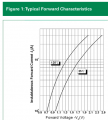
That's max. at rated current, due to ohmic resistance in the diode.
It's a standard diode so typically has <1V at lower currents (below).
1712274740988.png
Although a surge event due to accidental (or stupidity-effected) disconnection should not last long enough to damage the diode,
Not sure.
A typical car alternator can output over a 100A, which could blow a 60A diode during the half second or so the surge lasts.
 

Thread Starter

cmartinez

Joined Jan 17, 2007
8,762
A typical car alternator can output over a 100A, which could blow a 60A diode during the half second or so the surge lasts.
The alternator I'm planning to use for the project I have in mind is rated at 320A ... but that does not mean that the car's battery will be able to sink that huge surge all of a sudden. In fact, my question now is, what's the typical maximum current that a lead-acid battery is able to sink while it's being charged?
 

nsaspook

Joined Aug 27, 2009
16,325
The alternator I'm planning to use for the project I have in mind is rated at 320A ... but that does not mean that the car's battery will be able to sink that huge surge all of a sudden. In fact, my question now is, what's the typical maximum current that a lead-acid battery is able to sink while it's being charged?
You should limit it to at most 0.3C if you care about battery life. You can push it harder if the battery is near being flat but the LA electrochemistry starts to be pretty lossy near 80% Soc so it starts to get hot (warping plates and degrading separators). Regulate the charging voltage to limit current and them limit that voltage to stop gassing.
https://web.mit.edu/evt/summary_battery_specifications.pdf
C- and E- rates – In describing batteries, discharge current is often expressed as a C-rate
in order to normalize against battery capacity, which is often very different between
batteries. A C-rate is a measure of the rate at which a battery is discharged relative to its
maximum capacity. A 1C rate means that the discharge current will discharge the entire
battery in 1 hour. For a battery with a capacity of 100 Amp-hrs, this equates to a discharge
current of 100 Amps. A 5C rate for this battery would be 500 Amps, and a C/2 rate would
be 50 Amps. Similarly, an E-rate describes the discharge power. A 1E rate is the discharge
power to discharge the entire battery in 1 hour.
https://www.powerstream.com/SLA.htm
Coulometric Efficiency. This is the efficiency of battery charging based solely on how many electrons you push in. If you compare watts in to watts out you have to take into account that the battery charging voltage is higher than the battery discharging voltage. The coulometric charging efficiency of flooded lead acid batteries is typically 70%, meaning that you must put 142 amp hours into the battery for every 100 amp hours you get out. This varies somewhat depending on the temperature, speed of charge, and battery type.

Sealed lead acid batteries are higher in charge efficiency, depending on the bulk charge voltage it can be higher than 95%.
 
Last edited:

wayneh

Joined Sep 9, 2010
18,104
An engineer friend sent me that same link. He's pretty worked up about it. There could be some insurmountable problem that crops up, but if not, it'll be big.
 

WBahn

Joined Mar 31, 2012
32,840
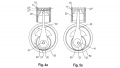
The first concern the pops into my mind is how durable the parts are going to be given that there is a ratcheting element to the operation. If this thing is turning a few thousand times a minute, it's going to rack up millions of ratcheting actions every few hours. I would think that those are going to involve a higher wear rate then normal gear interactions generally see.

Also, and I could have misunderstood this, but it seemed like the force is being transmitted through those arm linkages. That's going to be a lot of stress on those linkages for auto/truck transmissions.

Still, it seems like a clever design. It will be interesting to see to what degree it can be simplified in future versions (or as people take the concepts and charge off in completely new directions).
 

Thread Starter

cmartinez

Joined Jan 17, 2007
8,762
The first concern the pops into my mind is how durable the parts are going to be given that there is a ratcheting element to the operation. If this thing is turning a few thousand times a minute, it's going to rack up millions of ratcheting actions every few hours. I would think that those are going to involve a higher wear rate then normal gear interactions generally see.

Also, and I could have misunderstood this, but it seemed like the force is being transmitted through those arm linkages. That's going to be a lot of stress on those linkages for auto/truck transmissions.

Still, it seems like a clever design. It will be interesting to see to what degree it can be simplified in future versions (or as people take the concepts and charge off in completely new directions).
Same thoughts crossed my mind. That looks more like a clock mechanism than an engine's transmission. But I guess it could be made more robust if they work on the design. Only time's going to tell.
 

Thread Starter

cmartinez

Joined Jan 17, 2007
8,762

For a 4-stroke engine as already mentioned it It is only possible to perform one combustion for two crankshaft revolutions, in other words one combustion every 720 degrees, on the other hand the 6-stroke engine produces two combustions for three engine revolutions or every 1080 degrees, consequently 33% more torque and power with the same engine displacement.

 
Top