IC sockets, Gold or Tin?

Thread Starter

imalearnin

Joined Oct 7, 2022
13
I am making some fairly simple circuit boards using perf-board. For the ICs in the circuit I was planning to solder high quality sockets to it but am not sure what to get. I have learned that the round machined sockets are higher quality and form good contacts but looking further I found that most of them have gold plated contacts. So here is my question.

Since the ICs themselves are tin, will plugging the ICs into sockets with gold plated contacts cause issues? I heard that gold/tin combination is bad for fretting and can cause corrosion problems. I have also heard that gold is the best way to go because of the lack of oxidation. Most of the sockets with the round holes seem to be gold plated and tin plated seem hard to find.

What do you recommend? The current applications are for optical encoders, PWM, optocouplers, etc. with frequencies in the high K-Hz range and current is usually 100 mA or less. I do have a few components on the power side that can run over an amp. Do you recommend the gold or the tin for using with ICs? What do you folks do? I have the same questions for header/pins.

Another related question is what do you use for sockets for T0-220 components like voltage regulators etc.? I have plugged them into regular sockets (and breadboards) but they tend to ruin the socket or breadboard. But I do want to be able to use those components in some sort of socket for my prototyping work. What do you recommend for that? I have not been able to find any sockets for them but maybe I am just looking in the wrong place.
 

dl324

Joined Mar 30, 2015
18,220
Do you recommend the gold or the tin for using with ICs? What do you folks do? I have the same questions for header/pins.
For what you're doing, use whatever is available. Most machined pin sockets are gold plated, but some are solder/tin plated usually with gold contact surfaces.
Another related question is what do you use for sockets for T0-220 components like voltage regulators etc.? I have plugged them into regular sockets (and breadboards) but they tend to ruin the socket or breadboard. But I do want to be able to use those components in some sort of socket for my prototyping work. What do you recommend for that? I have not been able to find any sockets for them but maybe I am just looking in the wrong place.
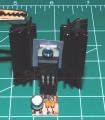
For breadboarding, I twist the bottom of the leads 90 degrees so they don't spread the breadboard contacts. Regarding sockets for other than prototyping, I don't recommend doing that. Just solder them.

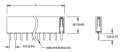
I find that square sockets are less desirable than the ones that are a slot. The contacts are typically rated at an amp or two.
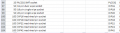
1769113793896.png

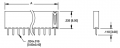
Notice that the leads are rotated at the top of the connector:
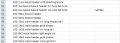
1769113839786.png

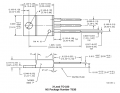
Solderless breadboards were designed for #22 solid wire (0.0254" diameter). You can see by the TO-220 dimensions (from National Semiconductor), that the leads are 0.027-0.037" wide, but thickness is 0.015".
1769114176635.png
 

MrChips

Joined Oct 2, 2009
34,628
Don't overthink this.
If you can anticipate having to replace the IC in the near future, use sockets, tin or gold plated.
If this is for production, omit the socket.
 

dl324

Joined Mar 30, 2015
18,220
Considering the price of IC sockets now, I'd even consider single wipe.

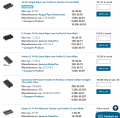
From Jameco.com:
1769183140709.png
Single wipe - about half a cent per pin, dual wipe - about 1-2 cents per pin, machined pin - about 5 cents per pin.

BTW, I have some sockets available for barter in the barter thread:
1769185097283.png
Headers:
1769185507740.png
 
Last edited:

MisterBill2

Joined Jan 23, 2018
27,186
The cheap tin-plated sockets from the company with a 2 letter initials got me the reputation of being able to get a production machine running in a very short time. Just pull all the ICs half out of the sockets and re-insert them. The slightest bit of humidity made them corrode and the LS-TTL circuits would not work right. Somebody's purchasing person saved a few dollars producing unreliable testers in a GM plant . There probably are better tin-plated sockets available . AND since this was quite a few years ago, the quality may have improved.
BUT that was my experience with the cheaper tin plated contacts.
 

Futurist

Joined Apr 8, 2025
721
I am making some fairly simple circuit boards using perf-board. For the ICs in the circuit I was planning to solder high quality sockets to it but am not sure what to get. I have learned that the round machined sockets are higher quality and form good contacts but looking further I found that most of them have gold plated contacts. So here is my question.

Since the ICs themselves are tin, will plugging the ICs into sockets with gold plated contacts cause issues? I heard that gold/tin combination is bad for fretting and can cause corrosion problems. I have also heard that gold is the best way to go because of the lack of oxidation. Most of the sockets with the round holes seem to be gold plated and tin plated seem hard to find.

What do you recommend? The current applications are for optical encoders, PWM, optocouplers, etc. with frequencies in the high K-Hz range and current is usually 100 mA or less. I do have a few components on the power side that can run over an amp. Do you recommend the gold or the tin for using with ICs? What do you folks do? I have the same questions for header/pins.

Another related question is what do you use for sockets for T0-220 components like voltage regulators etc.? I have plugged them into regular sockets (and breadboards) but they tend to ruin the socket or breadboard. But I do want to be able to use those components in some sort of socket for my prototyping work. What do you recommend for that? I have not been able to find any sockets for them but maybe I am just looking in the wrong place.
I thought most ICs these days were surface mount, are you using good old DIP?
 

MisterBill2

Joined Jan 23, 2018
27,186
VERY FORTUNATELY regular DIP ICs are still around. The tiny surface mount ones work well for automated assembly and reflow soldering. AND they are much easier to work with,
 
Top