I HATE patches

Thread Starter

cmartinez

Joined Jan 17, 2007
8,768
Of course, you should feel free to ignore my shouts from the peanut gallery (an idiom that might not translate, I don't know...)
I never ignore your advice, my friend. In fact, it is always thoroughly appreciated, peanuts included.

I wasn't aware of those useful-looking creamic tipped tweezers. Gonna look them up, they might come in handy. Thanks for the heads up.
 

Ya’akov

Joined Jan 27, 2019
10,238
I never ignore your advice, my friend. In fact, it is always thoroughly appreciated, peanuts included.

I wasn't aware of those useful-looking creamic tipped tweezers. Gonna look them up, they might come in handy. Thanks for the heads up.
Always happy to point out things that can be useful. If you don't know the Mechanic brand, they general sell very high value tools. The specialize in the phone repair market but much of that is crossover stuff to any small electronics work.

I have a few of their products, including a nice little hot plate which has proven to be every good, a very nice little UV curing light, some hand tools, and some consumables—solder mask, solder paste, &c.
 

MisterBill2

Joined Jan 23, 2018
27,547
At that number of reworks it might be cost effective to have a pick and place machine position the repair pieces.and glue them. But probably reflow soldering will not work.
And the phrase "Peanut Gallery" originated about 70 years ago. I think it came from "Buffalo Bob", but that could be an error. It referenced the live audience section in the TV studio.
 

JWHassler

Joined Sep 25, 2013
308
But I'm getting good at it :cool:


Sad thing is, I have to patch a few dozen of those boards :confused:.
But I'm getting good at it :cool:


Sad thing is, I have to patch a few dozen of those boards :confused:.
Someone once showed me a useful technique for patching with 30-g wire-wrapping wire.

Cut 1cm or so of insulation from both ends of a usefully-long piece, then grip both ends of the conductor and pull on it.
Result is slightly-narrower, work-hardened wire that moves easily inside its insulation. Wires can be soldered down, then insulation sleeves cut to size and slid into place.
 

MisterBill2

Joined Jan 23, 2018
27,547
For patches in PCBs with narrow traces , pulling hard enough to stretch a #30 wire is what I would call a poor choice. And with a few hundred to go, taking way to much time.
 

Thread Starter

cmartinez

Joined Jan 17, 2007
8,768
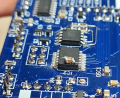
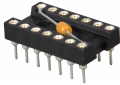
This is ridiculous, I know. But my board was suffering from inexplicable glitches and spontaneous resets. And the culprit was the absence of a bypass cap close to the MCU. The operative word being "close". That's because said chip already had a bypass cap, about one inch away from the chip. And I didn't think that said distance would have much of an effect. I was wrong. I swear that, from now on, every one of my designs will prioritize the presence and closeness of a bypass cap on every chip on the board. And everything else will revolve around that.

1753711509177.png
 

Thread Starter

cmartinez

Joined Jan 17, 2007
8,768
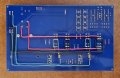
Not precisely a patch. But worth mentioning, I think.

This board has traces that will conduct a a little over one amp at 110 VAC, And relying on the PCB's copper traces alone would quickly overheat and blow them up. The only solution I could think of was using #22ga wire in parallel with the high power traces. It doesn't look pretty, but it does the job quite well.

03.jpg
 

Ya’akov

Joined Jan 27, 2019
10,238
Not precisely a patch. But worth mentioning, I think.

This board has traces that will conduct a a little over one amp at 110 VAC, And relying on the PCB's copper traces alone would quickly overheat and blow them up. The only solution I could think of was using #22ga wire in parallel with the high power traces. It doesn't look pretty, but it does the job quite well.

One thing you can do is to apply a heavy solder to the traces. This will increase their ampacity.
 

rsjsouza

Joined Apr 21, 2014
426
I've done this in the past as well, but over the years I had to design boards that could not afford extra manufacturing steps and found out that a typical 1 oz Cu PCB can carry quite the current. Provided that you do not have an excessive grouping factor, which compounds the temperature of each side-by-side track, most modern PCBs of moderate quality can take the heat.

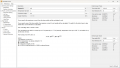
A typical calculator such as the one from Kicad below reveals that a 1 mm × 100 mm track can carry 1.5A at a temperature increase of 3°C. Applying margins of error, that could be mitigated by thicker traces.

2025-09-18_05h41_06.png
 
Top