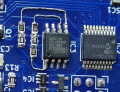
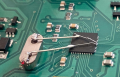
1. Get yourself some insulated wire-wrap wire.But I'm getting good at it
Sad thing is, I have to patch a few dozen of those boards.
Thanks for the advice. Wire-wrap wire is a bit too thick for my taste ... maybe I should've used magnet wire instead?1. Get yourself some insulated wire-wrap wire.
2. Don't leave those bare leads touching the board over copper (regardless of soldermask).
Solid 30 AWG is too fat?Wire-wrap wire is a bit too thick for my taste
Regardless, my most serious concern is the uninsulated wire lying on the traces. Soldermask is not intended as an insulator.For the work in the photo, I used 28 AWG split in half. So yes, insulated 30 AWG would be fat in comparison. But you have a point in saying (implying) that it's perfectly workable.
Gonna get myself some 30, the thinnest I have with me right now is 28.
I can tell you what probably happened: the design engineer chose to use the MCU's internal oscillator without reviewing the accuracy specification.This patch isn't mine, it's from someone else's website. But I found it hilarious.
That's a possibility ... I wonder what the LED is for, anywayI can tell you what probably happened: the design engineer chose to use the MCU's internal oscillator without reviewing the accuracy specification.
Is that an LED? If so, it's not attached to anything.That's a possibility ... I wonder what the LED is for, anyway
If it is a connected LED, it is probably serving as a clamp diode. Sometimes those are required.Is that an LED? If so, it's not attached to anything.
For an MCU crystal oscillator?If it is a connected LED, it is probably serving as a clamp diode. Sometimes those are required.
It would be interesting to know if that actually worked. Depending on the frequency of the crystal, those are some pretty sweet antennas, and a relatively very long way from the pin on the chip.This patch isn't mine, it's from someone else's website. But I found it hilarious.
Yes, it'd work. Probably a 32.768 kHz crystal for time keeping. You can't use the internal oscillators for that.It would be interesting to know if that actually worked. Depending on the frequency of the crystal, those are some pretty sweet antennas, and a relatively very long way from the pin on the chip.
Magnet wire also works well, 30awg or smaller. It's covered in lacquer for super thin insulation. Dip the ends in molten solder to clean the lacquer right off, sometimes you can get away without cleaning the ends first.1. Get yourself some insulated wire-wrap wire.
2. Don't leave those bare leads touching the board over copper (regardless of soldermask).
I do that all the time with magnet wire. I super heat my soldering iron to 400°C (750°F) and then tin the magnet wire's tips with it. The high temp chars the insulation away. After that, I lower the temp and proceed to normal soldering.Magnet wire also works well, 30awg or smaller. It's covered in lacquer for super thin insulation. Dip the ends in molten solder to clean the lacquer right off, sometimes you can get away without cleaning the ends first.
For prototypes, maybe. But I wouldn't trust it for production.Magnet wire also works well...
I did not mean that a clamp diode would be reasonable. And it might also be a QC inspector mark. If somebody is able to magnify the image a whole lot they might see something better.For an MCU crystal oscillator?
Never heard of such a thing (over a hundred years of doing this). Enlighten me.
| Thread starter | Similar threads | Forum | Replies | Date |
|---|---|---|---|---|
|
|
The Analog Gods Hate Me | Analog & Mixed-Signal Design | 21 | |
|
|
Arghhh... I Hate 0402 components! | Digital Design | 38 | |
|
|
I really hate my self when crud like this happens. | Technical Repair | 16 | |
|
|
I really hate misleading titles | General Electronics Chat | 14 | |
|
|
Hate speech is not politics. | Feedback and Suggestions | 39 |