How to use limit switches in a project circuit?

Thread Starter

fiftyv8

Joined Jan 29, 2018
223
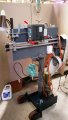
I have some more progress although it is mostly superficial I feel, but progress in the right direction nevertheless.
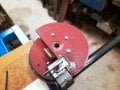
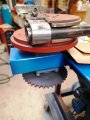
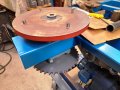
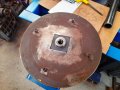
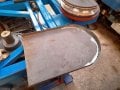
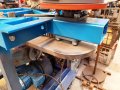
I've pretty much gotten my turntable and idle shaft mated up and in position and have gone and fabricated a locking gizmo for one of my forms that will hold the end of tube in place at the time of rotation.
It looks to be workable, but we will never know until the power is turned ON.
 

Attachments

Thread Starter

fiftyv8

Joined Jan 29, 2018
223
Not hinged, but is removeable and the center of the form has a large bolt that is not shown that acts as a hold down to keep it engaged with the 4 dowels on the turntable.
 
Last edited:

shortbus

Joined Sep 30, 2009
10,049
Most of the benders just use a post or a thing like a pin to do the holding to the form. You need something that can be moved out of the way to get the finished bend out of the groove of the bending form. If there is a fixed lock like you show the bent tube is trapped when the bend is completed.
 

Thread Starter

fiftyv8

Joined Jan 29, 2018
223
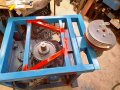
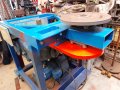
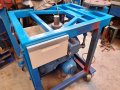
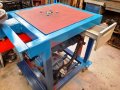
I decided to add a little diagonal bracing to my table before I sat the steel plate top into position.
At the same time, I got to thinking it may be it would be a good idea to add a chain guard to the sprocket on my idle shaft, just to be sure no fingers or clothing gets caught up in it...
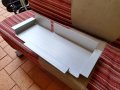
So grabbed a piece of left over sheetmetal and fabbed up a guard.
 

Attachments

Thread Starter

fiftyv8

Joined Jan 29, 2018
223
Well folks, the chain guard is finished to my satisfaction.
Prior to refitting the table top piece of heavy plate, I got to thinking that there was a bit of space available that was going to be lost, that could serve as a storage place for smaller items that I may need, that will kinder belong to this bender.

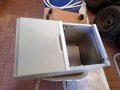
As luck would have it I saw on the side of the road somebody had thrown out a broken 2 drawer file cabinet.
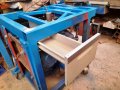
I picked it up and took it home and took a few measurements and figured I could cut it down and use the roller runners and create a small drawer underneath the table top.
This was the ideal moment to take this on while the heavy top was out of the way.

Not beautiful but will do the job and I can avoid having to try lifting this top off at a later date if I acted now.
So attached is how it turned out...
 

Attachments

Thread Starter

fiftyv8

Joined Jan 29, 2018
223
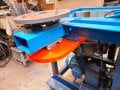
Since I liked my drawer install, I decided to use the 2nd drawer I had and make back to back drawers each side of the table.
This 2nd drawer is a little shorter but I'm sure it will get used.
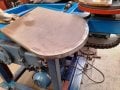
In addition, I was now in a position to replace the top piece of heavy plate back onto the table, where it will stay and hopefully I will not need to take it off again.
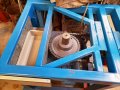
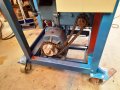
My next task as you can see in the pic's, is shortening the drive chain between the two reduction gearboxes.
I also intend to add an idler sprocket so I can get the tension just right and ensure maximum tooth to chain contact on both sprockets...
 

Attachments

shortbus

Joined Sep 30, 2009
10,049
Just make sure to put the idler on the correct side of the chain "loop". I've seen people putting it on the driven side and it should be on the unloaded side. You might also consider mounting the idler on a spring loaded arm.

"Where on a chain is it preferable to install a sprocket idler? When used for adjustment, an idler sprocket should be positioned on the unloaded side of the chain, preferably nearer to the driven sprocket and gearing with the outside of the chain." From - https://www.renoldjeffrey.com/media/1544778/rj_inst-maint_09.pdf
 

Thread Starter

fiftyv8

Joined Jan 29, 2018
223
Thanks Shortbus, that link is very informative for a young fella like me...
I am starting to think that it is just you and me out there these days on this Thread!!!
I'll post a pic of my idler install once figured out, fingers crossed the unloaded side of the chain makes the easiest install and not the most difficult as would generally be my luck.
 

Thread Starter

fiftyv8

Joined Jan 29, 2018
223
Yes, me too Shortbus and that is why I joined this forum for help when it comes to the limit switches.
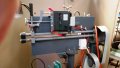
I've been on here previously and gotten tremedous support relating to programming my VFD unit that I attached to a homemade beadroller I made a couple of years back.
There are some half decent folks out there which I can attest to...
 

Attachments

Thread Starter

fiftyv8

Joined Jan 29, 2018
223
I know this is taking some time, actually it has taken more effort than I did originally anticipate and of course posting is slow because I am doing it in real time.
Not like some threads I've seen where the guy has already finished the project and is just releasing pic's daily to make it look like he is working on it...

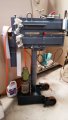
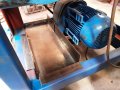
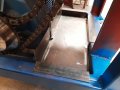
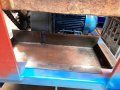
While I was in a storage frame of mind, I went one step further and made a tray in a lower portion of my frame that offered more useable space for tossing heavier stuff in when not being used.
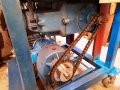
While down on my hands and knees I also shortened my drive chain and I've come to the conclusion that I may not required an idler sprocket at all.

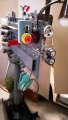
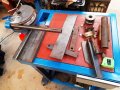
Now all the house keeping is done, I can turn my attention to the tube holder mechanism which will prevent the tube tail from following the form around and will feed and align the tube with the form.
It needs to be both height and width adjustable depending on what size tube and what form I am using.
It will need to be able to hold various shaped guides that match up with each size tube OD.

Time to go fossicking thru my scrap metal stash and see what I have that will work...
 

Attachments

Last edited:

shortbus

Joined Sep 30, 2009
10,049
Nice bead roller. You do have some slack in your chain don't you? Like if you push on it between the sprockets, it needs a little or it will wear sprockets and bearings in the gear boxes.

I have so many metal shaping tool projects that have the mechanical parts made but am lacking the frames for them. I also have too much "crap" and don't have room in my shop.

Do you know about the forum - Metalmeet.com ? Lot of very talented metal shapers and fabricators there. But it's not as active as here. You might want to check it out, quite a few members from you part of the world too.
 

Thread Starter

fiftyv8

Joined Jan 29, 2018
223
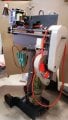
Contemplation time now I guess, so I expect to be off the radar for a few days, so I can figure out the best way to retain my tube and incorporate adjustments...
 

Attachments

Last edited:

shortbus

Joined Sep 30, 2009
10,049
Contemplation time I guess, so I expect to be off the radar for a few days, so I can figure out the best way to retain my tube and incorporate adjustments...
That's where I said earlier you need a follower block. If you just use a pin or even a roller for the anchor it will as the bend form rotates distort or flatten the side of the tube that is against it. That is why even a hand bender like a JD squared uses the follower block.

To visualize better look at a conduit bender and how it flattens the outside of the bend.
 

Thread Starter

fiftyv8

Joined Jan 29, 2018
223
Shortbus, you are right, however that is one method, but there are actually two methods.
The 2nd method is what I have built my unit around initially, where the tube is pulled by the rotation around the form.
What you are suggesting is where the follower block wraps the tube around the form.

The method I have chosen allows for the use of an internal mandrel if required with thin wall tube , whereas the method you are talking about can not employ such an internal mandrel due to the fact that the tube is being folded as opposed to being drawn.
The drawing process pulls the tube over the internal mandrel whereby maintaining the tube wall shape and integrity as it passes over the mandrel...

In my particular case or machine, my forms will not in all probability be the same configuration (either wrapped or drawn method), so I feel the need to be able to accommodate both methods if at all possible.
Whether this will be possible I hope to determine during my time to contemplate the situation...

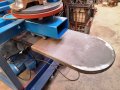
In summary, looking at my current table and form mounted, the half circle form is located as you see it ready for drawing.
If the machine was to work for your method my form would need to be in the opposite orientation for the follower block to be employed...
 

shortbus

Joined Sep 30, 2009
10,049
Shortbus, you are right, however that is one method, but there are actually two methods.
The 2nd method is what I have built my unit around initially, where the tube is pulled by the rotation around the form.
What you are suggesting is where the follower block wraps the tube around the form.
No it applies to what you are doing. The follower block follows. They are a straight block with the same radius as you bending form uses. It clamps the tube to the bend form right at the anchor point your using and as the bend form moves it pulls the follow block along with the tube. This keeps the tube wall from distorting while going past the tube anchor.

Look at this link, the section called "rotary draw bending", and see how the follower, or as they call it pressure die moves as the bend form rotates.

Or this link that shows the same thing but adds an internal mandrel that makes it a "mandrel bender", like you were originally talking about.https://www.thefabricator.com/thefabricator/article/tubepipefabrication/wipe-out-the-wrinkles-of-tube-bending
 

Thread Starter

fiftyv8

Joined Jan 29, 2018
223
Very good link Shortbus, but I will reserve any response until I have gotten my head around what I have here on the ground.
I dont expect that I will be using internal mandrels any time soon, and they are way to costly for me to buy over the counter, so if I ever do use them, they will need to be homemade.
If my unit is successful in delivering decent bends in thick wall tube, then I could be interested in taking on the challenge of thin walled material, which I see as requiring internal mandrels...
 

shortbus

Joined Sep 30, 2009
10,049
The internal mandrel isn't needed but think you'll find the follower is. It has been a standard design for many, many years. I'm soon to be 74 and every one of this type bender I've ever seen in use uses them, and I've paid attention over the years. Good luck though.
 
Top