Allowing for ineffciencies, the effort required for 5W output will be about 0.01 HP (7.46W or 5.5 ft.lb/s). Hand-cranking the generator for any length of time would be exhausting.
My observation is that recharging a phone battery takes a while because the rate of charge acceptance is not very high, and also because of heating concerns. My main experience with hand-cranked charging is with my LED flashlight. That uses a gear train to increase the speed many times. it delivers to the LED about three volts at about 50 milliamps, because it is a high brightness LED.
And I once cranked the charger of a friend's crank-charged radio. That was interesting in that it was a well designed mechanical system that provided a large speed increase between the crank and the generator. It was not an extreme effort but it did get tiresome after a few minutes.
So any hand operated generation will require a speed-increasing mechanical arrangement.
I suggest doing the math to discover the mechanical effort input needed to provide that desired electrical power output. Then decide if those involved are willing and able to deliver that much effort for the time to charge a battery.
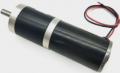
If the intention is to drive the motor by falling water as in : "Basic design is to drop water droplets on both side of motor, like pulley system", it is important to understand the amount of effort required to move a generator to deliver useful power.
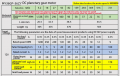
Math not needed. For motor in post #24 with rated current 1.2 A at rated RPM 45, torque is 55 kgf*cm,
so, using crank with lever length 10 cm, force 5.5 kgf needed for motor axe rotation.
OK, there is already a table of motor performance!! And thanks to Danko it seems that a force of 5.5 kG is required on a lever to rotate the motor. Now the TS needs to decide if that is a reasonable possibility.
My question is how to have it produce enough mechanical power to deliver that motion. There looks to me like a disconnect between desired electrical output and actual mechanical energy input.

 Facebook
 Google
 GitHub
 Linkedin