How to read very small signals

Thread Starter

Pepe333

Joined Feb 12, 2018
86
There are other things we still don't know as yet.
What is the gain and offset of the photodiode circuit?
Is the user utilizing the full range of the ADC?
What are the typical numbers recorded from a flash pulse?
For a wider dynamic range, would a logarithmic circuit be a better choice?
The gain is variable, its depends on the power of the light detected.
Yes, the circuit uses the full range of ADC.
The pulse of a flash depends of the power selected, it may be from some us to hundreds of ms.
I dont know what a logarithmic circuit could be. I work in a linear way.

These images are from different power selected on the flash.
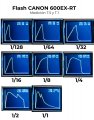
medicion 600ex.jpg
 

Thread Starter

Pepe333

Joined Feb 12, 2018
86
Now that we know more about your application we can narrow down the detector and electronics.
The duration of light from xenon flash tubes are very short, 1-100μs.
Hence you need a detector with fast response times. A photodiode or phototransistor is a suitable choice.
If you need to cover different maximum light intensities then you may required an op-amp circuit with selectable gain.

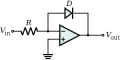
I see in the drawing behind your prototype you have a sketch of an op-amp circuit.
What is the actual circuit you are now using for the photodiode?
The circuit I'm using is attached on the first post.
 

MrChips

Joined Oct 2, 2009
34,872
Good point. The op-amp is band-width limited and may not be responding fast enough.
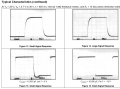
Do you have some data recorded on the wave shape?
It would be interesting to see the slew rate of the amplifier circuit.
 

ronsimpson

Joined Oct 7, 2019
4,706
The op-amp is band-width limited and may not be responding fast enough.
The amp in the OPT101 is slower than I thought. It is only 2mhz and 1V/uS. I think they were more interested in high input impedance. I have done this with 100mhz amp that can not see dark very well.
 
Top