How to make transformer bobbins?

Thread Starter

Hamlet

Joined Jun 10, 2015
553
I often need to wind a coil for transformers, solenoids, or chokes, & I typically use craft plywood for the ends and a paper tube for the center, cemented with wood glue, or Cyanoacrylate . Then, I usually give it a coat of varnish or epoxy. I am curious what other people are doing in the way of DIY formers. I've tried various plastics, but all that I have tried have been impossible to glue securely.

For rigidity, I want to try thin pcb materieal, something without copper (obviously), or holes, but don't know what it is called. Is such a thing available? What's the term for PCB material without copper, or holes?

What do you folks do when you need custom formers?
 

Thread Starter

Hamlet

Joined Jun 10, 2015
553
Thanks for the links!

I just thought of something, are laminate (Formica brand) countertops made from phenolic?

Formica is really tough, rigid, & thin. Maybe that would work. I'm trying to stay away from
fiberglass/epoxy-glass pcb stuff, as it's really hard on hole-saws and drill bits. If it glues up
okay, it might work a treat.
 

MrChips

Joined Oct 2, 2009
34,630
If you have not done so already you should be looking to 3D printing. Once you get your feet wet you will be amazed with the things you can do.
 

shortbus

Joined Sep 30, 2009
10,050
Thanks for the links!

I just thought of something, are laminate (Formica brand) countertops made from phenolic?

Formica is really tough, rigid, & thin. Maybe that would work. I'm trying to stay away from
fiberglass/epoxy-glass pcb stuff, as it's really hard on hole-saws and drill bits. If it glues up
okay, it might work a treat.
Formica is a laminate that was originally made as an electrical insulator so it would work good. And it glues very well. https://en.wikipedia.org/wiki/Formica_(plastic)
 

KeithWalker

Joined Jul 10, 2017
3,603
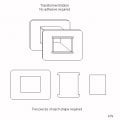
This is how I have been making them for the last 70 years. If they are made fairly carefully, they assemble with no adhesives so you can make them out of any rigid insulating material. I used to use SRBP but it's hard to find in small quantities so now I usually use plastic scraps. A layer of tape and they are ready to be wound. I usually make a wooden plug with a screw through the middle to chuck them in a hand drill held in the bench vise for winding.
Bobbin.jpg
 

KeithWalker

Joined Jul 10, 2017
3,603
A note on the side: When I was 15, I acquired an ex-service small CRT so I decided to build a scope. I hand wound the power transformer with a 240V primary and a 6.3V, a 100V and a 1,000 volt secondary. I completed the metalwork and assembled the electronics. I mounted the transformer and as I as wiring it in circuit, I accidentally pulled the wire out from the inner end of the thousand volt winding. It broke off way inside and there was no way I could re-join it. I had to strip the winding off and start again. It was a hard lesson to learn but now I always make sure that my winding connections are mechanically secure. (Finally, the scope did work!)
Keith
 

Thread Starter

Hamlet

Joined Jun 10, 2015
553
If you have not done so already you should be looking to 3D printing. Once you get your feet wet you will be amazed with the things you can do.
Yeah, 3D looks cool, but the learning curve is almost as high as electronics. I don't have enough blood to run both.
 

MrChips

Joined Oct 2, 2009
34,630
Yeah, 3D looks cool, but the learning curve is almost as high as electronics. I don't have enough blood to run both.
I heard a similar excuse from a tube-guy who wouldn't crossover to transistors.
Then later the same tube-guy wouldn't crossover from transistors to microcomputers.
 
Top