AC Stepdown transformer troubles. 220v->12v

Thread Starter

RickSmit

Joined Sep 13, 2024
76
Hi guys. this might seem repetitive but i CANNOT figure out what is wrong.
I have this circuit.
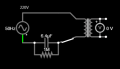
1772045088054.png
the value of the capacitor should be higher so i can draw 0.5 amps on input and 10amps at output. but i do not have more AC capacitors at the moment to achieve that but it is fine, i should still get 5amps almost...

1772045941696.png
Reason. i want to run 2 Peltier devices on 5amps each on 12volts in parallel. those other circuits WORK and are good.

Problem. my stepdown transformer DOES NOT WORK. i read absolutely ZERO volts on output. reading the input sides i read 217v on every point. but output i read 00.0v....my windings were chosen because i have a think heavy duty copper plate that was used as a highpower input on that SAME transformer inside a inverter transformer. and it goes at most 5 turns... so KNOWING that i need 8.5v RMS minimum so that after rectification i have rms*1.414=12v output (my diodes are high power 0.225vdrop so 0.5v drop on each cycle).... and to get 8.5v out with 5 turns i calculate 135turns on the input. i connected it all. the transformer hums and i read input power. but no output power...i tried testing it without the current limiting capacitor and i blew a 15amp fuse. then i added to test a 22nF capacitor in series and then even my input stopped. i take it the current wasn't enough to drive the magnetic field in the FERRITE core..... i did also try and reduce my primary winding but still nothing. ZERO output voltage.... what is going on??? i even used the inverters same primary that goes around 12 turns on primary and 5 turns secondary. doing the math i should get at least 91vRMS output, but STILL ZERO VOLTS OUTPUT while it hums away.

i did try a iron plated core transformer without current limited transformer and i got out of an old guitar amplifyer and i wound the secondary with 10 turns. and read 1.8v out, so i ruled out multimeter problems. doing the math there are 1222 turns on primary so to use it as it is to get 8.5v at 5-8amps i need 80turns, but there's not enough space for the thick wire...
should i abandon my ferrite core and see if 135-220 primary turns and 5turn secondary turns work on the iron plate core. or should i just see how many turns i can add on the primary with 0,015748inch wire? or do you guys know what is the problem with my ferrite core transformer?
 

Pyrex

Joined Feb 16, 2022
501
Hi,
It is not a good idea to use a capacitor to limit the current. Such a capacitor, together with the inductance of a transformer, forms an LC tank, and it can resonate if the values of L and C correspond to the fundamental frequency (50 or 60 Hz) or some higher harmonic. LC circuit resonance can cause big problems - first of all, it can blow a capacitor.

Secondly, I don't know where you got your transformer from, and the fact that a 15 A fuse blew when you connected it directly to the power grid indicates that such a transformer is completely unsuitable for your purposes. Most likely, that transformer is designed to operate at high frequencies, so when used with a 50Hz frequency, the current increases significantly and it is practically a short circuit. Transformers designed to operate at a 50Hz frequency have steel cores, not ferrite ones.
 

kiroma

Joined Apr 30, 2014
80
Secondly, I don't know where you got your transformer from, and the fact that a 15 A fuse blew when you connected it directly to the power grid indicates that such a transformer is completely unsuitable for your purposes. Most likely, that transformer is designed to operate at high frequencies, so when used with a 50Hz frequency, the current increases significantly and it is practically a short circuit. Transformers designed to operate at a 50Hz frequency have steel cores, not ferrite ones.
Exactly. And this happens because ferrite has lower permeability, so the inductance is less than the steel core. So what happens is that it reaches higher amperage until such emf (voltage) is reached (also that the transformer was not designed for lower frequencies). That's why a short coil won't limit the current to a reasonable level if plugged into the mains, it'll also blow.
 

MisterBill2

Joined Jan 23, 2018
27,159
Ferrite cores are ot suitable for mains frequency power. As has been explained quite well! 12 volts and ten amps is 120 watts, so it will not be a tiny transformer at all. You can put the two 12 volt devices and then get a 24 volt 5 amp supply and be more efficient and less expensive as well.
 

vandveuser16776

Joined Feb 21, 2026
121
should i abandon my ferrite core and see if 135-220 primary turns and 5turn secondary turns work on the iron plate core. or should i just see how many turns i can add on the primary with 0,015748inch wire? or do you guys know what is the problem with my ferrite core transformer?
A ferrite core inductor needs between 100kHz to 1MHz pure square wave, flyback protection, and a gain loop monitor , AKA Opto-Isolated Feedback Loop. This the minimum requirement to have a ferrite core inductor yield some power and control the output.
 

Thread Starter

RickSmit

Joined Sep 13, 2024
76
Hi,
It is not a good idea to use a capacitor to limit the current. Such a capacitor, together with the inductance of a transformer, forms an LC tank, and it can resonate if the values of L and C correspond to the fundamental frequency (50 or 60 Hz) or some higher harmonic. LC circuit resonance can cause big problems - first of all, it can blow a capacitor.

Secondly, I don't know where you got your transformer from, and the fact that a 15 A fuse blew when you connected it directly to the power grid indicates that such a transformer is completely unsuitable for your purposes. Most likely, that transformer is designed to operate at high frequencies, so when used with a 50Hz frequency, the current increases significantly and it is practically a short circuit. Transformers designed to operate at a 50Hz frequency have steel cores, not ferrite ones.
yes i gathered that from your information. and it kind of makes sense... metal core it is then... and yes i have a 15amp fuse in my adapter plug from mains(safety feature) i plugged in the transformer and Heard POP!! exchanged with 10amp fuse, then i saw a FLASH as fuse popped....i understand now... ferrite = high freq,,,, metal core = mains freq.... thank you its helpful...
will i still be able to wind 135p : 5s ratio on the metal core or should i go 217p(mains measured):9s for 8-9v out?
 

Thread Starter

RickSmit

Joined Sep 13, 2024
76
Ferrite cores are ot suitable for mains frequency power. As has been explained quite well! 12 volts and ten amps is 120 watts, so it will not be a tiny transformer at all. You can put the two 12 volt devices and then get a 24 volt 5 amp supply and be more efficient and less expensive as well.
i have thought of that before but other circuits are already made for 12V. i made it so because i was confident in the transformer, changing them now will take a lot of work in my setup.... guess i can wind the transformer with 2 secondary. windings one for 24 one for 12...thank you for reminding me the options again....100watt or 120watt guess 100watt is better.
 

Thread Starter

RickSmit

Joined Sep 13, 2024
76
A ferrite core inductor needs between 100kHz to 1MHz pure square wave, flyback protection, and a gain loop monitor , AKA Opto-Isolated Feedback Loop. This the minimum requirement to have a ferrite core inductor yield some power and control the output.
understood. thank you. i will go try and keep you guys posted
 

Pyrex

Joined Feb 16, 2022
501
yes i gathered that from your information. and it kind of makes sense... metal core it is then... and yes i have a 15amp fuse in my adapter plug from mains(safety feature) i plugged in the transformer and Heard POP!! exchanged with 10amp fuse, then i saw a FLASH as fuse popped....i understand now... ferrite = high freq,,,, metal core = mains freq.... thank you its helpful...
will i still be able to wind 135p : 5s ratio on the metal core or should i go 217p(mains measured):9s for 8-9v out?

Look at everything from the other side. You need a power supply to work with a Peltier element. A Peltier element requires direct current, not alternating current, so why do you want to use a transformer? If you use a transformer, you will also need a rectifier, so you will need bigger than a 120VA power transformer.

You can use an switching mode 230VAC/12VDC converter; they are lightweight and compact, and their price is lower than that of a 50Hz transformer of the same power.

An example of one of many such converters:

24V 10Amp SMPS AC 220V To DC 12V 10A 240W Switching Mode Power Supply Adapter Charger For Electronic Project Industrial price in bd
 

MisterBill2

Joined Jan 23, 2018
27,159
NOT justa "metal core" for a transformer, but an IRON CORE (steel core) for any transformer used for mains frequency power. Otherwise the power transfer efficiency will suffer a whole lot!!
Other folks here can give you the math to back up what I said!!
 

MisterBill2

Joined Jan 23, 2018
27,159
yes i gathered that from your information. and it kind of makes sense... metal core it is then... and yes i have a 15amp fuse in my adapter plug from mains(safety feature) i plugged in the transformer and Heard POP!! exchanged with 10amp fuse, then i saw a FLASH as fuse popped....i understand now... ferrite = high freq,,,, metal core = mains freq.... thank you its helpful...
will i still be able to wind 135p : 5s ratio on the metal core or should i go 217p(mains measured):9s for 8-9v out?
"Metal core" does not mean that a core is made of transformer steel laminations. Look at actual pewer transformers and see whay they look like. Then read a book on transformer design.
You will not find an accurate one on facebook or youtube.
A typical 120 watt transformer for a rectiifier power supply will weiigh at least two pounds.
If you get a switch-mode 12 volt power supply it may have a smaller and lighter transformer OPERATING AT MANY KILOHERTZ, or possibly almost 50 kilohertz. THAT is why they can use a ferrite core.

A mains frequency transformer will probably have a lot of turns in the primary, many have several hundred turns.
AT LEAST those that I have taken apart did. They were cheap and tended to run hot.
 

MaxHeadRoom

Joined Jul 18, 2013
30,557
I have rewound many a transformer, both EI and toroidal,.
A toroidal requires quite a bit less in the number of turns/volt.
Here is an excellect youtube video on the subject.


Last edited:

Thread Starter

RickSmit

Joined Sep 13, 2024
76
Look at everything from the other side. You need a power supply to work with a Peltier element. A Peltier element requires direct current, not alternating current, so why do you want to use a transformer? If you use a transformer, you will also need a rectifier, so you will need bigger than a 120VA power transformer.

You can use an switching mode 230VAC/12VDC converter; they are lightweight and compact, and their price is lower than that of a 50Hz transformer of the same power.

An example of one of many such converters:

24V 10Amp SMPS AC 220V To DC 12V 10A 240W Switching Mode Power Supply Adapter Charger For Electronic Project Industrial price in bd
cant believe i have to say this...but i do not have that shit and cannot buy. need to make my own....if i could buy all these things i wouldn't need to make it...the fact that i bought peltier devices and wires and highpower diodes to handle current means i already looked for things online to build my thing with. if i could buy the right transformer i would not have to make one. BTW switch board wont do me good becauce i need it compact because im building a heater slash cooler...
 
Last edited:

Thread Starter

RickSmit

Joined Sep 13, 2024
76
"Metal core" does not mean that a core is made of transformer steel laminations. Look at actual pewer transformers and see whay they look like. Then read a book on transformer design.
You will not find an accurate one on facebook or youtube.
A typical 120 watt transformer for a rectiifier power supply will weiigh at least two pounds.
If you get a switch-mode 12 volt power supply it may have a smaller and lighter transformer OPERATING AT MANY KILOHERTZ, or possibly almost 50 kilohertz. THAT is why they can use a ferrite core.

A mains frequency transformer will probably have a lot of turns in the primary, many have several hundred turns.
AT LEAST those that I have taken apart did. They were cheap and tended to run hot.
yes i myself found that... an update, i used a mains iron core transformer and unwound it. and saw that for some reason they wind the primary with about a 1000turns. with like 0.02mm wire. thin A.F... i unwound it carefully and kept it for later projects, but i was suspicious of it. then i rewound it with 135 turns. and secondary 10 turns, i connected it straight to mains and then fuse popped again. with both types blowing a fuse at same turns, meant it wasnt the cores fault. well at least not the whole one... then i connected it in series with my 6uf AC capacitor and it worked but i got out 1.1V instead of what the math says 13v...so something is still not working right.... and i realized that they wind the primary and i measured another one, to get like 1H-2H of inductance,,where my 135 turns are 30mH,, because i could connect that one onto the mains straight.... but i cant really use that thansformer. yes its 220->24 stepdown transformer but i have NO GARRENTEE of the amps it can supply with thin wire input and unknown gauge output.... but now i sit with an issue of my secondary wire will never be long enough.
 

MisterBill2

Joined Jan 23, 2018
27,159
The bad news for your project is that there is a whole lot more to transformers than justthe simple turns ratio. UNFORTUNATELY I don't know what sort of thransformer you unwound, but it might have been useful.
For starters, you need to know how much POWER you need out of the transformer for your load. Load volts requires times Load amps required will give you that number of WATTS. Then you can find the area of the part of the transfromer core passing thru the center of the winding. THAT requires about a square inch of core per hundred watts of thransformer output power. You can also calculate the trqansformer primary current if you know the primary winding input voltage. AND if you know the input POWER, wich you can cheat and assume iit is the same as the output power, and calculate the input current. NOW you can look up the primary wire size, based on the calculated current.

Of course, now I am wondering about the transformer that you took apart. Did it have a steel laminations core?? OR did it have a ferrite core?? If it came out of an older, tube-type TV set then it was not the power transformer.

Since it seems that you know the volts and amps you need from your transformer, I suggest that you go on-line and look at the catalogs of some electronic supply companies and look at the transformers that they sell. THAT will allow you to see the size and weight of the transformer that your application requires. THAT will help understand what you need to come up with.
It will be an electrical supplier, not found on you tube or anything like that cartton channel.
 

Thread Starter

RickSmit

Joined Sep 13, 2024
76
The bad news for your project is that there is a whole lot more to transformers than justthe simple turns ratio. UNFORTUNATELY I don't know what sort of thransformer you unwound, but it might have been useful.
For starters, you need to know how much POWER you need out of the transformer for your load. Load volts requires times Load amps required will give you that number of WATTS. Then you can find the area of the part of the transfromer core passing thru the center of the winding. THAT requires about a square inch of core per hundred watts of thransformer output power. You can also calculate the trqansformer primary current if you know the primary winding input voltage. AND if you know the input POWER, wich you can cheat and assume iit is the same as the output power, and calculate the input current. NOW you can look up the primary wire size, based on the calculated current.

Of course, now I am wondering about the transformer that you took apart. Did it have a steel laminations core?? OR did it have a ferrite core?? If it came out of an older, tube-type TV set then it was not the power transformer.

Since it seems that you know the volts and amps you need from your transformer, I suggest that you go on-line and look at the catalogs of some electronic supply companies and look at the transformers that they sell. THAT will allow you to see the size and weight of the transformer that your application requires. THAT will help understand what you need to come up with.
It will be an electrical supplier, not found on you tube or anything like that cartton channel.
''''''''''''''''''''''''''''''''''''''''
first off... thank you for the note on the core square inch per 100watts. that was helpful yes. i measured the inside of my coil casings and i got 1.6cmx2.35cm =3.76 square cm, and 1 inch = 2.54cm so i have the more space so i should be able to run 100w comfortably....

second... it is a laminated(i think) DEFINITELY iron core mains transformer i got out of a guitar amplifier YEARS ago, and altready unwound the secondary years ago....

thirdly..... i do not know why i'm not getting the right volts on output.... we have 220V mains @ 50Hz. i have 135 windings on primary so doing the relationship of 220V / 135 =1.629 Volts per turn....(relationship chosen because i can only get 5 secondary winding on.) so 5 turns on secondary should get me 8V..after rectification about 11volts.....but i only get out 1.2v output with TEN turns not 5....WHY IS THAT?

forth... power in equals power out - losses, i will ignore losses unless that is what's eating my volts. using the equations for impedance. my 30mH primary winding gives me 9.4 ohms.... my 6.42uF series capacitor is 495.81 Ohms adding to together i get 504.21 Ohms so power is 220V x amps, amps will be then 220v/504 = 0.430A equals to 96watts.... 96Watts at 12V = about 8amps output.

what am i missing, why is the relationship of winding not giving me the correct volts, is it power loss?... if i must get out 13.5v on 10 turns secondary with 135 turns primary, and i get 1.2V then its a power loss of 91%... how is that possible? or what am i missing here? why can i not get my 8V output with correct winding relationships?

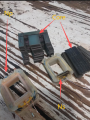
transformer:
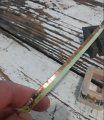
1772554815292.png please note the secondary are small still to test the output, to get number of turns. if i get it right i will use this copper strip from high power transformer which should carry 10amps easily

1772554922937.png

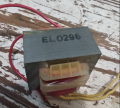
if all else fails i still have a true stepdown transformer i have not taken appart, but it 220-24... i tested it....BUT i do NOT know that transformers rated output amps

1772555029256.png
 
Last edited:

MisterBill2

Joined Jan 23, 2018
27,159
The "100 watts per square inch of core" is a fair way to guess the maximum possible output power. Usually fairly close, if not exactly right. Low duty cycle applications may skimp on core and wire size, which is why we have some doorbell transformers that run very hot to the touch. And they have an over-temp switch that opens slowly and generates RFI as well. BUT they were cheaper at the time.
 
Top