Facebook
 Google
 GitHub
 Linkedin

Art Vandelay
- Joined Nov 1, 2024
- 140
Where did you get 100 from? If you changed the resistor from 10 to 100 (to reduce the current), the expression remains unchanged.wait, are you sure? The original formula was L = 1 / ((2π * fv)^2 * C)
now you show me that L = 1 / (2π^2 * fv^2 * C) which is different:
L = 1 / (2π^2 * fv^2 * C)
L = 1 / (9.8690 * 238090^2 * 0.0000001)
L = 1 / (9.8690 * 56686848100 * 0.0000001)
L = 1 / 55944.25038989
L = 1.78749e-5
L = 0.0000178749
L = 17.8uH (gaaaaaaah - still wrong!) - it should be 2.5mH
wait -100R but where?
L = 100 / (2π^2 * fv^2 * C) -I'll put it here
L = 100 / 55944.250
L = 0.00178
L = 1.78mH -yah, very close to the truth ! (should be 2.5mH)
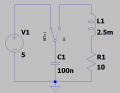
Using a 100nF capacitor and 2.5mH inductor you should get:
L = 1 / ((2π * f)^2 * C)
L = 1 / ((2π * 238090)^2 * (100 x 10^-9))
L = 4.46846080873 x 10^-6 = 5uH (rounded to the correct number of significant figures)
It's best to compute the entire expression at once to reduce rounding error propagation. Find a calculator that allows you to enter everything at once then round at the end.
Note that larger value capacitors will result in bigger errors in the formula. A typical cap has an error of +- 20%. So, for a 100nF cap, the error will be +-20nF. That will throw off the result quite a bit. Similarly, any error in measuring the resonant frequency will have an effect.
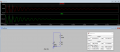
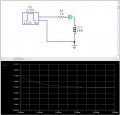
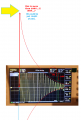
Assuming you really are using a 100nF capacitor and 2.5mH inductor, the resonant frequency is 10.0658kHz. Try starting over because the difference between the calculated frequency is an order of magnitude lower than what you measured. This suggests the inductor is mislabeled or your scope is faulty or improperly configured.
https://www.omnicalculator.com/physics/resonant-frequency-lc