How to correctly measure input power of an LTC3703 buck converter in LTspice?

Thread Starter

Toni Rodri

Joined Dec 3, 2023
49
I am simulating a synchronous buck converter based on the LTC3703 in LTspice and I want to accurately measure the input power in steady-state.

The input current drawn from the source is highly pulsed and includes large switching spikes , so instantaneous waveforms are not very intuitive.

Thank you
 

crutschow

Joined Mar 14, 2008
38,314
I am simulating a synchronous buck converter based on the LTC3703 in LTspice and I want to accurately measure the input power in steady-state.

The input current drawn from the source is highly pulsed and includes large switching spikes , so instantaneous waveforms are not very intuitive.
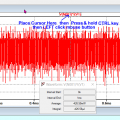
Plot the instantaneous supply output power by ALT left-click over the supply (a thermometer will show) after a suitable Transient time starting after the initial startup, and then CTRL left-click on the plot title to get the average power.
 
Last edited:

Thread Starter

Toni Rodri

Joined Dec 3, 2023
49
Plot the instantaneous supply output power by ALT left-click over the supply (a thermometer will show) after a suitable Transient time starting after the initial startup, and then CTRL left-click on the plot title to get the average power.
hey the ctrl + left-click not working :(
 

ericgibbs

Joined Jan 29, 2010
21,390
hi Toni,
Please post your LTSpice simulation asc file and any added models, we can then show the method of measuring the 'input power'.

E
 

ericgibbs

Joined Jan 29, 2010
21,390
hi Toni,
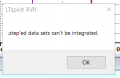
Simplified your simulation, it takes too long to run, also it is not possible to plot/measure the Stepping Power when using a step simulation.
Ref image, using Voltage source V1 current plot
E
EG 1906.png
 

Attachments

lichurbagan

Joined Jul 4, 2025
120
I am simulating a synchronous buck converter based on the LTC3703 in LTspice and I want to accurately measure the input power in steady-state.

The input current drawn from the source is highly pulsed and includes large switching spikes , so instantaneous waveforms are not very intuitive.

Thank you
When simulating an LTC3703 synchronous buck, input power is hard to read. The input current is pulsed and contains large switching spikes. Instantaneous waveforms are therefore misleading. The correct approach is averaging instantaneous input power. Use V(VIN) multiplied by I(Vin). Apply the AVG function over a steady-state window. This captures true energy flow despite switching noise. It also matches real efficiency measurement practice. Hardware designs reinforce this approach.
A good reference is this buck converter project:
https://www.pcbway.com/project/shar...er_[Adjustable_Efficient_5V_9A]_664624c4.html
 
Top