OK, let's start with some fundamentals. The current to voltage relationship for a DC current is:
Current = I = Capacitance * (change in voltage) / (change in time)
I will note (change in voltage) as dV, and the change in time as dT, or:
I = Capacitance * dV / dT Solve for Capacitance:
Capacitance = I * dT / dV (THE equation)
You state you have a 12V system drawing 4 amps for 6 seconds. Placing these numbers into THE equation yeilds:
Capacitance = 4 amps * 6 seconds / 12 volts = 2 farads
BUT....
12 volts is what the cap starts with, and it ends with zero. You need to select a smaller dV to leave a working voltage on the cap to run your circuit after the time expires.
So I'm going to guess your circuit will run just fine at 10 volts. With this value we get:
Capacitance = 4 amps * 6 seconds / 2 volts = 12 farads
Yikes! That's a lot of farads. You may want to rethink this project.
It is known as the calculus.The math looks deep, thank you.
I thought It was just algebra.It is known as the calculus.
It becomes just algebra if the current is a constant.I thought It was just algebra.
This is calculus.I = Capacitance * dV / dT
Well, since neither dV nor dT have been defined as function, but in fact as constants, there is no need for calculus here. It is a nice special case.This is calculus.
How much voltage drop can you tolerate in that six seconds (i.e. the lowest voltage at which the load will still operate).I only need it to run at 12 volts 4 amps for six seconds
I'd like to get a flat 12 volts for that time. How about 10 volts, crutschow?How much voltage drop can you tolerate in that six seconds (i.e. the lowest voltage at which the load will still operate).
Your right about that. I misspoke, I meant 4 Amps for 6 sec.4 amps per sec would mean a current that is increasing at the rate of an additional 4 A every second.
Did you really mean this, or did you mean just 4 A for 6 s?
Where is this current coming from and going to?
What is setting it at 4 A?
It would be very helpful if you at least provided a schematic, and even better if you attach your LTSpice file.
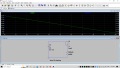
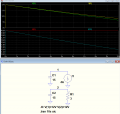
This simulation shows a 15F capacitor charged to 12V sourcing an active load of 4A. This assumes the load is able to compensate for the constantly falling supply voltage by drawing a steady 4A. After 6 seconds, the final capacitor voltage is 10.4V.Your right about that. I misspoke, I meant 4 Amps for 6 sec.

Then you need a DC to DC converter between the capacitor and the load.I'd like to get a flat 12 volts for that time.
Between the load and the capacitor is a DC to DC converter. I am trying to simulate an Ion Thruster rocket with a 6 second thrust duration.Then you need a DC to DC converter between the capacitor and the load.
And you didn't tell us that?Between the load and the capacitor is a DC to DC converter. I am trying to simulate an Ion Thruster rocket with a 6 second thrust duration.