How do you trace/find underground broken wires?

Thread Starter

ronsimpson

Joined Oct 7, 2019
4,645
About 32 years ago a plumber cut the power to my shop/barn. 100A service. He twisted the wires together, wrapped them in a bread bag and barred the wires. (never said anything) That failed two years later. I dug up the wire and repaired a section.
A year ago, a different plumber might have hit the same wire. He was pushing a pipe at 4 foot underground and the wire is 2' down there should have not been a problem. I can locate the wires but not the brake. (300 feet of wire)
I inject 500khz a.m. modulated signal into the Neutral wire that is broken. Then use a small AM radio to locate the wires. The problem is that the RF signal couples to the two hot wires. I don't find a lower signal where the wire is broken.
Any ideas for me.
My ham radio that probably goes down to 100khz which will reduce the wire-to-wire coupling.
I don't have a time delay way of measuring the wire length.
Much of my equipment is in the unpowered shop. LOL
I have several wire tracers but they only work at distances less than 4 inches.
 

SamR

Joined Mar 19, 2019
5,470
I have a "Cable Signal Tracer" injector/detector set I often use for wringing out and tracing wiring, but it is far too weak for buried wire. But there are industrial ones the phone and power companies use that maybe a rental place would have for tracing wires as contractors often use them before going to it with their backhoes. Still a signal injector and detector but a high powered one. No idea how it might also interact with a signal wire contacting a metal pipe. Wish they had used one before digging into my buried 240VAC line going out to my well house.
 

SamR

Joined Mar 19, 2019
5,470
You can supposedly "sort of" do TDR with a NanoVNA if you have one. But all you will get is a ~distance. You still have to locate the wire.
 

Thread Starter

ronsimpson

Joined Oct 7, 2019
4,645
Perhaps a tdr system could help:
You can supposedly "sort of" do TDR with a NanoVNA if you have one. But all you will get is a ~distance. You still have to locate the wire.
My radio tracer locates the wire within inches.

I have a NanoVNA. It crossed my head to try to get a reflection off the end of the wire. We probably will see the good wires resonate at some low frequency and a second resonate at a higher frequency from the shorter wire. If I test both ends, I might know what percentage point the wire is broken.

I also have thought about measuring the wire-to-wire capacitance. The broken wire should have a smaller cap.
 

SamR

Joined Mar 19, 2019
5,470
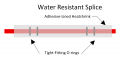
If you splice the wire, use marine grade shrink tube with the glue/mastic inside. I've even spliced the electrical cable down to an old Evinrude Electroshift Outdrive lying in saltwater with the stuff and never had a problem in years of use. Tape the splice and shrink the stuff on top of it and it will never leak. It is also a bit thicker than the standard shrinktube for better abrasion resistance.
 

Thread Starter

ronsimpson

Joined Oct 7, 2019
4,645
More information. I tried a number of tests. Here is one.
Totally disconnect the three underground wires from the system.
Measure the capacitance from each wire to earth ground. I know earth is not the best but there are 8-foot ground rods.
On one end I get 43nF on L1 and L2 and 31nF on Neutral. Suggesting the brake is at the 3/4 point.
On the other end I get about 43nF, 43 and 23nF. That gives me the idea the break is at 1/2 point.
I think I proved the break is not near either end. There is a 90-degree turn on each end.
I know from the ohm meter the old splice is good. See black arrows.

1775087624548.png
I dug down and pick up the wire at the new water pipe location. The hole is only 6 inches wide. The wire seems good but I will dig out a long trench there. I really think the break is at the 200 foot mark because of the new pipe.

There is about $1500 in wire in this. If the county finds out I replaces the wire, they will make me replace the 50-year-old panels on both ends and that gets into a real big project. Next, they probably will see that everything is old and the grounding code was very different back then.
 

Pyrex

Joined Feb 16, 2022
501
Hi,

A typical old-design cable locator consists of a receiver and a generator, the receiver consists of the sensor, the amplifier, and headphones.
The sensor consists of a coil with 2000-3000 turns of magnetic wire , and inside it is inserted a ferrite rod about 20 cm long. (The coil from a low-power transformer or contactor can also be used)

The amplifier is made of three or four transistors. (A battery-powered radio can also be used in place of such an amplifier, the sensor is connected to the volume control potentiometer.)

The 1kHz generator is connected to the grounding rod and the core of the cable being searched for.
If the cable conductor is broken, the current to the ground will be small, and this will create difficulties in locating the cable fault.Therefore, the generator must have at least a couple of outputs – one output with high current and low voltage, and an output with low current and high voltage.

If such a generator is not available, a 50/60Hz transformer, which is powered from the powerline , can be used. It would be necessary to select a transformer so that the current is sufficient.
However, if there are powered cables nearby, this method will not work, because the magnetic field they emit will interfere.

The generator is turned on, then we follow the cable route, navigating according to the signal strength. The sensor is attached to a wooden or plastic rod and held close to the ground surface. At the place where the cable core is broken, the signal strength drops significantly.
Since there are two healthy cores in your cable, it would be wise to connect the generator to those two cores, and at the other end of the cable, join those two cores into a bundle.In this way, it is possible to find the cable route before proceeding with the damaged core
 

n6ac

Joined Apr 29, 2011
7
I have been successful in locating a break (in ethernet cables, but principle should apply) by using a digital capacitor tester (Amazon) and measuring between-line capacitance for the various pairs, from each end.
 

tyogi

Joined Jul 26, 2024
0
I located a break in a 50' buried UF 120Vac cable using a simple DVM. I activated the circuit and placed a resistive load (incandescent light bulb) at the destination. I attached a short ground rod to one probe and placed the rod several feet from the wire path; this becomes the reference point. The DVM was set to AC volts. I used the other probe to measure the voltage along the wire path, and located the peak. Then I probed laterally for the largest voltage to narrow the wire path. I shut off the voltage and dug down a foot to find the break in the hot wire within 6". This method assumes that the insulation is broken, which is the usual case.
The ground and neutral wires were intact in my case. You can check this by shutting off the breaker and measuring resistance between ground and neutral at the destination; should be close to zero. If both ground and neutral are also broken, you can run a surface neutral wire to the resistive load and all broken wires.
You can use a similar technique to locate a break in an above-ground cable. Place a resistive load to neutral at the end, to both the broken wire and any other wires. Carefully apply 120Vac. Probe along the cable with a non-contact AC voltage sensor; it will quit beeping at the break. It is important to connect all the wires at the end; otherwise capacitive coupling with negate the method. This method won't work for shielded cable; TDR might be the last resort.
Takashi Yogi
 

Thread Starter

ronsimpson

Joined Oct 7, 2019
4,645
More information:
I have two good wires and one broken, twisted together and 24 inches underground.
I used a 100khz square waves 50% duty cycle. I tried signal levels from mV to 10V. Time changes some with voltage.
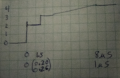
I injected the pulse into a good wire, and I get a 2V step, a delay of 1.5uS, then a 1V step and another 1.5uS delay then a slow clime up to 4V. The slope has small bumps at 1.5us and 3uS intervals.
I injected the pulse into the broken wire, and the first delay is 200 to 260nS and the end is at 1uS.
This gives me the idea the brake is at the 1/8 point. I need to move to the other end of the wire and try again.
1775251525639.png
I have the scope and generator on 500 feet of wire. There is a nasty 1mhz signal on the wires to test. (also 120hz noise) I worked for one of the scope companies, so I thought the power supply is unhappy. I switched scopes and companies and got the same noise. Switched generators. The noise is really on the wires. I moved to a digital scope and turned on averaging to remove the noise. The 200nS was from the analog scope and the 260nS was from a digital scope. I changed the way I measured time in the middle of this. So, forgive me for the uncertainty.

I don't trust the 1 foot/nS (or is it 11.5"/nS). I think that depends on the impedance of the wire and other factors.
I need to go back and get better numbers on 1.5uS and (200 to 260nS) then move to the other end of the wire.

This afternoon's project. RonS.

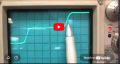
TDR Here is a video of how this should work. If I was using good coax or twisted pair, it should look like this.
1775253304072.png
 

Thread Starter

ronsimpson

Joined Oct 7, 2019
4,645
Rule of thumb: 20 cm/ns.
I looked at the manual for a TDR machine. They say 99% accuracy if you are using coax or twisted wire of known impedance. "enter value of wires here" In my case 1% off is 1.5 meter. Or +/=1% is a total of 3meters out of 155meters.
Because I don't know the impedance of this wire, I am using the good wires to calibrate. Good wire is 1.5uS and the broken wire is about 200nS.

Tell me if I am wrong but I think the signal travels at about 200m/uS. (AI said 150 to 300m/uS) My signal travels 155m by the time it reflects back. My 1.5uS reflection seems slow, but my wire is power cables. (103m/uS)

Maybe I don't care what the speed if the signal is. I only care that two wire are 1.5uS long and one is 0.2uS long.
---edited--- measured wire more carefully.
 
Last edited:

Thread Starter

ronsimpson

Joined Oct 7, 2019
4,645
Perhaps a tdr system could help:
A TDR came yesterday. It measures network cables very well. When it measures 3.0m it is right on. It will not work with lossy cables like mine. It must have a good reflection. I am getting 1/2 as much reflection as on a coax.

Next idea for you to think about. The insulation is 600V. I have some good HV supplies. I could charge up the broken wire to some HV and limit the current to 1mA. There is a chance it will spark to ground. An AM radio might pick up the noise. Probably the RF noise will jump to all the wires.

I have 1 yard (1m) dug up where the scope thinks the problems is. I will expand the hold today.
I have a small hole dug where the capacitance meter thinks the problem is.
One hold is just South of the road, and the other hold is just North of the road. Want to bet where the break is?
 

du00000001

Joined Nov 10, 2020
189
I looked at the manual for a TDR machine. They say 99% accuracy if you are using coax or twisted wire of known impedance. "enter value of wires here" In my case 1% off is 1.5 meter. Or +/=1% is a total of 3meters out of 155meters.
Because I don't know the impedance of this wire, I am using the good wires to calibrate. Good wire is 1.5uS and the broken wire is about 200nS.

Tell me if I am wrong but I think the signal travels at about 200m/uS. (AI said 150 to 300m/uS) My signal travels 155m by the time it reflects back. My 1.5uS reflection seems slow, but my wire is power cables. (103m/uS)

Maybe I don't care what the speed if the signal is. I only care that two wire are 1.5uS long and one is 0.2uS long.
---edited--- measured wire more carefully.
If I got it right, the good wire is 155 m long. When it comes to TDR, the signal has to travel forth and back - making 310 m in total. So your wire is 206 m/us - quite close to the 200m/us of the rule of thumb
 
Top