Facebook
 Google
 GitHub
 Linkedin

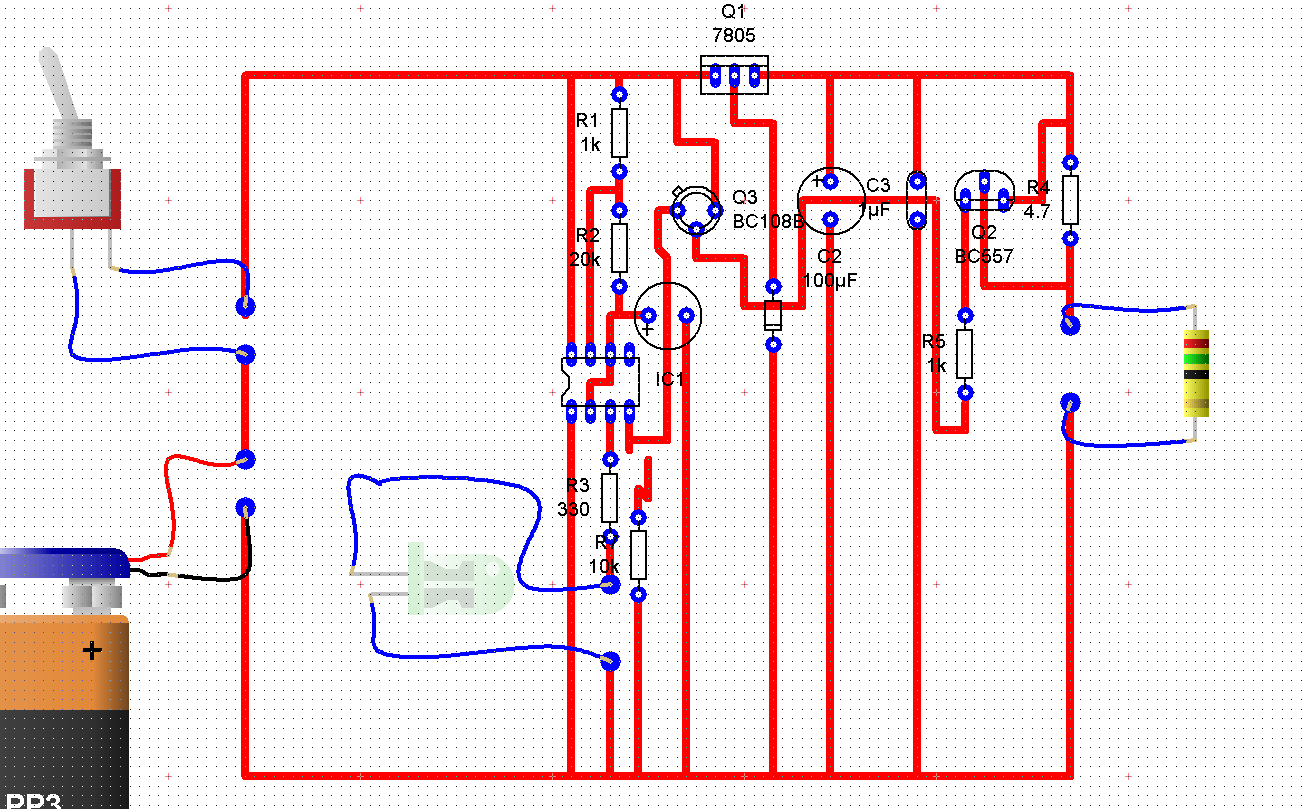
2 clues have been given to you on post #7 and #11.
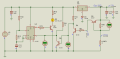
I'll give a simple example on how you can detect when there is current flow during charging. The values on the drawing may not work as you wanted as it only shows how I would do it just to trigger your imaginations.
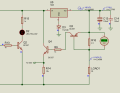
LOAD1 is your output to your phone. Assuming a charging current of 200mA. R16 is a 2.2 Ω resistor connected in series with your load. It would drop 462mV so Q3 is conducting. This would make Q4 to conduct so the emitter of Q4 would be "High". You may use this logic level to control 555 whether to become flashong or not.
Since R16 drops about 0.5V from the 7805 regulator so D3 is added to make the output voltage of 7805 a diode drop higher ie 5.6V.
To control LM555 to flash or not. There are many ways to do it so I'll leave it to you to decide.
Allen
I'll give a simple example on how you can detect when there is current flow during charging. The values on the drawing may not work as you wanted as it only shows how I would do it just to trigger your imaginations.
LOAD1 is your output to your phone. Assuming a charging current of 200mA. R16 is a 2.2 Ω resistor connected in series with your load. It would drop 462mV so Q3 is conducting. This would make Q4 to conduct so the emitter of Q4 would be "High". You may use this logic level to control 555 whether to become flashong or not.
Since R16 drops about 0.5V from the 7805 regulator so D3 is added to make the output voltage of 7805 a diode drop higher ie 5.6V.
To control LM555 to flash or not. There are many ways to do it so I'll leave it to you to decide.
Allen