Declare what the circuit is supposed to do (its purpose).
Divide the circuit into "functional blocks" (this looks like its already been done).
Then, develop test cases for testing each of the functional blocks.
The test cases define what to test and the expected results.
Declare what the circuit is supposed to do (its purpose).
Divide the circuit into "functional blocks" (this looks like its already been done).
Then, develop test cases for testing each of the functional blocks.
The test cases define what to test and the expected results.
the circuit is brake system plausibility device where if a driver brakes and accelerates at the same time for 500ms it shuts down the engine, so it has 2 sensor inputs, each sensor is connected to a window comparator to
Declare what the circuit is supposed to do (its purpose).
Divide the circuit into "functional blocks" (this looks like its already been done).
Then, develop test cases for testing each of the functional blocks.
The test cases define what to test and the expected results.
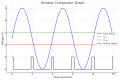
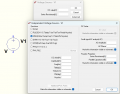
so for example how would i test the window comparators on the left which is supposed to keep the input of a current sensor between the range set by the voltage dividers which in this case is 1.6-4.5V but if the input were to go above or below that range then it would output low here is what it should look like
Exactly from the application.
You have stated:
"the circuit is brake system plausibility device where if a driver brakes and accelerates at the same time for 500ms it shuts down the engine,"
So you should be able to infer the inputs and the expected outputs for that.
If you don't know them, then you need more information about the requirements of the system, which we certainly don't know.
Exactly from the application.
You have stated:
"the circuit is brake system plausibility device where if a driver brakes and accelerates at the same time for 500ms it shuts down the engine,"
So you should be able to infer the inputs and the expected outputs for that.
If you don't know them, then you need more information about the requirements of the system, which we certainly don't know.
Exactly from the application.
You have stated:
"the circuit is brake system plausibility device where if a driver brakes and accelerates at the same time for 500ms it shuts down the engine,"
So you should be able to infer the inputs and the expected outputs for that.
If you don't know them, then you need more information about the requirements of the system, which we certainly don't know.

 Facebook
 Google
 GitHub
 Linkedin