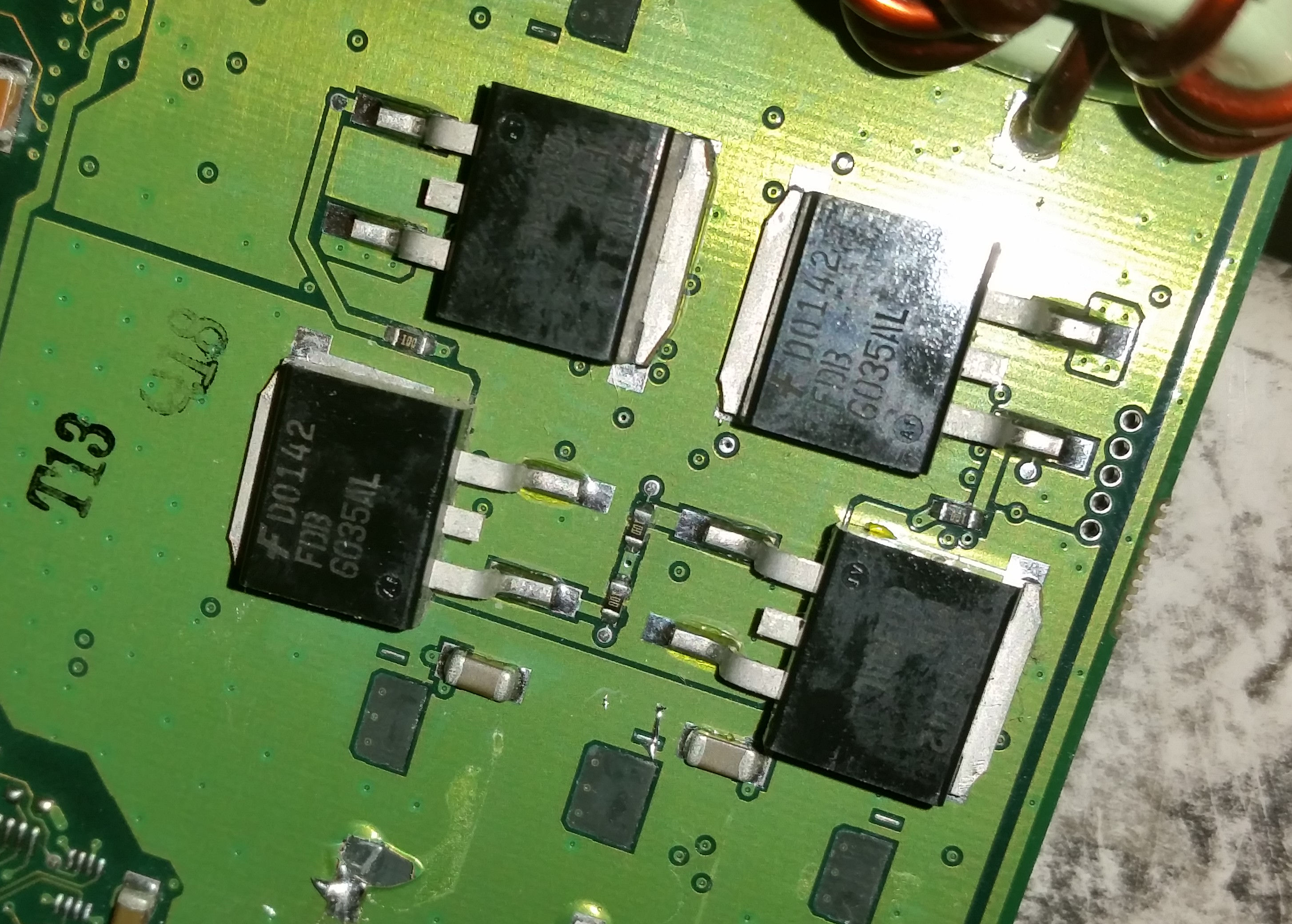
Are you removing all of the solder, or at least getting it all molten before trying to remove components?
They sometimes use an adhesive to hold components in place prior to soldering, but solder paste is often all that is needed for boards with components only on one side of the board.
They are just soldered.
You need a hot gun to remove them.
You an remove them with a broad tip soldering iron that can transfer heat quit fast if you got experience.
Yeah, I removed some components using my soldering gun. In future I'll try the hot air tool at my local maker space. I was trying to be careful but sometimes (quite often) the force I was applying pulled up the pad from the PCB before the solder was molten.
Using the right tool for the right job makes a big difference.
When using a hot air tool with the appropriate nozzle, you can move the component with tweezers to see if it's ready to be removed. Just don't dally and exceed allowed soldering time limits, or temperatures.
Use hot gun is sometimes dangerous.
Use too much heat and you destroy the component and burn the PCB
You need appropriate airflow with heat. Adding flux really helps. But you need to clean the PCB afterwards though
They are soldered to a ground plane with the intention that the copper on the board works as a heatsink, taking heat away from the component. It does that when you are trying to remove them from the board too and the problem is greater. You have to get a good load of heat in there.
My initial thinking was that it was just going to cool the tip while boiling off the flux. After thinking about it, it makes sense that the liquid would conduct heat while it was being boiled off and it could help with heat transfer.
For stubborn joints, I melt some solder on the tip of my iron and use the molten solder to help with heat transfer.
Just desoldering and lifting the pins allows testing the component without removing it fully from the board heat sink which is what sucks most heat from the soldering gun making solder hard to melt.
I was watching someone on youtube use flux when removing components so I tried it myself, and it really does help. I always used flux core solder, but again after watching that guy use lots of flux on every joint and his joints always looked really nice, so I tried myself too and for whatever reason even when using flux core solder, adding a good amount of additional flux really does leave a nicer smoother looking joint.
Also when removing big components like that, it sometimes helps to get the entire board warm first. Again watching guys on youtube, some of them use an electric skillet to warm the whole board, then those big parts are easier to get hot enough to melt the solder.
This guy has a lot of repair videos and you can get some good tips watching him (I'm sure there are others on youtube that are just as good):
A dab of molten solder is quite helpful in establishing a transfer of heat.
Attacking any joint with a dry tip is asking for trouble.
I have seen one reference where it is advised to keep solid solder flowing into the joint until removing both the solder and the tip together. This is to keep the temperature of the joint down to the melting point if the solder, not the higher temperature of the tip itself.

 Facebook
 Google
 GitHub
 Linkedin