how do you organise your components?

Thread Starter

Soop

Joined Feb 10, 2022
21
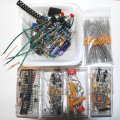
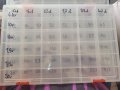
I've previously had my caps and resistors in flat, clear plastic boxes with compartments. The caps I've had rows of capacitance and columns of voltage, so it's super easy to get the exact part I need.

The downside is that there's a lot of empty compartments, and I only (prematurely) organised what I had at the time.

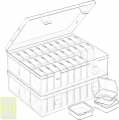
Now I've just recieved my order of 4x nicely sized 48 compartment boxes, so if I just consolidate voltages, I can fit 2 decades of e24 caps per box, and the same for resistors, while also having empty slots for correct values as they appear. I'm strongly leaning towards this, even if it does add a little bit of overhead fishing for voltages. Then I'll have temporary boxes for excess overflow. I was considering adding coloured dots on the top of electrolytics to denote voltage for a quick grab and go too, but it's a lot of overhead initially

I'm purely a hobbyist/dabbler btw, so this isn't like workshop/lab level, just a clean workflow to avoid the hassle of losing stuff, and I'll put in an order at a recommended supplier to bulk out the gaps with some cheap stock when I have visibility of what I have
 

MrChips

Joined Oct 2, 2009
34,632
Get extra small zip-lock plastic bags and keep exact same components in one bag. I do that with other hardware such as nuts and bolts. Use a kitchen food sealer and you can make your own bags from plastic that would normally be tossed out.
 

panic mode

Joined Oct 10, 2011
4,873
for large parts i also use ziplock bags and hang them, usually one decade on same pin.
so one decade may have values 1, 1,2, 1,5 ... 9.1
the next one is 1-, 12, 15,... 91
etc.

also have boxes for parts with large quantities, or parts that are heavy.
but most of the parts i use these days are SMD. i tried different things but they all fail miserably.
the problem is that they do not seal so parts keep falling out. the other problem is that the lids have very fragile plastic pins that constantly break off.

this next one (green, modular) is by far the worst one i tried... really flimsy and parts constantly leaking out. an absolute disaster of a product.

1775758389354.png
this one is not too bad but still fragile:
1775758601802.png

did not take too long and i've had it and moved onto pill boxes.
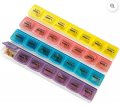
this makes it compact, air tight seal , portable and indestructable. i can toss them across the room or out of window and it will not open or break.
the small diameter means one can pack a lot of them and easily see everything that is is available. one disadvantage is that most pill boxes are tall and easily tipped over so good idea is to remove what you need and close them right away.
1775759180133.png
have not try it yet, but considering stackable beads organizers like these, they are short and wide so stability cannot be the problem:
1775758949875.png
 

Jon Chandler

Joined Jun 12, 2008
1,563
I use pill organizers like this one from Walmart for SMD components. Geez, they've gotten expensive, $9.

For static sensitive devices, I cut a cross out of pink foam and line the compartment. Each compartment lid snaps shut securely.

Don't knock it off the bench... at least a few of the compartments will burst open – a lesson learned the hard way.

Note: Since I do hand assembly using a vacuum pickup tool, I strip resistors and caps out of the tape and store them loose.

Screenshot_20260409_115257_Walmart.jpg
 

MrChips

Joined Oct 2, 2009
34,632
Avoid the clear plastic storage organizers (polycatbonate?). The hinge pins break too easily. Get these (polypropylene?):

1775762876923.png
 

WBahn

Joined Mar 31, 2012
32,714
I had a good friend that didn't organize anything, per se, despite having thousands of components. Yet he always knew exactly what he had and where it was.

This is because, decades earlier, he created a system of inventory control that he adhered to religiously. He basically had random storage bins, boxes, drawers and anytime he added a component he first went to his inventory, which was a text file on an old computer, and entered the information and where he was putting it. It didn't matter where he put it, so he would just find a conveniently-sized location. When he needed something, he checked his inventory to see if he had it and, if he did, it told him exactly where it was. Now, some things like resistors, he had a bit more organization to it, but not as much as you might think. The thing that he never allowed himself to do was to hunt through drawers and grab something -- he always went through his inventory file and made sure that it was kept up to date. He did that for decades with a degree of discipline that I know I could never bring to the table. Of course, he acknowledged that he had long since passed the point where he had no choice but to exercise that level of discipline, or he would quickly not be able to find anything.

The bottom line is that what works for one person may be totally unsuitable for someone else. You need to experiment and find what works for you (and some of us are still trying to figure that out -- ask me how I know).
 

MrChips

Joined Oct 2, 2009
34,632
I had a good friend that didn't organize anything, per se, despite having thousands of components. Yet he always knew exactly what he had and where it was.

This is because, decades earlier, he created a system of inventory control that he adhered to religiously. He basically had random storage bins, boxes, drawers and anytime he added a component he first went to his inventory, which was a text file on an old computer, and entered the information and where he was putting it. It didn't matter where he put it, so he would just find a conveniently-sized location. When he needed something, he checked his inventory to see if he had it and, if he did, it told him exactly where it was. Now, some things like resistors, he had a bit more organization to it, but not as much as you might think. The thing that he never allowed himself to do was to hunt through drawers and grab something -- he always went through his inventory file and made sure that it was kept up to date. He did that for decades with a degree of discipline that I know I could never bring to the table. Of course, he acknowledged that he had long since passed the point where he had no choice but to exercise that level of discipline, or he would quickly not be able to find anything.

The bottom line is that what works for one person may be totally unsuitable for someone else. You need to experiment and find what works for you (and some of us are still trying to figure that out -- ask me how I know).
I do the same. I must have over 100,000 pieces of components. I catalog all on a spreadsheet.
Except, I don't catalog resistors and capacitors. They all go into organized storage drawers or boxes, thru-hole and SMD.
 

dl324

Joined Mar 30, 2015
18,226
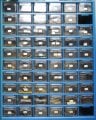
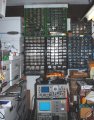
For resistors, my main storage is this (mounted on a wall):
resistorStorage.jpgpartsStorageWall.jpg
I use the top 8 rows. The top row is <10, 100, 1k, 10k, 100k, 1M/10M, then subsequent rows are 10's, 20's, 30's, 40's, 50's, 60/70's, 80/90's.

Similar for capacitors except that cabinet is stored in the garage because I rarely need them.

On my bench, I use plastic clamshell boxes. One box for <1k, 1-9K, 10-90K, 100K-900K, 1M+. I also store caps with them, e.g. 104 caps in the 100K resistors. Other fboxes have transistors+diodes, headers, etc. I stack the boxes next to my soldering station.

EDIT: corrected typo on boxes
looseParts.jpg
I also use weighing trays to hold misc components on the bench. I have 3 sizes of them. The one shown above is the medium sized.
 
Last edited:

abrsvc

Joined Jun 16, 2018
159
Organization will depend upon a number of factors. In my case, I did not have a ton of storage space for units under repair so the emphasis for me was to have parts available to get the repairs done quickly and minimize storage requirements. Starting this process in the '80s meant mostly through-hole components, so I stocked many "universal" parts. My goal for part storage was to have each part type/value in its own container for ease of location and inventory.

My current setup consists of three main storage systems: 1) 60 parts cabinets of either 60, 42 or 18 drawers each; 2) 4" wide cardboard storage drawers with coin envelopes to contain parts; and 3) two sizes of Sterlite drawer units for larger parts.

The coin envelopes contain transistors, resistors, diodes etc. and are labeled. In the case of transistors, ALL values in stock had an envelope with the value underlined if it was located in one of the 60 drawer units. This made for easy checking for a specific part value without a paper or electronic list. Easy to add a value too.

Resistors are located in 60-drawer units with all standard values, 1 cabinet per wattage (1/4, 1/2 and 1W). Capacitors are in 2 cabinets with each "column" a specific voltage and each row a Ufd value (Radial and Axial have their own drawer).
Common transistor values (2SA, 2SB,2SC and 2SC) each have their own drawer and were purchased in bulk for cost savings and stock. 100 TO92 easily fit in a drawer for example.

Common VCR idlers and belts fit into 18 drawer units nicely.

Surface mount parts end up in envelopes since they are often shipped in plastic strips or end up in small parts boxes like the green one shown in post a few back from here.

You mileage may vary. Use what makes sense for you and how your use dictates.

Dan
 
I have been thinking of making a binder with a "short and to the point" data sheet stapled to a bag of said part (for things that there's enough variables to need a data sheet - but not more than a page or two)

Especially with the numbers on ICs or transistors usually being hard to read unless the room light is exactly where you want it
 

Thread Starter

Soop

Joined Feb 10, 2022
21
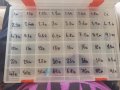
this is what I've ended up going with. I have three 48 slot boxes for 6 decades of e24 film resistors (I can add another 24 box if I ever find the need for the lower values, but they'll probably be ceramic or something)

For capacitors I ummed and ahhed about setting aside space for full e24 values, but as I've gone for voltage as the column and capacitance as the row, it would end up being too much empty space, so I've just gone for common values, so I *should* have a space for everything. I also had some extra slots at the end since the larger caps won't fit in those spaces anyway, and I'll keep an overflow elsewhere.

For what I tend to do, these are the main sorts of components I use, I have ceramics and SMD components floating about, and a larger of the same thing for ICs, mosfets and the like,but I'm happy with this. I've used a similar but less future proof and lower quality system for a while, and being able to just see exactly what's in there and fish out something quickly is good for me
 

Attachments

dl324

Joined Mar 30, 2015
18,226
I have three 48 slot boxes for 6 decades of e24 film resistors (I can add another 24 box if I ever find the need for the lower values, but they'll probably be ceramic or something)
I leave SMD components on their original reels arranged by value in a cardboard box and cut off what I plan to use.

I also have dozens of reels of through hole resistors, capacitors, and LEDs (and boxes of through hole resistors and LEDs). The reels/boxes are mostly stored in cardboard boxes, though commonly used values are stacked on a shelf above my workbench. I also have hundreds of tubes of IC's and sockets that are also stored in cardboard boxes. I have inventory stickers on each of the boxes
 

jjlarkin

Joined May 30, 2025
7
I've previously had my caps and resistors in flat, clear plastic boxes with compartments. The caps I've had rows of capacitance and columns of voltage, so it's super easy to get the exact part I need.

The downside is that there's a lot of empty compartments, and I only (prematurely) organised what I had at the time.

Now I've just recieved my order of 4x nicely sized 48 compartment boxes, so if I just consolidate voltages, I can fit 2 decades of e24 caps per box, and the same for resistors, while also having empty slots for correct values as they appear. I'm strongly leaning towards this, even if it does add a little bit of overhead fishing for voltages. Then I'll have temporary boxes for excess overflow. I was considering adding coloured dots on the top of electrolytics to denote voltage for a quick grab and go too, but it's a lot of overhead initially

I'm purely a hobbyist/dabbler btw, so this isn't like workshop/lab level, just a clean workflow to avoid the hassle of losing stuff, and I'll put in an order at a recommended supplier to bulk out the gaps with some cheap stock when I have visibility of what I have

Coin envelopes.
 

Michael42

Joined Apr 20, 2026
5
I’d probably consolidate by value too if I were in your shoes. As a hobbyist, saving space and keeping things simple matters more than having a perfect lab-style system. I’ve found that sorting caps by capacitance first gets you 90% of the way there, and checking voltage after isn’t too much hassle. The colored dot idea sounds useful, but I’d only do it if you find yourself constantly digging through the same compartments.
 
Top