Home school circuit analysis class suggestions needed

dl324

Joined Mar 30, 2015
18,340
Color can be helpful on a very busy page.
A "busy" page is the fault of whoever drew it. In my first job I worked on circuit boards in a computer that took 6 E sized sheets to contain the logic. None of those were ever more than one color. It happened to be blue because that's how duplicators worked back then.

EDIT: Up to 6 E sized sheets per board. Some only took a few. As I recall, the memory controller took 6 and was the board with the most layers. The computer consisted of about a dozen boards and 3 power supplies.
 
Last edited:

MrSalts

Joined Apr 2, 2020
2,767
Another point. Electricial engineers/technicians don't like colored schematics.
More like, old traditional Electrical engineers don't like color.

The current generation of engineers are using color to communicate with one more level of clarity with each other. Use color if you like.

And, if you've ever seen modern CAD files with 3D rendering, there are all kinds of colors, shadows lamp positions, shadow intensity, reflectivity and more possible. So, the answer is, yes, mechanical engineers use color and more.
 

Thread Starter

rpschultz

Joined Nov 23, 2022
821
Head over to Spark Fun. They've got easier to understand descriptions of some parts. For example, here's a big beefy N-channel FET (hard for the kids to kill), that can be controlled with a logic level device like an Arduino (not all FETs can so this is important): https://www.sparkfun.com/products/10213
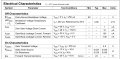
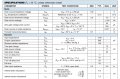
So I’m looking at this datasheet. As I read it, applying 1.0-2.5 Vdc will turn on the Gate and allow current to flow from the source to the drain. Is that right?

293A2162-3FD9-4597-B670-DAAB4B6B6D8D.jpeg
Edit: Amazon had a 10 pack for $7.
 
Last edited:

dl324

Joined Mar 30, 2015
18,340
So I’m looking at this datasheet. As I read it, applying 1.0-2.5 Vdc will turn on the Gate and allow current to flow from the source to the drain. Is that right?
Vgs(th) is the voltage where the MOSFET just begins turning on. Note the 250uA current for the voltage range specified in the datasheet.

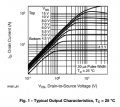
You should use the drain current vs gate voltage graph for typical devices to find the voltage you should use for the current you want.

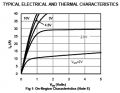
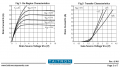
The first datasheet I checked didn't have the graph I was looking for. This was the closest thing:
1674058168836.png
1674058145998.png
1674058268820.png

Someone might come along and tell you that you can't specify typical devices when you buy them, but most of them will be typical due to manufacturing process tolerances.

EDIT: Data for BSS138:
1674058630606.png
I guess the Fig 1 data is better because you're not likely to operate the device with a Vds of 10V.
 
Last edited:

dl324

Joined Mar 30, 2015
18,340
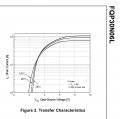
This is from that data sheet. At 25C it turns on at about 2.25V and the available current goes up pretty fast.
Note that the graph is for Vds=25V. From the Fig 1 graphs I posted for two other devices, drain current falls rapidly for low Vds.
 

Thread Starter

rpschultz

Joined Nov 23, 2022
821
So why do BJT use base collector emitter and FET use gate source drain base?!? Aren’t they kinda the same?
 
Last edited:

Thread Starter

rpschultz

Joined Nov 23, 2022
821
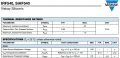
My research suggests that the IRF540 is a great general purpose MOSFET that works with arduino because it has a 2.1v gate threshold so it works with 3.3v microcontrollers. Although data sheet says VGSth is 4vdc.?!?

I’m leaning toward getting these for everyone, could do a number of circuits with it.

I may just do a couple weeks of review on resistors, caps and diodes… they have covered all that last semester, and then start in on transistors.
 

dl324

Joined Mar 30, 2015
18,340
My research suggests that the IRF540 is a great general purpose MOSFET that works with arduino because it has a 2.1v gate threshold so it works with 3.3v microcontrollers. Although data sheet says VGSth is 4vdc.?!?
Your research is suspect.
1674148583052.png

They don't even show characteristics for Vgs < 4V:
1674148667891.png
 
Top