HELP! My toddler touched the circuit board of a school home charger

Thread Starter

Stephanie5794

Joined Jul 24, 2024
8
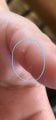
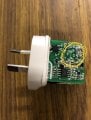
My toddler pulled on a Belkin phone charger which was plugged in to the socket and switched on in our house in Australia. The cover of the charger came off. She’s then touched the exposed circuit board. She cried out. Was very upset for a short period. I didn’t notice any flickering of lights and it hasn’t tripped any safety switches in the house. She now has a series of small white circle marks/burns on her thumb. About 8 of them. I’ve included a photo of the circuit board she has touched and tried to take a photo of her hand, but she’s reluctant to let me take a good photo. She’s otherwise using her hand without any obvious problems. She walking around, up and down stairs etc, so she’s otherwise fine, if a little grumpy.

I’m asking the experts, has she just burnt her thumb, or would the circuit board have shocked her? And if so, do I need to take her to the hospital? What’s the expert opinion please? Thank you.
 

Attachments

dl324

Joined Mar 30, 2015
18,219
Welcome to AAC!

Any danger has likely passed. Count your blessings and try to stop worrying.
has she just burnt her thumb
I think white is indicative of a bad burn. I had something similar when I burned myself with a soldering iron.
would the circuit board have shocked her?
Yes. It could have been very bad. Those phone chargers aren't always safe to begin with. The cover shouldn't have come off and I would take that up with the manufacturer. They owe you something for what happened to your daughter.
do I need to take her to the hospital?
No. It could have been much much worse, but if the burns are only on her thumb, you don't need to worry about unless it gets infected or the pain doesn't subside.

Not to try to scare you, but she could have been hurt much more severely. Especially if she had touched high voltages with both hands.
 

MrChips

Joined Oct 2, 2009
34,628
As others have already stated, she received an electrical shock and minor burns. They will heal in time. The immediate danger has passed. Now is a good time to look around the house for other electrical and chemical hazards that got overlooked.
 

Thread Starter

Stephanie5794

Joined Jul 24, 2024
8
Welcome to AAC!

Any danger has likely passed. Count your blessings and try to stop worrying.
I think white is indicative of a bad burn. I had something similar when I burned myself with a soldering iron.
Yes. It could have been very bad. Those phone chargers aren't always safe to begin with. The cover shouldn't have come off and I would take that up with the manufacturer. They owe you something for what happened to your daughter.
No. It could have been much much worse, but if the burns are only on her thumb, you don't need to worry about unless it gets infected or the pain doesn't subside.

Not to try to scare you, but she could have been hurt much more severely. Especially if she had touched high voltages with both hands.
Thanks so much!
 

Thread Starter

Stephanie5794

Joined Jul 24, 2024
8
As others have already stated, she received an electrical shock and minor burns. They will heal in time. The immediate danger has passed. Now is a good time to look around the house for other electrical and chemical hazards that got overlooked.
Thank you so much!
 

dl324

Joined Mar 30, 2015
18,219
Keep an eye on the burns. I'm not a medical professional, but I interpret burns with white skin/flesh to be 3rd degree. White or black indicates dead tissue. A minor burn is redness.

Voltages above 50V are considered lethal and letthal voltages are present in that phone charger.
 

Thread Starter

Stephanie5794

Joined Jul 24, 2024
8
Keep an eye on the burns. I'm not a medical professional, but I interpret burns with white skin/flesh to be 3rd degree. White or black indicates dead tissue. A minor burn is redness.

Voltages above 50V are considered lethal and letthal voltages are present in that phone charger.
Thanks for your reply
 

WBahn

Joined Mar 31, 2012
32,703
Keep an eye on the burns. I'm not a medical professional, but I interpret burns with white skin/flesh to be 3rd degree. White or black indicates dead tissue. A minor burn is redness.

Voltages above 50V are considered lethal and letthal voltages are present in that phone charger.
They appear to be very minor 2nd degree point-contact burns. The white spots may blister, but probably won't on small spot burns like that. Putting some ointment or bandage strip (Band-Aid) over it may be helpful, but probably not necessary unless blisters do form and break. They will probably heal in one to two weeks, with the white spots turning hard and peeling off.
 

MisterBill2

Joined Jan 23, 2018
27,166
By the time she screamed and let go the danger of shock was past. The white spot burns are quite superficial but they certainly hurt for a while.
And the scream indicates still breathing, so it is a good sign. Fall down and silent is the bad news.
 

Ya’akov

Joined Jan 27, 2019
10,226
Sorry to hear you had this trouble. The cover of the charger shouldn’t have been removable—that’s a serious product defect and you really should document it fully and pursue it with the manufacturer.

Do not send them the charger. The might ask for it suggesting they want to “investigate”. Take the best photos you can from close up and many angles, and tell them that’s the best you can do. Put the parts away in a sealed container (zip locks in a box, or similar) and write the date it was sealed across the tape.

Don‘t answer any questions about your daughter’s behavior or what might have happened to the charger prior to the incident. They may ask such questions to make a case the charger was misused or abused. While you could potentially benefit financially from pursuing this, that’s not why I suggest it. What happened should not be possible and is so dangerous that someone needs to do something about it.

That said, a little background about electric shock could help you. There are two ways that electrocution can injure (or kill). One is burning—as you have seen. The good news is that burns like that mean the second way, which is much more likely to be a fatal thing, has probably been stopped.

This is to have electric current flow across the heart and stop it. Unfortunately, common as it is, household mains power is more than sufficient to take a life. For that to happen, though, the path for the circuit that lets current flow—always from high potential to lower—must find its way across the heart.

The heart is electrically operated and the 50Hz¹ or 60Hz is just about perfect to disrupt the carefully orchestrated electrical signals the keep the heart beating. Classically, grabbing one wire of the circuit in each hand is the killer since the current will literally flow across the heart.

(One hand the “live” branch of the circuit, and a connection to ground (also called “earth”), from wet feet of other intimate contact is also a common killer).

In cases like your daughter’s, where you can see the burns on her finger you know that the circuit the current found was into and immediately out of her finger. This doesn’t mean there wasn’t some current flow in more dangerous directions since electrical power will use every path it can find but it does mean that the immediate path of her finger was the overwhelmingly dominant one².

The other thing about the wall power is its voltage. Electricity behaves according to Ohm’s Law which says that current is directly proportional to voltage (the measuring of electricity’s ability to “push” its way along.³) The 240V is a very high voltage and very dangerous. Somehow we mostly survive it, tough—partially because the covers don’t usually come off chargers and expose the mains voltage to be touched.

Ohm’s Law says that current (which is roughly the ”flow” of electric charge, that is how much charge per second is moving) is directly proportional to voltage—how hard it’s being ”pushed”. So, higher voltages make it more likely the current will reach dangerous levels in that across-the-heart path that is so deadly.

Electric current can do other damage, primarily from heating. It can damage nerves and organs as it flows through the body and because the nerves use electrical signals, it can do damage to muscles by causing them to contract violently (this is more of a problem for DC (direct current) and one of the saving graces of AC—though not much of one.)

So, I know this is long but I leave it here for you if you choose to read it in hopes it can demystify electric shock to some extent. I wish you and your daughter the best and I hope you pursue this with the manufacturer not assuming good will on their part even if you are convinced the specific people you talk to are legitimately concerned. Often, human response and corporate behavior are very widely different.


1. Hz is the abbreviation for Hertz, the standard unit of frequency. The power coming from the wall outlet is alternating current (AC)—so called because it changes polarity (positive and negative) 100 or 120 times per second. One Hertz is a full sine wave which will be one each of 0 to the positive and 0 to the negative limits. Hence, 100 or 120 (50 or 60 times 2).

2. The simplified version often heard is “electricity takes the path of least resistance” but this can be misleading. In fact, it actually divides the current up proportionally along every path available. It “decides” on the intensity of that push based on how easily it can flow—called “resistance”, the higher (in Ohms, written Ω) the harder the path is to traverse. So, it is very possible to a finger to save a life by shunting most of the current and still have some flowing along much more dangerous paths at harmless currents (measured in Amps written A—or in our case mA for milliamps, that is 1/1000A since 1A is very large when talking about electric shockl

3. This is an extremely simplified version of what voltage is—not inaccurate but also shouldn’t be “pushed” too far, so to speak.
 

Thread Starter

Stephanie5794

Joined Jul 24, 2024
8
Sorry to hear you had this trouble. The cover of the charger shouldn’t have been removable—that’s a serious product defect and you really should document it fully and pursue it with the manufacturer.

Do not send them the charger. The might ask for it suggesting they want to “investigate”. Take the best photos you can from close up and many angles, and tell them that’s the best you can do. Put the parts away in a sealed container (zip locks in a box, or similar) and write the date it was sealed across the tape.

Don‘t answer any questions about your daughter’s behavior or what might have happened to the charger prior to the incident. They may ask such questions to make a case the charger was misused or abused. While you could potentially benefit financially from pursuing this, that’s not why I suggest it. What happened should not be possible and is so dangerous that someone needs to do something about it.

That said, a little background about electric shock could help you. There are two ways that electrocution can injure (or kill). One is burning—as you have seen. The good news is that burns like that mean the second way, which is much more likely to be a fatal thing, has probably been stopped.

This is to have electric current flow across the heart and stop it. Unfortunately, common as it is, household mains power is more than sufficient to take a life. For that to happen, though, the path for the circuit that lets current flow—always from high potential to lower—must find its way across the heart.

The heart is electrically operated and the 50Hz¹ or 60Hz is just about perfect to disrupt the carefully orchestrated electrical signals the keep the heart beating. Classically, grabbing one wire of the circuit in each hand is the killer since the current will literally flow across the heart.

(One hand the “live” branch of the circuit, and a connection to ground (also called “earth”), from wet feet of other intimate contact is also a common killer).

In cases like your daughter’s, where you can see the burns on her finger you know that the circuit the current found was into and immediately out of her finger. This doesn’t mean there wasn’t some current flow in more dangerous directions since electrical power will use every path it can find but it does mean that the immediate path of her finger was the overwhelmingly dominant one².

The other thing about the wall power is its voltage. Electricity behaves according to Ohm’s Law which says that current is directly proportional to voltage (the measuring of electricity’s ability to “push” its way along.³) The 240V is a very high voltage and very dangerous. Somehow we mostly survive it, tough—partially because the covers don’t usually come off chargers and expose the mains voltage to be touched.

Ohm’s Law says that current (which is roughly the ”flow” of electric charge, that is how much charge per second is moving) is directly proportional to voltage—how hard it’s being ”pushed”. So, higher voltages make it more likely the current will reach dangerous levels in that across-the-heart path that is so deadly.

Electric current can do other damage, primarily from heating. It can damage nerves and organs as it flows through the body and because the nerves use electrical signals, it can do damage to muscles by causing them to contract violently (this is more of a problem for DC (direct current) and one of the saving graces of AC—though not much of one.)

So, I know this is long but I leave it here for you if you choose to read it in hopes it can demystify electric shock to some extent. I wish you and your daughter the best and I hope you pursue this with the manufacturer not assuming good will on their part even if you are convinced the specific people you talk to are legitimately concerned. Often, human response and corporate behavior are very widely different.


1. Hz is the abbreviation for Hertz, the standard unit of frequency. The power coming from the wall outlet is alternating current (AC)—so called because it changes polarity (positive and negative) 100 or 120 times per second. One Hertz is a full sine wave which will be one each of 0 to the positive and 0 to the negative limits. Hence, 100 or 120 (50 or 60 times 2).

2. The simplified version often heard is “electricity takes the path of least resistance” but this can be misleading. In fact, it actually divides the current up proportionally along every path available. It “decides” on the intensity of that push based on how easily it can flow—called “resistance”, the higher (in Ohms, written Ω) the harder the path is to traverse. So, it is very possible to a finger to save a life by shunting most of the current and still have some flowing along much more dangerous paths at harmless currents (measured in Amps written A—or in our case mA for milliamps, that is 1/1000A since 1A is very large when talking about electric shockl

3. This is an extremely simplified version of what voltage is—not inaccurate but also shouldn’t be “pushed” too far, so to speak.
Thank you so much for your detailed reply
 

WBahn

Joined Mar 31, 2012
32,703
The much more serious damage might be a lifelong fear of electricity and electrical outlets. I have observed that in several folks.
Which could end up not being a bad thing -- too many people are naive and blaise about electricity and routinely fail to treat it with the respect and attention it demands.
 

MisterBill2

Joined Jan 23, 2018
27,166
FEAR is quite different from RESPECT. Vastly different, in fact. I respect the VOLTAGE (power) that I work with, but I do not fear it. That would be a terrible impediment to a career.
 
Top