Facebook
 Google
 GitHub
 Linkedin

I've never did anything with PCB Etching yet because I always thought that PCB etching was for low current applications.
I've build 4 Box Mods, the last one (MK 4) being built with a 430 Watt EVGA ATX PSU.
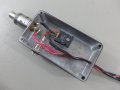
The Mosfet, is very difficult to work with in small enclosures like the 1590B. It took me 3 hours to get everything in the enclosure, and the mosfet was installed upside down, and the legs or leads on the mosfet were bent. It works. No problems.
I want to try my hands at making a PCB using the Laser printer method. I've watched several videos on YouTube, and understand the process.
I want my PCB traces to handle currents as high as 60A. I understand that there's PCB trace calculators, but I had a hard time understanding them.
I'm also aware that my traces doesn't necessarily have to be wide, but think. But I'm not aware of how thick.
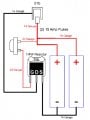
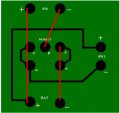
So.. I wanted to do something like this. The 30A fuse is inline with the cable going back to the psu.
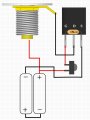
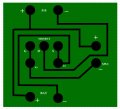
Connects to the 430 Watt EVGA ATX PSU via XT60 & stranded 14 awg.
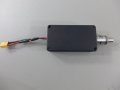
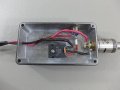
Better Resolution
IMGUr Link : http://imgur.com/a/dEbUg
I've build 4 Box Mods, the last one (MK 4) being built with a 430 Watt EVGA ATX PSU.
The Mosfet, is very difficult to work with in small enclosures like the 1590B. It took me 3 hours to get everything in the enclosure, and the mosfet was installed upside down, and the legs or leads on the mosfet were bent. It works. No problems.
I want to try my hands at making a PCB using the Laser printer method. I've watched several videos on YouTube, and understand the process.
I want my PCB traces to handle currents as high as 60A. I understand that there's PCB trace calculators, but I had a hard time understanding them.
I'm also aware that my traces doesn't necessarily have to be wide, but think. But I'm not aware of how thick.
So.. I wanted to do something like this. The 30A fuse is inline with the cable going back to the psu.
Connects to the 430 Watt EVGA ATX PSU via XT60 & stranded 14 awg.
Better Resolution
IMGUr Link : http://imgur.com/a/dEbUg