Help with using monostable one-shot multivibrator for limited time

Thread Starter

DvirIL

Joined Nov 2, 2020
29
Not directly. I'm offering an option that might work better.
It's not just 4 pulses, that output waveform is only a representation of what it would look like.
The truth is that this is the goal in the end to produce PWM in this way, but I didn't want to exaggerate the question and here you answered my question without me asking,
but how really is it possible to produce more than 4 pulses? For example, it will take half a second and they will be for example 6-10 pulses ?
 

sghioto

Joined Dec 31, 2017
8,634
The current should be about 0.6amper with 20V, the purpose of 555 is to control external relay that could pass the voltage and current without problem, which OP-AMP can drive so much current?
The op amp is only represented as the driver circuit just as the 555 circuit.
So you need the 20 volts to decease to zero volts in 1/2 second? Is that 20 volts what controls the brake?
Any number of transistors can easily handle 20 volts at .6 amps
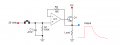
What comes to mind is an op amp voltage regulator where the output
voltage is controlled by the charge on a capacitor. Using an op amp like the LM7301 and an output transistor.
1692130611243.png
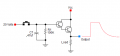
For that matter a simple darlington configuration.
1692134324044.png
 
Last edited:

Thread Starter

DvirIL

Joined Nov 2, 2020
29
This is a variation of my previous design using a LMC555.
Instead of a series of constant duty cycle pulses this mod produces a PWM signal where the duty cycle decreases as C3 discharges through R3. Thus the average voltage declines possibly making a "more soft and user friendly" brake.
View attachment 300530
hi,
it doesn't work,
the functionality doesn't work as the previous circuit.
1692521872386.png
could you advise any solution please?
 

Thread Starter

DvirIL

Joined Nov 2, 2020
29
The op amp is only represented as the driver circuit just as the 555 circuit.
So you need the 20 volts to decease to zero volts in 1/2 second? Is that 20 volts what controls the brake?
Any number of transistors can easily handle 20 volts at .6 amps
What comes to mind is an op amp voltage regulator where the output
voltage is controlled by the charge on a capacitor. Using an op amp like the LM7301 and an output transistor.
View attachment 300554
For that matter a simple darlington configuration.
View attachment 300558
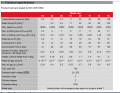
This seems like a good solution, but I looked at the manufacturer's doc and there is no mention of tension being "smoothed" in this way and how the brakes behave:
1692522529065.png
1692522543937.png
1692522657300.png
You have to remember that the load here is inductive..
 

sghioto

Joined Dec 31, 2017
8,634
This seems like a good solution, but I looked at the manufacturer's doc and there is no mention of tension being "smoothed" in this way and how the brakes behave
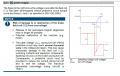
Does it mention anything about using PWM signal? Using a PWM signal doesn't seem like a good idea in my opinion because every pulse is turning the brakes back on and off. Using a continuous declining voltage I believe is inline with this statement in the data sheet.
1692550840054.png
A slow decrease in the voltage does that.
 

Thread Starter

DvirIL

Joined Nov 2, 2020
29
Does it mention anything about using PWM signal? Using a PWM signal doesn't seem like a good idea in my opinion because every pulse is turning the brakes back on and off. Using a continuous declining voltage I believe is inline with this statement in the data sheet.
View attachment 300904
A slow decrease in the voltage does that.
so how can I turn it off slowly? you have any idea?
 

sghioto

Joined Dec 31, 2017
8,634
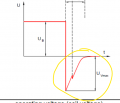
That's the inductive kickback when the brake voltage instantly goes to zero, which is what you trying to prevent.
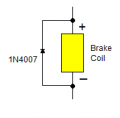
Typically a diode is installed across the brake coil in reverse to suppress that negative spike.
I'm saying by reducing the voltage to the brake gradually (1/2 second) should help eliminate that spike and might work better in your application to make it as you said "more soft and user friendly"
1692627469359.png
 
Last edited:

Thread Starter

DvirIL

Joined Nov 2, 2020
29
That's the inductive kickback when the brake voltage instantly goes to zero, which is what you trying to prevent.
Typically a diode is installed across the brake coil in reverse to suppress that negative spike.
I'm saying by reducing the voltage to the brake gradually (1/2 second) should help eliminate that spike and might work better in your application to make it as you said "more soft and user friendly"
View attachment 300950
so why not use in diode instead of op-amp capacitor and resistor?
today there is a diode and it doesn't help.
 

sghioto

Joined Dec 31, 2017
8,634
You could have mentioned the diode before. What makes this difficult is the lack of information of exactly how the brake is wired in the circuit. Can you post a schematic of how it is connected presently and how the PWM from the output of the 555 would control said brake?
 
Top