Facebook
 Google
 GitHub
 Linkedin

I've got a Tek 2213 reading a signal from an acoustic guitar. As I read it, the vertical scale is 0.1 Volts/div. When I strike the note it's roughly 2 divisions and then it decays away for about 1 division total for a few seconds. So to me, that's max +/- 100 mV, with +/- 50 mV for a few seconds, right?
When I use my Fluke 87 on AC mode, I don't think it catches the strike because it generally reads about 60-70 mV on the strike, and then hangs out in the 10-30 mV range. I wonder if it's just reading the + portion and not the whole range. It definitely seems to ready 1/2 of the Tek.
What am I missing?
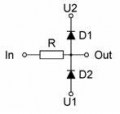
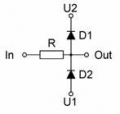
Ultimately I'm trying to understand maximum voltages on a variety of guitar pickups. The input of an esp32 microcontroller is 0-3.1v with a maximum of 3.3v. The tuner circuit I'm designing will have some amount of fixed gain. I think I'll need to use a zener diode to clip the signal to protect the micro from overvoltage.
When I use my Fluke 87 on AC mode, I don't think it catches the strike because it generally reads about 60-70 mV on the strike, and then hangs out in the 10-30 mV range. I wonder if it's just reading the + portion and not the whole range. It definitely seems to ready 1/2 of the Tek.
What am I missing?
Ultimately I'm trying to understand maximum voltages on a variety of guitar pickups. The input of an esp32 microcontroller is 0-3.1v with a maximum of 3.3v. The tuner circuit I'm designing will have some amount of fixed gain. I think I'll need to use a zener diode to clip the signal to protect the micro from overvoltage.