Help understanding this sample schematic for an electrochemical cell sensor

Thread Starter

chogi

Joined Jan 4, 2025
7
1736022902205.pngSample schematics
datasheet
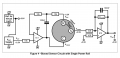
Im trying to understand this sample schematic for a type of sensor i need to incorporate for a project. I understand the active low pass filter but not the ref for virtual earth or v set supply. Are these just voltage dividers between 5V rail and ground to achieve the desired voltages? I looked a bit online and on this forum and found nothing.

Also im brand new to pcb design. Am i going to need an additional power plane layer for this 2.5V virtual ground? Can i split the power plane into 0 and 2.5 V sections if i use the back of the pcb as a power plane? anything else to look out for when designing a schematic like this/ with this kind of sensor? Thanks in advance.
 

ericgibbs

Joined Jan 29, 2010
21,419
Hi chogi,
Welcome to AAC.
The Virtual Earth source must be a low impedance source for the +2.5V
As you can see, the +2.5V is used in a number of circuit nodes.
One method is to use a OPA to create the +2.5V, do you know how to do that?

The Vset supply set could be just a trimmer resistor as it is driving a high impedance input.

E
 

Thread Starter

chogi

Joined Jan 4, 2025
7
Hi chogi,
Welcome to AAC.
The Virtual Earth source must be a low impedance source for the +2.5V
As you can see, the +2.5V is used in a number of circuit nodes.
One method is to use a OPA to create the +2.5V, do you know how to do that?

The Vset supply set could be just a trimmer resistor as it is driving a high impedance input.

E
yes if opa means op amp. I've taken one simple electronics course but this project has lots of electronics stuff. Im worried about this schematic not working however as it is for a "generic" electrochemical sensor. The bias here is 300 mV. Do you know how bias is calculated? in the sheet for the oxygen sensor im using the bias is listed as -300, does that mean the refereance voltage shoukd be 600 mv higher than this schematic? or is this schematic showing a negative bias but listing as positive because the arrow is "backwards"? I cant find any documentation from SGX about this or anything online. Would be amazing if you could help.

Essentially, im trying to adapt this schematic to work with my sensor an im not sure what i need to change. Also im not even sure if this complex of a schematic will fit on the PCB i want to manufacture. I'm working with very limited space.
 

ericgibbs

Joined Jan 29, 2010
21,419
hi ch,
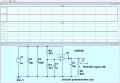
This circuit is an example of the op-amp version for the Virtual Earth.
Also, the Vset.
To get the 300mV Bias, You have to adjust the Vset, while measuring between R and S terminals.

The Rgain value is chosen to suit the required Vout , relative to the 2.5VE voltage, I would suggest a resistor trim pot so that you can calibrate the output.

E
EG57_ 2523.png
 

Thread Starter

chogi

Joined Jan 4, 2025
7
hi ch,
This circuit is an example of the op-amp version for the Virtual Earth.
Also, the Vset.
To get the 300mV Bias, You have to adjust the Vset, while measuring between R and S terminals.

The Rgain value is chosen to suit the required Vout , relative to the 2.5VE voltage, I would suggest a resistor trim pot so that you can calibrate the output.

E
View attachment 339632
Thank you very much, I am worried i won't be able to fit this on my PCB. I am going to speak with my project supervisor tomorrow and will try again if she thinks it will fit. It will take too much time to try just for it to not fit anyway if i try to make this with how slow i am in Kicad lol.
 

MisterBill2

Joined Jan 23, 2018
27,311
"Virtual Earth" is a very confusing term to use to describe a Mid-supply reference voltage.
What it means is that it is a stable bias point at half the supply voltage used as a signal common bus. That is the common scheme to avoid needing a negative power supply for an analog circuit. It can be as simple as a two resistor voltage divider.
A common trick I use to make it more efficient is to use a higher resistance divider to feed the non-inverting input of a single supply opamp connected as a unity gain follower. That is cheap and easy in a multi-amplifier IC like the LM324. It provides that half-supply voltage from a low impedance source.
Which is what your circuit uses.
 
Last edited:

Sensacell

Joined Jun 19, 2012
3,778
"Virtual Earth" is a very confusing term to use to describe a Mid-supply reference voltage.
What it means is that it is a stable bias point at half the supply voltage used as a signal common bus. That is the common scheme to avoid needing a negative power supply for an analog circuit. It can be as simple as a two resistor voltage divider.
A common trick I use to make it more efficient is to use a higher resistance divider to feed the non-inverting input of a single supply opamp connected as a unity gain follower. That is cheap and easy in a multi-amplifier IC like the LM324. It provides that half-supply voltage from a low impedance source.
Which is what your circuit uses.
Be careful of capacitive loads with this trick, some opamps love to oscillate when forced to drive large capacitance.
There are chips just for this purpose - TLE2426 for example.
 

MisterBill2

Joined Jan 23, 2018
27,311
Certainly putting a capacitor at the output of an op-amp can cause problems, mostly unintended oscillations. So putting the capacitor at the input to keep it quiet is a good choice. It is also a much higher impedance part of the circuit, so much less capacitance is required. AND caps on the supply to the device are totally appropriate.
So that "ref for virtual earth" part in post #1 can just be an opamp with the output als fed directly back to the inverting input, while the non-inverting input is fed half the supply voltage from the middle of a two equal resistors series string. No "earth" or ground involved. It simply sets a stable voltage for other circuits.
 
Top