Help understanding test results!

Thread Starter

semiconset

Joined Jul 23, 2018
4
Hi,
I am brobing something on a test bench.
I am applying a voltage sweep as shown below and measuring current to calculate resistance.
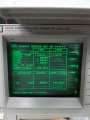
1532385306943567979338.jpg

Now, I get the following results or graph.....
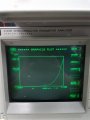
1532385405987638039188.jpg

Until my voltage reaches around 2.5 V the resistance is roughly 1 to 2mega ohms. Soon after it drops 3 orders to 18 E+3 at 5volts.

What could be happening?

PS: My structure is supposed to be an isolation, as in I am expecting very high resistance always- regardless of what voltage I apply.
 

WBahn

Joined Mar 31, 2012
32,730
What is the maximum voltage for these capacitors in this process?

If that isn't specified (and it should be unless this is a school fab or something like that), then how thick are the films and what is the breakdown field strength for dialectric?
 

Thread Starter

semiconset

Joined Jul 23, 2018
4
What is the maximum voltage for these capacitors in this process?

If that isn't specified (and it should be unless this is a school fab or something like that), then how thick are the films and what is the breakdown field strength for dialectric?
Hi,
Thanks for the reply.
We are qualifying this strucure for the first time so we don't have a baseline target other than hand calculated value which should be between 50 to 100 pF.
Also the dielectric is 0.2um thick.
 

Thread Starter

semiconset

Joined Jul 23, 2018
4
Looks like a diode. The contacts chosen don;t look like they are ohmic.

Is this a 4 terminal or 2 terminal measurement?
Its a two probe measurement. What does it mean if the iv looks like diode? My structure is metal contacting silicon - SiO2 - silicon - GND metal. I started probing like this because I suapect the metal contact is badly misaligned wrt isolation. Maybe its partially outside isolation region, bhb does that explain this kind of characteristics?
 
I had a course in solid state physics and I did work in a solar cell lab. It doesn't mean I know much of what;s going on. I do remember that the choice of the best contact depended on the work function of the material. We primarily worked with Mo and transparent ITO or ZnO for metal contacts. Our usual substrate was 2 um Mo sputter coated 7059 glass. I could do the sputtering. Mo thermal evaporation was very tricky. I did some of that in the 80's.

I found this https://people.eecs.berkeley.edu/~hu/Chenming-Hu_ch5.pdf article about MOS capacitors which I don't understand,

The other question I have is what measure I-V when your building a capacitor. Why not C-V or at least capacitance? Variactor diodes do change their capacitance with applied voltage. https://en.wikipedia.org/wiki/Varicap

You show no negative voltage values. Is the polarity backwards? You might expect large changes in capacitance in reverse bias?
 
Top