Help to limit inrush current

Thread Starter

farzad latifeh

Joined Oct 3, 2017
99
Hi everybody,
I am new in electronics and I could not resolve the problem,
I made an automated watering system for my garden using this post:
https://www.instructables.com/id/WATERING-SYSTEM-INTRODUCTION/
I made changes to make it more applicable, I put a dc motor which is 12 V, 23 Ohm internal resistance, 0.545 Amps to pump the water and accordingly I used one power supply for both dc Motor and Arduino which is 12 V, 1 Amps output.
The problem is, when the dc motor has turned on by relay, the inrush current which is around 1.5 Amps or less ( I don't know how the power supply can give this current since it is 1 Amps output!!!!, I just saw the inrush current by my digital Multimeter!) make the entire system including Arduino to be reset, I red a lot about inrush current limiters like FET and NTC, etc. but non of them are applicable for my purpose since I need the output current and voltage and I cannot lose it by putting resistors or something else and also I don't have enough budget to buy something else like a Thermistor, is it possible to change the power supply with something like 2 Amps to support the inrush current? or is it possible to use a capacitor or inductor to reduce it??
I thought the capacitors can prevent it but it seems they also have inrush current indeed (560 uF 25V), please help me I cannot spend so much money to test them all. TNX. :D
 

djsfantasi

Joined Apr 11, 2010
9,237
Worry less about inrush current and fix your power supply. It is rarely, if ever, a good idea to use the same power supply for your motor and the Arduino.

Get a separate DC supply for the motor and connect it’s gtound and the Arduino’s ground together.

Also, do you have a diode across the motors leads, to protect against back EMF?
 

Thread Starter

farzad latifeh

Joined Oct 3, 2017
99
Worry less about inrush current and fix your power supply. It is rarely, if ever, a good idea to use the same power supply for your motor and the Arduino.

Get a separate DC supply for the motor and connect it’s gtound and the Arduino’s ground together.

Also, do you have a diode across the motors leads, to protect against back EMF?
my power supply is a cheap one and I know that's not very good but there is no other choice for me unfortunately,
I don't have any diode on my dc motor's lead, how about n4148 diode?
 

Thread Starter

farzad latifeh

Joined Oct 3, 2017
99
Take a look at the datasheet and check tgatnthe parameters are within your designs limits.

http://html.alldatasheet.com/html-pdf/26129/VISHAY/1N4148/365/2/1N4148.html

Look at the reverse voltage for example. 20V is allowed at 5ma. Will your motor operate in this range.

Also, back EMF will result in voltages significantly higher than the supply voltage.

See if you can find another diode that fits better
OK, Thanks,
any other idea how to control inrush current like this https://forum.allaboutcircuits.com/threads/inrush-current-limiter.64585/, just a curiosity...
 

AlbertHall

Joined Jun 4, 2014
12,619
Hi everybody,
I am new in electronics and I could not resolve the problem,
I made an automated watering system for my garden using this post:
https://www.instructables.com/id/WATERING-SYSTEM-INTRODUCTION/
I made changes to make it more applicable, I put a dc motor which is 12 V, 23 Ohm internal resistance, 0.545 Amps to pump the water and accordingly I used one power supply for both dc Motor and Arduino which is 12 V, 1 Amps output.
The problem is, when the dc motor has turned on by relay, the inrush current which is around 1.5 Amps or less ( I don't know how the power supply can give this current since it is 1 Amps output!!!!, I just saw the inrush current by my digital Multimeter!) make the entire system including Arduino to be reset, I red a lot about inrush current limiters like FET and NTC, etc. but non of them are applicable for my purpose since I need the output current and voltage and I cannot lose it by putting resistors or something else and also I don't have enough budget to buy something else like a Thermistor, is it possible to change the power supply with something like 2 Amps to support the inrush current? or is it possible to use a capacitor or inductor to reduce it??
I thought the capacitors can prevent it but it seems they also have inrush current indeed (560 uF 25V), please help me I cannot spend so much money to test them all. TNX. :D
Try connecting a 100nF ceramic capacitor as close as possible to the motor terminals. This will reduce the electrical noise produced by the arcing of the brushes in the motor.
 

AlbertHall

Joined Jun 4, 2014
12,619
The capacitor across the motor won't change inrush current but it may be the brush noise getting onto the supply which is resetting the arduino.
 

Thread Starter

farzad latifeh

Joined Oct 3, 2017
99
The capacitor across the motor won't change inrush current but it may be the brush noise getting onto the supply which is resetting the arduino.
good advice thanks, but the LED on power supply goes off for half a second and after checking the current by Multimeter I found that it is taking around the 1.5 amps current immediately after starting, so, I guess it is all about the inrush current, but I will check it, thanks anyway;)
 

Thread Starter

farzad latifeh

Joined Oct 3, 2017
99
The capacitor across the motor won't change inrush current but it may be the brush noise getting onto the supply which is resetting the arduino.
and there is something, what if I put the capacitors at the output of the power supply? will it help to reduce the effect of motor inrush current anyway?
 

AlbertHall

Joined Jun 4, 2014
12,619
One way of reducing the initial current drawn by the motor would be to have a two-stage switching scheme. Initially switch the motor on with a resistor in series. After a delay while the motor gets running, a second switch shorts out the resistor so now full power is supplied to the motor. It would need a second output from the arduino and some added software to control the two outputs.
 

joeyd999

Joined Jun 6, 2011
6,204
The problem is, when the dc motor has turned on by relay, the inrush current which is around 1.5 Amps...
A motor does not have "inrush current". It has stall (or locked rotor) current. This is the current a motor draws a 0 RPM, and develops the initial torque required to overcome its own static friction and that of the mechanical system it's connected to.

Limiting the current to the motor can prevent the motor from starting at all -- and this will be load dependent.

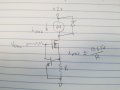
If you must go this route, I suggest a current limiting circuit something like this (that +2V is actually +12V):

20171003_133426.jpg

Your mileage will vary.
 
Last edited:

BobTPH

Joined Jun 5, 2013
11,463
If you still do not have the reversed diode, try that first. I would give better than even odds that it will solve your problem.

The power supply can give 1.5A for a short time because of the filter capacitor it already has in place. Adding more may help.

Bob
 

Thread Starter

farzad latifeh

Joined Oct 3, 2017
99
Thanks to all of you,
I will test them one by one
many thanks,
but there is something how about the inductors? can I actually use them to prevent it?
 

Thread Starter

farzad latifeh

Joined Oct 3, 2017
99
If you still do not have the reversed diode, try that first. I would give better than even odds that it will solve your problem.

The power supply can give 1.5A for a short time because of the filter capacitor it already has in place. Adding more may help.

Bob
I don't know how to choose the diode type
 
Top