Facebook
 Google
 GitHub
 Linkedin

Hi everyone,
I’m working on a project involving an e-bike battery system, and I need help solving a problem with the lock mechanism. Here’s the situation:
What I’ve Tried So Far:
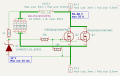
My initial idea was to create a PCB to split the current, redirecting 25% of the load current through an NMOS transistor and the remaining 75% through the lock. However, I realized this wouldn’t work because the NMOS transistor and the lock would be at the same voltage potential, preventing proper current splitting.
The Question:
Does anyone have suggestions or solutions to fix this issue? My main constraints are:
Thanks in advance for your help!
System diagram with the lock's locaton:
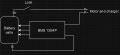
The first idea of the circuit with NMOS fets:
I’m working on a project involving an e-bike battery system, and I need help solving a problem with the lock mechanism. Here’s the situation:
- The lock serves two purposes: it turns the battery system on/off and physically secures the battery to the bike housing.
- The issue is that the lock is rated to handle a maximum current of 15A, but the motor in the system draws about 17A, which is causing damage to the lock.
- Unfortunately, replacing the lock is not an option, so I need a workaround to protect it while still allowing the system to function properly.
What I’ve Tried So Far:
My initial idea was to create a PCB to split the current, redirecting 25% of the load current through an NMOS transistor and the remaining 75% through the lock. However, I realized this wouldn’t work because the NMOS transistor and the lock would be at the same voltage potential, preventing proper current splitting.
The Question:
Does anyone have suggestions or solutions to fix this issue? My main constraints are:
- The lock must remain in the circuit and cannot be replaced.
- The solution needs to protect the lock from overcurrent damage while allowing the motor to operate normally.
Thanks in advance for your help!
System diagram with the lock's locaton:
The first idea of the circuit with NMOS fets: