Facebook
 Google
 GitHub
 Linkedin
I want to install a car door lock annunciator in our van. The purpose is to sound a horn when a signal to lock the doors occurs.
The reason is that the "walk away auto lock" feature does not always lock the doors. So sometimes when I return to the van, I find that the doors were not auto locked. An annunciator that sounds a horn when the signal to auto lock the doors occurs, would provide audio feedback while I'm walking away from the van. If I don't hear the horn, I can then lock the doors using the key FOB. If I hear the horn, I can just continue walking away with assurance that the doors were auto locked.
Here's my design so far:
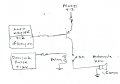
My first try was the lower circuit without the PNP transistor. When I close the driver's door and walk away from the van, after about a 7 second delay the auto lock sends +12 volt pulses to lock all of the doors. Tapping one door lock circuit, it activates a relay that closes a normally open switch. That applies +12 volts to the motorcycle horn. This all worked fine.
BUT, then I discovered that the van auto locks the doors the first time the van reaches 9 miles per hour. This sounds the horn while driving. It only happens the first time it reaches 9 mph and never happens again while driving but I don't want that 9 mph horn blast.
So I'm thinking about adding a PNP transistor as show in the upper circuit. I'll tap the fuse box and find a circuit that has zero volts when the engine is not running and +12 volts when the key is on (engine running). Zero volts on the transistor base when the key is off should turn the transistor on but no current will flow in the circuit until the door lock pulse occurs. IOW, while the car is parked with the engine off, the transistor will be on but no current will flow to the horn since there is no door lock pulse.
When the engine is running (key on), the +12 volts will remove the forward bias on the transistor turning it off so the door lock pulse cannot sound the horn while driving.
QUESTIONS:
1. It's easy to find a fuse that has +12 volts only when the key is on. BUT, how can I determine, when there is NO +12 volts, that the circuit is truly zero volts (or near zero), and not an open circuit. IOW, that the +12 volts was provided by relay contacts.
2. What value resistor should I use in the base circuit of the transistor to limit the base current to a very low level. I don't want to drain the car's battery while it is parked. Is there a better circuit that does not have a parasitic current draw when the car is parked?
3. Is there a simpler circuit that you can come up with? Like omit the relay and just use the one transistor?
Thanks for any help.
The reason is that the "walk away auto lock" feature does not always lock the doors. So sometimes when I return to the van, I find that the doors were not auto locked. An annunciator that sounds a horn when the signal to auto lock the doors occurs, would provide audio feedback while I'm walking away from the van. If I don't hear the horn, I can then lock the doors using the key FOB. If I hear the horn, I can just continue walking away with assurance that the doors were auto locked.
Here's my design so far:
My first try was the lower circuit without the PNP transistor. When I close the driver's door and walk away from the van, after about a 7 second delay the auto lock sends +12 volt pulses to lock all of the doors. Tapping one door lock circuit, it activates a relay that closes a normally open switch. That applies +12 volts to the motorcycle horn. This all worked fine.
BUT, then I discovered that the van auto locks the doors the first time the van reaches 9 miles per hour. This sounds the horn while driving. It only happens the first time it reaches 9 mph and never happens again while driving but I don't want that 9 mph horn blast.
So I'm thinking about adding a PNP transistor as show in the upper circuit. I'll tap the fuse box and find a circuit that has zero volts when the engine is not running and +12 volts when the key is on (engine running). Zero volts on the transistor base when the key is off should turn the transistor on but no current will flow in the circuit until the door lock pulse occurs. IOW, while the car is parked with the engine off, the transistor will be on but no current will flow to the horn since there is no door lock pulse.
When the engine is running (key on), the +12 volts will remove the forward bias on the transistor turning it off so the door lock pulse cannot sound the horn while driving.
QUESTIONS:
1. It's easy to find a fuse that has +12 volts only when the key is on. BUT, how can I determine, when there is NO +12 volts, that the circuit is truly zero volts (or near zero), and not an open circuit. IOW, that the +12 volts was provided by relay contacts.
2. What value resistor should I use in the base circuit of the transistor to limit the base current to a very low level. I don't want to drain the car's battery while it is parked. Is there a better circuit that does not have a parasitic current draw when the car is parked?
3. Is there a simpler circuit that you can come up with? Like omit the relay and just use the one transistor?
Thanks for any help.