Guitar Level To RCA Line Level Preamp

MrAl

Joined Jun 17, 2014
13,722
The usual, "insisted-upon", "well-everybody-knows-that",
overall Signal-Chain of your "standard" Electric-Guitar, is so convoluted, and just plain atrocious,
that it's almost un-explainable in rational terms.

Guitar-Players should bow at the feet of the exasperated Engineers that gingerly coddled their Massive-Egos,
and even strait-up lied to them,
just to be able to capture a recording that actually sounds good to everyone else.

What a ridiculous drama.

Modern Modeling-Software, and built-in Wireless-Connections, have all but eliminated
all of the absurd, completely "un-adjustable", and cantankerous- ~75-year-old Hardware,
that Guitarists absolutely worship, and just won't let go-away.

It's like trying to answer the question ........ "Do I look Fat in this Dress ?"........ You just can't win.
.
.
.

Or the question, "Does my ass look big in this dress?". In some cases you better say 'no' and in other cases you better say 'YES' (ha ha).

These days you can download files that simulate older guitar cabinets. That allows a wide range of sounds.
I prefer a sort of clean 'bell' sound from my guitars as I mostly play jazz. Back when I played rock the distortion was the 'in' sound of the day. These days there are a huge number of special effects you can add though.

There was a study done a long time ago with vintage violins including some worth $100k or more. Many people preferred the sound of the newer designs over the vintage ones which were supposed to be the 'best'. That shows how subjective good or bad instrument sounds are. There's no science that says "this is the best sound" that I know of.
It's still funny that a lot of guitarists have a preferred sound. I can't explain why though except maybe it is based on past sound listening experiences, and of course the kind of music being played. When you are trying to match a sound from a well-known song, you want it to be as close as possible. A great example I think is when we did a Peter Frampton piece where I had to use a special box and an actual hose that goes into the mouth so you can modulate the tone using the shape of your mouth. That was a very special effect.
 

Ian0

Joined Aug 7, 2020
13,158
I had to use a special box and an actual hose that goes into the mouth so you can modulate the tone using the shape of your mouth. That was a very special effect.
I saw that on re-runs of "Top of the Pops" on the BBC, with a hose from the effects box gaffa-taped to the microphone stand .
Then there's the vocoder, which takes the envelope of a vocal signal from a microphone and uses it to amplitude-modulate the instrument signal.
 

MrAl

Joined Jun 17, 2014
13,722
I saw that on re-runs of "Top of the Pops" on the BBC, with a hose from the effects box gaffa-taped to the microphone stand .
Then there's the vocoder, which takes the envelope of a vocal signal from a microphone and uses it to amplitude-modulate the instrument signal.
Yeah the song we did was "Show me the way", a very old song now.
Also, "Do you feel like we do" or something.
I think they called it a "talk box".
 

LowQCab

Joined Nov 6, 2012
5,101
Guitar, ( or Bass-Players ), generally don't get that the "Tone" that they are currently experiencing
is HUGELY affected by the environment, ( the "room" ),
that contains the absolutely terrible, and "beamy", Speakers/Amps that they are playing though.

Trying to replicate the same "Tone" in 2 different environments
using a Tube-Amp, and a very questionable, "Low-Fi" set of Speakers, in a poorly designed Cabinet,
is, in fact, an impossibility.

"We got the "look", we're gonna be huge man" !!!!!

To be fair, I've experienced exactly 2 Guitar-Players that took an active interest in
coming to the back of the room to evaluate the overall-Mix in the PA.

I always do an excellent job, but they will still complain, every single time.
.
.
.
 

LadySpark

Joined Feb 7, 2024
194
SPICE says that current flows in the input resistor and you say it doesn't. Who is right?
me because the voltage source ends on the other side of the input resistor. Which turns the guitar into a voltage source with the source resistance of the input resistor.

Spice is a garbage in garbage out and like all of them, kind of work enough to build a circuit that doesn't smoke when prototyping.
 

Audioguru again

Joined Oct 21, 2019
6,826
Greenback speakers? I made my own.
I bought speaker crossover coils from a local manufacturer of a very expensive line of speakers.
On one coil the inductance was wrong so I took my real time analyzer there and tested one of their newest speakers. Its frequency response had a notch at the crossover frequency because the inductance of a coil was wrong. It also showed that they do poor quality control since they never tested the sound from that speaker.
 

Ian0

Joined Aug 7, 2020
13,158
me because the voltage source ends on the other side of the input resistor. Which turns the guitar into a voltage source with the source resistance of the input resistor.
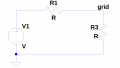
Just to clarify, what do you mean by "the other side of the input resistor"?
V1 is the guitar which is a voltage source.
Grid is the connection to the valve grid.
Are you thinking of R1 as the input resistor?

Screenshot from 2024-05-25 16-40-21.png
 
Yeah the song we did was "Show me the way", a very old song now.
Also, "Do you feel like we do" or something.
I think they called it a "talk box".
I have a talk box, because I was after Peter Frampton tones. A very nice bloke. He signed my guitar.
Sorry, not so relevant to this entire thread. But I am learning some about what affects tone.
 
Guitar, ( or Bass-Players ), generally don't get that the "Tone" that they are currently experiencing
is HUGELY affected by the environment, ( the "room" ),
that contains the absolutely terrible, and "beamy", Speakers/Amps that they are playing though.


.
.
.
True. A cabinet can sound wonderful in the studio, but not so hot outdoors.

Proper post EQ tweaking can go a long way towards matching a similar tone. Whether it be a different cabinet, speakers, instrument, microphones...
 

MrAl

Joined Jun 17, 2014
13,722
Just to clarify, what do you mean by "the other side of the input resistor"?
V1 is the guitar which is a voltage source.
Grid is the connection to the valve grid.
Are you thinking of R1 as the input resistor?

View attachment 323149
Hi,

I think the intention there is that V1 cannot be the guitar because the guitar coil(s) has resistance of its own, and that would mean the entire 'voltage source' would be V1 plus R1 in your diagram. It's an ideal voltage source in series with a fixed resistance (like R1). That means the voltage source really "ends on the other side of the input resistor", but calling it an input resistor then is not right either its the source impedance. The input resistance might be R3 in that diagram. That sets up a voltage divider between the guitar pickup (and any other resistances involved in the tone control or volume control) and the resistance inside the amplifier (R3).

Some of the pickups I have looked at have many turns of #40 AWG wire. The resistance of that wire would be considered to be part of the "voltage source" when modeled in spice. It becomes a nonideal voltage source.
 

Ian0

Joined Aug 7, 2020
13,158
Hi,

I think the intention there is that V1 cannot be the guitar because the guitar coil(s) has resistance of its own, and that would mean the entire 'voltage source' would be V1 plus R1 in your diagram. It's an ideal voltage source in series with a fixed resistance (like R1). That means the voltage source really "ends on the other side of the input resistor", but calling it an input resistor then is not right either its the source impedance. The input resistance might be R3 in that diagram. That sets up a voltage divider between the guitar pickup (and any other resistances involved in the tone control or volume control) and the resistance inside the amplifier (R3).

Some of the pickups I have looked at have many turns of #40 AWG wire. The resistance of that wire would be considered to be part of the "voltage source" when modeled in spice. It becomes a nonideal voltage source.
I'm still trying to understand what @LadySpark is saying in posts #29 to #35 where it is stated repeatedly that the 1MΩ resistance between valve grid and ground has no effect on the input impedance of the amplifier.
By the way, my model of the pickup is a Voltage source of about 6mV in series with 6kΩ+6H
 

MrAl

Joined Jun 17, 2014
13,722
I'm still trying to understand what @LadySpark is saying in posts #29 to #35 where it is stated repeatedly that the 1MΩ resistance between valve grid and ground has no effect on the input impedance of the amplifier.
By the way, my model of the pickup is a Voltage source of about 6mV in series with 6kΩ+6H
Hi,

Ok I do not understand that either. A 1M resistor from input to ground immediately alters the input impedance at least a little. That's unless the input impedance is already low like 10k, and maybe we can stretch that to 100k. That would make the 1M resistor have less effect. 1M in parallel with 10k is about 9.9k, not much difference, and 1M in parallel with 100k is about 9.1k, still not a world of difference. 1M in parallel with 1M though is of course 500k which is a big difference.
 

Ian0

Joined Aug 7, 2020
13,158
Hi,

Ok I do not understand that either. A 1M resistor from input to ground immediately alters the input impedance at least a little. That's unless the input impedance is already low like 10k, and maybe we can stretch that to 100k. That would make the 1M resistor have less effect. 1M in parallel with 10k is about 9.9k, not much difference, and 1M in parallel with 100k is about 9.1k, still not a world of difference. 1M in parallel with 1M though is of course 500k which is a big difference.
This is the circuit in question:

1715706301485.png


To recap, only one input is used at a time.
The switch on Input 2 puts the 47k in parallel with the 1M when there is no plug in the socket. The switch on input 1 is unused.
So Input 1 sees 47k in series with 1M = 1.047M (the resistor in input 2 is floating)
Input 2 sees 47k in series with (1M and 47k in parallel) = 91k
I presume that you concur.
 

MrAl

Joined Jun 17, 2014
13,722
This is the circuit in question:

1715706301485.png


To recap, only one input is used at a time.
The switch on Input 2 puts the 47k in parallel with the 1M when there is no plug in the socket. The switch on input 1 is unused.
So Input 1 sees 47k in series with 1M = 1.047M (the resistor in input 2 is floating)
Input 2 sees 47k in series with (1M and 47k in parallel) = 91k
I presume that you concur.
Hi,

You presume correctly of course :)

This looks like a dual input impedance amplifier. I don't think I have ever used one but I read about them. Probably to accommodate either input source.

The only other thing I can think of offhand is that if we model the pickup as a (simpler) voltage source in series with a resistance, then the voltage division occurs before the input due to that extra series resistance. You've accounted for that already though.

This is probably the first time in years that I have looked at even a part of a tube amplifier. Some guitarists swear by them, but I've used transistor stuff myself and got really good sound, and it is very hard to beat the effects on the market these days as there are a large number of different ones to choose from. "Distortion" is just one of many.
 

Ian0

Joined Aug 7, 2020
13,158
Hi,

You presume correctly of course :)

This looks like a dual input impedance amplifier. I don't think I have ever used one but I read about them. Probably to accommodate either input source.

The only other thing I can think of offhand is that if we model the pickup as a (simpler) voltage source in series with a resistance, then the voltage division occurs before the input due to that extra series resistance. You've accounted for that already though.

This is probably the first time in years that I have looked at even a part of a tube amplifier. Some guitarists swear by them, but I've used transistor stuff myself and got really good sound, and it is very hard to beat the effects on the market these days as there are a large number of different ones to choose from. "Distortion" is just one of many.
It seems most guitarists only ever use the high-gain input. But from my calculations (and @LowQCab 's) the guitar would be much better suited to a 100k input than 1M, preventing a big upper-mid peak that varies with the cable length.

I learned transistors first, then learned valves much later in my career - to me it is a high voltage JFET in a glass bottle!
 

LowQCab

Joined Nov 6, 2012
5,101
Of course, all of this stuff is simple "point-to-point" wiring and
really easy to alter into any configuration that gets that "Magical-Tone".
.
.
.
 

GetDeviceInfo

Joined Jun 7, 2009
2,273
I followed this thread with interest, thinking I needed a preamp as well. Discovered my local Long Mcquade has a sale on Boss RC-1 loopers, so I purchased on last night online, ready for pickup this morning. Now I need to replace the amp my grandson seems to have inherited.
 

MrAl

Joined Jun 17, 2014
13,722
I followed this thread with interest, thinking I needed a preamp as well. Discovered my local Long Mcquade has a sale on Boss RC-1 loopers, so I purchased on last night online, ready for pickup this morning. Now I need to replace the amp my grandson seems to have inherited.
It's funny this came up at this point in time because I was checking a guitar for its tuning using one of those new clamp on tuners and wanted to compare the readings with the scope.
The problem I had was the scope has trouble triggering on the raw output of the guitar. That means it will read 110Hz, then 109.9Hz, then 110.1Hz, etc., something like that. With this it really has to be more accurate because I think that 0.1Hz 'extra' is around 1.6 cents.
It my work better with a filter.
 

eetech00

Joined Jun 8, 2013
4,709
It's funny this came up at this point in time because I was checking a guitar for its tuning using one of those new clamp on tuners and wanted to compare the readings with the scope.
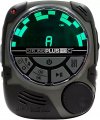
A bit off topic, but, yeah...I don't like those clamp on tuners. I use one of these:

1716823071677.jpeg

It's a bit bulky, but I have a tuner output on my bass head, so I just set on top, connect, tune and play.
 
Top