Fried scope?

MisterBill2

Joined Jan 23, 2018
27,519
Now it is clear to me that I don't know what is being called "the breadboard". And "The Onboard Test signal" does not provide much information.
But now I have some advice for everybody, which is that because this tool is so subject to destruction, all should avoid purchasing or even borrowing it.
AND probably it would be wise to avoid all products offered by that manufacturer.
 

Thread Starter

k1ng 1337

Joined Sep 11, 2020
1,038
Now it is clear to me that I don't know what is being called "the breadboard". And "The Onboard Test signal" does not provide much information.
But now I have some advice for everybody, which is that because this tool is so subject to destruction, all should avoid purchasing or even borrowing it.
AND probably it would be wise to avoid all products offered by that manufacturer.
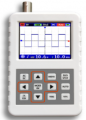
By breadboard I meant that power is connected to breadboard but nothing was on the breadboard, I should have said I connected the negative lead of the scope to the negative terminal of a 5v DC USB charger. On top of the scope unit there is a small metal terminal used for testing the device; when the negative lead is left floating and the positive is connected to this terminal, a 10khz signal can be observed. As with dl123's experience i imagine my unit was just in the mood for early retirement. I knew when I bought the unit I was buying china junk so it's no surprise there..
 

MisterBill2

Joined Jan 23, 2018
27,519
This is the voltage (in the absolute maximum ratings section) beyond which damage will occur, not a voltage at which the chip will operate correctly.
These are the voltages beyond which destruction is assured, they include voltages that will not provide operation, They are warning labels. The voltages for normal operation are listed in the "recommended operating" section.
 

dl324

Joined Mar 30, 2015
18,327
As with dl123's experience i imagine my unit was just in the mood for early retirement.
Mine is back in action. The problem was a low battery. I recreated your test and there were no problems. In my case, I had a circuit on the breadboard that was running while I connected the test signal.
 

Thread Starter

k1ng 1337

Joined Sep 11, 2020
1,038
These are the voltages beyond which destruction is assured, they include voltages that will not provide operation, They are warning labels. The voltages for normal operation are listed in the "recommended operating" section.
Then for any device referenced from positive to zero voltages ground (ne555 etc.) which doesn't list a negative supply voltage on its datasheet is simply not rated for reverse polarity. Since they are not explicit that would mean the value for damage is likely unknown.

I come across parameters often in datasheets where I wonder if it's blank because it's untested or because they don't know.
 

dl324

Joined Mar 30, 2015
18,327
Then for any device referenced from positive to zero voltages ground (ne555 etc.) which doesn't list a negative supply voltage on its datasheet is simply not rated for reverse polarity. Since they are not explicit that would mean the value for damage is likely unknown.
What does this have to do with your original problem?

A 555 timer is specified to operate with a supply voltage of 4.5-16V. That doesn't prevent you from using a -5V supply. You just need to connect VCC to the higher potential (ground in this case), and connect ground to the lower voltage (-5V in this case). Obviously, the output would swing between ground (HIGH) and -5V (LOW).
 

MisterBill2

Joined Jan 23, 2018
27,519
As I examined the circuit in post #16 again, it appears that there is no protection, if the input is to what is tagged as "J1", except for a 470 ohm resistor in series. That is inadequate. Or is this a partial circuit, with the rest hidden because "we do not need to know" about the rest? I see that happening on occasions..
And I also wonder about how the topic drifted to data sheet specifications.
 

Thread Starter

k1ng 1337

Joined Sep 11, 2020
1,038
What does this have to do with your original problem?

A 555 timer is specified to operate with a supply voltage of 4.5-16V. That doesn't prevent you from using a -5V supply. You just need to connect VCC to the higher potential (ground in this case), and connect ground to the lower voltage (-5V in this case). Obviously, the output would swing between ground (HIGH) and -5V (LOW).
One question led to the next, sorry for getting off topic. I suppose this thread has met it's end, thanks everyone.
 

dl324

Joined Mar 30, 2015
18,327
One question led to the next, sorry for getting off topic. I suppose this thread has met it's end, thanks everyone.
It's your thread, so you can take it in any direction you want. But if you're interested in getting your DSO150 working again, it would be best to keep on topic.

Have you started troubleshooting? The assembly manual posted earlier gives some troubleshooting directions.
 

MisterBill2

Joined Jan 23, 2018
27,519
In the direction of making the thing work again, I see a reset pin, #7, with the tag nRST, and connected to TP#1. What do any of the instructions or data sheet say about that pin's function?
Really, though, the first step should be to remove the battery until next time when you want to work with it. Then re-install the battery and see if possibly the time off has allowed a restart. That would be great if it did. If it does not, possibly a momentary grounding of the RST, TP#1, or maybe apply the 3.3 volts. The manual should say something about that. Or possibly some users forum, not right here.
 

Thread Starter

k1ng 1337

Joined Sep 11, 2020
1,038
Turns out it was a failed solder joint at the barrel jack and the device is now back on action! I was reluctant to open it until I ruled out software issues as I ruined another device not long ago just trying to get the darn thing open :(

It must have been coincidence that it went dead as I did what I did although I am curious: Is it possible for a high current to melt a solder joint? If the joint were experiencing a force already trying to pull it apart, as soon as the solder melts it would separate.

Thanks again everyone and big thanks to dl324 for potentially sacrificing his unit in the name of science!
 

Thread Starter

k1ng 1337

Joined Sep 11, 2020
1,038
It's possible, but not likely with your scope. The input impedance is too high.
I couldn't see anything that could cause what you observed, so I wasn't really taking much of a risk.
Still it was nice that you tried it instead of relying on your infinite wisdom ;)
 

MisterBill2

Joined Jan 23, 2018
27,519
Very interesting and certainly a relief that it was repairable. It is unfortunate that a number of producers go so cheap as to leave the power connector only supported by a couple of surface mount solder connections. That includes Hewlet Packard on some of their previous laptop computers! That is simply poor design, no excuse accepted! It seems that quality and durability will usually come second to saving a bit of cost.
 

BobTPH

Joined Jun 5, 2013
11,515
Looks like I was wrong. I thought what you did could not have caused the problem. Now I have changed my mind. You probably jostled it while connecting the probe and broke the connection.

Bob
 

MisterBill2

Joined Jan 23, 2018
27,519
Looks like I was wrong. I thought what you did could not have caused the problem. Now I have changed my mind. You probably jostled it while connecting the probe and broke the connection.

Bob
Broken solder joints can be a real dog to find because they can be very intermittent. At times it makes more sense to simply resolder all of the connections in a piece of equipment.With a good iron tip and a good light that can often be done in just a very few minutes. I have done that several times.
 

dl324

Joined Mar 30, 2015
18,327
Turns out it was a failed solder joint at the barrel jack
Unless the BNC connector wasn't soldered properly, it doesn't look like you can put much stress on the signal connection.

Mine was a kit and soldering the ground connections for the BNC connector was the "hardest" part. It takes a lot of heat and I didn't want to risk burning the board.

Is the display on your unit slightly askew? The alignment tabs on mine prevent me from aligning properly.

It's a nice scope for the price. Mine was given to me... I like the DSO FNIRSI PRO with its 5MHz bandwidth and integral battery more. It cost me $32 on Ali Express.
1638724196957.png
 

Thread Starter

k1ng 1337

Joined Sep 11, 2020
1,038
Indeed the fault took some time to locate. After I opened the device, I tried power to see if that made a change which it did. The screen would now flicker with some light touch. Getting it apart was hazardous because the two main circuit boards were held together by a socket and header which got support by sliding in the groves from the case, in other words the designers decided to forgo fasteners by killing two birds with one stone. Ironically the smaller board one third the area of the large was mounted with four screws while the large one had none. Additionally, the ribbon cable for the screen was barely hanging on and was poorly mounted to begin with. After fiddling with that area I was able to get it to boot long enough to realize it was hard booting each time and not long after I barely seen the fault. From most angles the joint appeared like the rest. The jack itself is secured by its three solder joints only. The whole interior in my opinion was slapped together. Not sure about others but its almost unusable above 100khz and is rated at 200khz.
 

dl324

Joined Mar 30, 2015
18,327
The whole interior in my opinion was slapped together.
On mine, the large board is held in place by the LCD header, 2 screws for the rotary encoder, half a dozen plastic tabs above and below the board, the 4 pushbutton switches, and the 4 plastic screw columns that fit in corresponding notches on the board. The main stress point is the power jack and the hole in the case looks like it will prevent much motion. I think it's a clever package.
 
Top