Feedback Control of Dynamic Systems

MrAl

Joined Jun 17, 2014
13,709
Hello again,

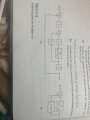
Do you think you can make that very first drawing a little more clear as to the lettering. I am having difficulty reading the text in that drawing.

When possible typing is always more clear because the lettering is more uniform. The only catch is when typing the upper case "i" which looks like a lower case "L" in some fonts. I suggest using the font type "Courier New" because there is no ambiguity with the lettering type.

The text that is hard to read is enclosed in red in the following drawing (top).
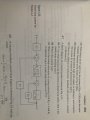
You can solve for Kt in the second drawing (bottom) but i dont think it will be unique.
 

Attachments

Last edited:

Thread Starter

tindel

Joined Sep 16, 2012
939
That should be K, subscript G, I added that on my own and it's not in the book. There were so many K's in this problem, I didn't want it to not have a subscript.

I'm using OneNote to do my 'homework', and have probably worked on 100+ problems at this point. The only clear version of typing this stuff I've found is simulink. Unfortunately, my student license ran out on Dec. 31st.

Thanks in advance!
 

Attachments

MrAl

Joined Jun 17, 2014
13,709
That should be K, subscript G, I added that on my own and it's not in the book. There were so many K's in this problem, I didn't want it to not have a subscript.

I'm using OneNote to do my 'homework', and have probably worked on 100+ problems at this point. The only clear version of typing this stuff I've found is simulink. Unfortunately, my student license ran out on Dec. 31st.

Thanks in advance!
Great that's a little more clear now.

Ok so your original question regarding these two was:
"find values of K' and k_t' (below) so the system has the same transfer function as above."
where 'below' refers to the second diagram and 'above' refers to the first diagram.

Ok i looked at your result for K' and it looks very close but it does not look exactly correct.
The simplest method to find the required results i can see is to simply reduce both systems to their transfer functions and then equate the two and look for a solution for one of the variables in question, then solve for the other. You can then check your results by substituting the values found into the second transfer function and see if it comes out to the first transfer function exactly. They must match perfectly or else something isnt right yet.

Did you try that substitution check method yet? Try that and see what you get.
Just to note, there are solutions that exist that work perfectly.
 
Last edited:

Thread Starter

tindel

Joined Sep 16, 2012
939
I'm continue to go thru this book working on problems... I have another question about phase and gain margins and nyquist stability.

The book considers a stable system to be any system with a GM >= 1 or a PM >= 0deg as the system will not grow exponentially - despite ringing and stuff you'd never want in your real system with poor PMs/GMs.

Where I'm starting to get befuddled is in situations when the GM<1 (unstable) and the PM >=0deg (stable) and vice versa. Take for example: G(s) = 1000*(s+10)/(s*(s-1)*(s+100)) The gain margin when looking at the nyquist plot is ~0.1 (unstable) and the phase margin is ~45deg (stable). Because these are conflicting data points, I'm not quite figuring out how to decide if the system is overall stable. I have been reverting to hand drawing the nyquist plots to count the clockwise encirclements (N) and the counting the number of poles in the RHP (P) to determine the overall stability (Z=N+P).

The difficulty is that the nyquist plots in matlab/octave don't plot the function at infinity to double check my work (due to the 1/s term) to make sure I'm counting the encirclements correctly. What I've started to discover, however, is that the PM or GM closest to the (-1,0) point on the nyquist plot seems to be the primary driver in stability. Does anyone know if this is true for all cases?
 

MrAl

Joined Jun 17, 2014
13,709
I put your G(s):
G(s)=(1000*(s+10))/((s-1)*s*(s+100))

into a negative feedback system with feedback gain of 1 and it became stable. Without the feedback it was unstable.

I am assuming because you called it G(s) and you did not specify an H(s) that you were doing the feedback system in that way. You can add more information if you like.
 

Thread Starter

tindel

Joined Sep 16, 2012
939
Yes, the closed loop system is G(s)/(1+G(s))... the characteristic equation then is 1+G(s) and this is plotted in the nyquist plot below...

1623419460390.png

As can be seen, the GM is 1/9 (unstable) and the PM is 45deg (stable), conflicting results. Am I correct in stating that because the PM measurement point is closer to the (-1,0) than the GM measurement point, that PM result is the overriding factor in this case? Or must I plot the entire nyquist plot and count the number of encirclements and remove the number of RHP ploles to determine the stability? Is the measurement taken closest to (-1,0) always the most significant factor in determining loop stability?

The book really isn't terribly clear on this concept.
 

Thread Starter

tindel

Joined Sep 16, 2012
939
Actually, I think I answered my own question.

Since the characteristic equation is 1+G(s), the system is unstable whenever G(s)=-1. So the GM/PM crossing closest to (-1,0) is the most significant factor in determining stability of the system.

Can someone confirm my thoughts?
 

MrAl

Joined Jun 17, 2014
13,709
Actually, I think I answered my own question.

Since the characteristic equation is 1+G(s), the system is unstable whenever G(s)=-1. So the GM/PM crossing closest to (-1,0) is the most significant factor in determining stability of the system.

Can someone confirm my thoughts?
Try transforming the system to the time domain and then plot the result over some time interval.
If you see some ripple then a straight horizontal line then it must be stable. If you see it shoot up or down then it is not stable. If you see it turn into a sine wave and it is not supposed to be a sine wave then it is unstable, but if it is a sine wave and it is supposed to be a sine wave and the sine wave is of constant amplitude then it is sinusoidally stable.
 
Top