Feedback Control of Dynamic Systems

Thread Starter

tindel

Joined Sep 16, 2012
939
Intro: I am a (mostly) hardware/analog engineer with about 13 years of industry experience - and I was dumb fortunate enough to find myself back in academia working on some continuing ed course work in embedded systems. During that time I've begun to have an explosion of ideas - so I quit my good paying job, found some professors at the school that at least show some moderate interest in my desired field of research, and am starting to work on starting a business, and committing to getting my MSEE. My interest is really in digital control systems. I signed up for the digital control systems course this spring and found that it was a bit over my head. Now I'm doubling back and trying to self-study this text over the year. I did have a controls course way back in the Spring of 2007 where I received an A- in the course. So I feel like I knew the material at some point, but I really need to study again to recall some of the concepts that I have lost over the years. I hope some of you will help me.

Generally I wouldn't do something like this, but because I'm doing this as self-study, I don't have access to resources that I normally would in an academic environment. I.E. I don't have a professor, I don't have a TA, etc. The professor may like to see my face occasionally (to show my continued interest in the topic), but she certainly doesn't want me attending her office hours and teaching this class to me this semester when she's teaching her Spring course.

Goals: I have a few goals for myself and this thread in the next 11 months:
  1. Learn the course material required to take the Digital Control Course in the Spring of 2021.
  2. Be prepared enough at the end of this semester that in the event that I'm admitted to the graduate program in F2020, I'm ready for this course based on this book. (There's a small chance that I'm admitted for next semester - but I have to finish my application!)
  3. Ask for help in this thread on concepts that I don't understand.
  4. Have a place to document my learnings - as objective evidence to the professor that I've done the work and understand the concepts.
Text: Feedback Control of Dynamic Systems - Franklin, Powell, and Emami-Naeini, 8th edition
 
Last edited:

Thread Starter

tindel

Joined Sep 16, 2012
939
Chapter 1 was self-explanatory for me.

Chapter 2

Example 2.1: My first question has to do with the dynamics of a cruise control system. There are two vectors - if you can imagine them (I don't have the copyright so I won't post photos). The first is the u vector in the +x direction resulting from the force generated from the motor. The b vector in the -x direction resulting from the drag of the road as a function of velocity

This system is defined by Newton's second law of motion
\[ F=ma \]
Incorporating our force vectors, and substituting the second derivative for acceleration, we are left with the following differential equation:
\[ u-b\dot{x} = m\ddot{x} \]
Converting position to velocity \( \dot{x}=v \) and \( \ddot{x}=\dot{v} \) we arrive at the following differential equation that describes the velocity of the system
\[ u-bv = m\dot{v} \]
rearranging:
\[ \frac{u}{m} = \dot{v} + \frac{b}{m}v \]

Now here is where I'm having trouble. The author substitutes the three following equations into the equation, but I'm not sure where these equations come from. They obviously have something to do with the Laplace transform, as we will see, but I'm not connecting the dots on how exactly.
\[ v = V_oe^{st} \]
\[ \dot{v} = sV_oe^{st} \]
\[ u = U_oe^{st} \]

Substituting, we achieve
\[ \frac{U_oe^{st}}{m} = V_oe^{st}(s+\frac{b}{m}) \]
This can be reduced using basic algebra to the transfer function in the s-domain:
\[ H(s) = \frac{V_o(s)}{U_o(s)} = \frac{1/m}{s+b/m} \]
 
Last edited:

Papabravo

Joined Feb 24, 2006
22,058
Where this comes from is the recognition that the only function for which it is possible to add the function to its derivative and get a sensible result is an exponential function. It does not have much to do with Laplace Transforms -- yet. It will soon however.
 

crutschow

Joined Mar 14, 2008
38,314
This is a pet interest of mine but, since you are interested in digital control systems, at some point, take a look at Fuzzy Logic for doing such control.
It's designed for doing linear/non-linear digital control systems (unlike PID which is was originally designed for linear analog control using linear differential equations that has been adapted to digital).
Here's a good starting reference.
 

Thread Starter

tindel

Joined Sep 16, 2012
939
Where this comes from is the recognition that the only function for which it is possible to add the function to its derivative and get a sensible result is an exponential function. It does not have much to do with Laplace Transforms -- yet. It will soon however.
Papabravo, thanks for the response and interest in this thread!

I understand what you're saying, but at the same time, why not replace it with something else? Just because the math isn't 'pretty'? H(s) is the s-domain transfer function of the time domain differential equation, no? This implies to me that somehow the Laplace transform has been executed.

I guess I'm asking you to elaborate a bit on your point.
 

Thread Starter

tindel

Joined Sep 16, 2012
939
This is a pet interest of mine but, since you are interested in digital control systems, at some point, take a look at Fuzzy Logic for doing such control.
It's designed for doing linear/non-linear digital control systems (unlike PID which is was originally designed for linear analog control using linear differential equations that has been adapted to digital).
Here's a good starting reference.
I'm glad controls interests you as well! Feel free to get a book and go through it with me - either brushing up or learning new things! I've also been aware of fuzzy logic for quite some time. I've never seen it executed in practice. They also don't have a course at the school covering fuzzy logic. As a result, I'm not sure how applicable it is for the research I'm doing so I likely won't dig into fuzzy logic for quite some time. At least not until someone (perhaps you) convinces me that I should be.
 

MrAl

Joined Jun 17, 2014
13,667
It appears that they are just finding the Laplace Transform of the differential equation.
You might note that they did not include initial conditions so we might say their solution is incomplete for some applications, but perhaps they did not need that yet.

A more common way of doing this is as follows...

For the equivalent general DE we have:
A=v+B*V
where
V is the variable being solved for and lower case 'v' is its first derivative in time.

Now since lower case 'v' is the derivative of upper case V we can say that the LT of that is:
v => s*V

where we note the left side has the time derivative and the right side has the upper case V which is the variable to be solved for. In more complete notation this would look like this:
dv(t)/dt=s*V(s)

Now substitute that into the original equation and get:
A=s*V+B*V

and note now we have an equation in upper case V only.
All we do now is solve for upper case V and get:
V=A/(s+B)

and that should be equivalent to the actual text.

To be complete:
v dot => s*V-V(0)
v dot dot => s^2*V-dV/dt(0)-s*V(0)
where
V(0) is the initial state of V at t=0 and
dV/dt(0) is the initial state of dV/dt at t=0.

The requirement for v dot is that we know the initial condition of v, and
the requirement for v dot dot is that we know both the initial condition of v and the initial condition of its derivative dv/dt.
Of course often we can solve for these based on simpler aspects of the circuit at t=0.
 
Last edited:

Papabravo

Joined Feb 24, 2006
22,058
Papabravo, thanks for the response and interest in this thread!

I understand what you're saying, but at the same time, why not replace it with something else? Just because the math isn't 'pretty'? H(s) is the s-domain transfer function of the time domain differential equation, no? This implies to me that somehow the Laplace transform has been executed.

I guess I'm asking you to elaborate a bit on your point.
Laplace Transforms were introduced a full two semesters after taking the first course in differential equations. Adding a function to its derivative has two fundamental requirements. The "form" of the function and it's derivative have to be the same. For example we know that the solution cannot be a polynomial, because there is no polynomial for which the function and it's derivative can be added together. It also cannot be a simple trig function because you can't add sines and cosines together. There is only one functional form which has the property that the function and its derivative have the same form and that is the exponential function. The second requirement is units. Two things can only be added together if and only if they have the same units. In your example the letter 's' was used as part of the exponent. The units of t are time in seconds, there for s has units of frequency or reciprocal time. The exponent is dimensionless, and a velocity time s has units of distance.

The other basic theorem is, that if a solution exists to a LTI (Linear Time Invariant) ODE(Ordinary Differential Equation) then that solution is unique. That means -- there are no other possible solutions.
 
Last edited:

crutschow

Joined Mar 14, 2008
38,314
I likely won't dig into fuzzy logic for quite some time. At least not until someone (perhaps you) convinces me that I should be.
I completely understand that.
A good understanding of standard control systems is likely useful before looking at Fuzzy Logic.

For future reference, here's a discussion about (apparently successfully) using Fuzzy Logic for a simple (but non-linear) control system, where using PID was giving problems.

Two things I particularly like about Fuzzy Logic:

One is that, if the system is not working properly, it is usually more apparent where the problem is in the software and what needs tweaking, as compared to the equivalent PID control software, which is emulating analog integrators and differentiators..

The other, is that it generally can better handle systems that have a non-linear response (which many do), whereas PID presumes a linear system.
 

Thread Starter

tindel

Joined Sep 16, 2012
939
I really like @MrAl's description using the Laplace transform of the derivative of the primary function. This is more clear to me than @Papabravo's description, but I understand (and appreciate) his viewpoint and input as well. I think you are both saying the same thing, but are coming from different angles, which has helped me a lot!

Reviewing the Derivative Property of the Laplace Transform:
\[ \mathcal{L}\left\{\frac{df(t)}{dt}\right\} = \int_{0^-}^\infty \left(\frac{df(t)}{dt}\right) e^{-st}dt\] \[ =e^{-st}f(t)|_{0^-}^\infty + s\int_{0^-}^\infty f(t) e^{-st}dt\ \] \[ =sF(s) - f(0^-) \]

We can therefore conclude (assuming initial conditions are equal to 0) :
\[ \mathcal{L}\{u(t)\}=U_0(s) \] \[ \mathcal{L}\{v(t)\}=V_0(s) \] \[ \mathcal{L}\{\dot{v}(t)\}=sV_0(s) \]

The original equation as a function of time was
\[\frac{u(t)}{m}=\dot{v(t)}+\frac{b}{m}v(t) \]

Can be transformed into to the following Laplace transform:
\[ \frac{U(s)}{m} = sV_0(s)+\frac{b}{m}V_0(s) \]

Therefore the transfer function is again found to be:
\[ H(s) = \frac{V_0(s)}{U_0(s)} = \frac{1/m}{s+b/m} \]
 

Thread Starter

tindel

Joined Sep 16, 2012
939
Well, there's good news and bad news. The good news is that I finished reading chapter 2 and understood the concepts. The bad news is I'm still struggling a bit with the math.

My next question has to do with a dual pendulum connected by a spring. This ends up being a rotational motion problem. Where the Moments = Moment of Inertia * angular acceleration. It's a bit of a brain teaser to get all the angles right and derive the differential equations! I think I was able to derive the correct solutions, but would like someone to double check my work if they are so inclined.
 

Attachments

MrAl

Joined Jun 17, 2014
13,667
Hi,

Yes and when you have to write a set of ODE's you do the same for each one. So it turns a differential equation set into a set of algebraic equations in the variable 's'.

As to your next drawing, it is not obvious how the spring is connected and where it is connected by looking at your drawing. I can guess, and then a question would be have you done the two masses rolling on a frictionless track connected by a spring yet? That would be like two train cars on a train track connected by a spring and some force is applied to one of the cars probably the left most car and directed to the right. First the left car moves to the right and then the second car us pushed by the spring so it start to move, or else the second car is pulled to the right and it starts to move first then the first car is pulled by the spring and then starts to move too although there is like a delay.
 
Last edited:

Thread Starter

tindel

Joined Sep 16, 2012
939
@MrAl I uploaded a modified pdf with how the spring is connected. I have worked similar problems to the train one you describe and I felt that I understood that material well. This one is a bit different due to the angles involved and making sure the vectors are in the proper directions. The text also states that I should consider the spring as horizontal due to small angles of theta.
 

MrAl

Joined Jun 17, 2014
13,667
Hi,

Ok, then next it seems you have a forcing function "F" directed to the right.
How is this force applied?
That is, is it a step force or a pulse or what?
I would guess a step.
[LATER]
Wait i think i would rather guess no force applied but instead an initial condition applied to the left mass such as an initial position not perfectly vertical.
Also, i found this:
https://en.wikipedia.org/wiki/Pendulum_(mathematics)
 
Last edited:

Thread Starter

tindel

Joined Sep 16, 2012
939
So I'm circling back around to this... and I'm stuck on two problems in chapter 4.

4.6
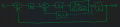
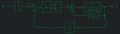
Consider the DC motor control system with rate (tachometer) feedback shown here:
1609042148819.png

a) find values of K' and k_t' (below) so the system has the same transfer function as above.
1609042370560.png
to which, I found the following solutions:
1609042434281.png

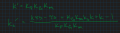
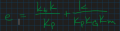
b) Determine the system type with respect to tracking theta_r and compute the system 1/Kv in therems of parameter K' and k_t'
The type is type 1 and the 1/Kv system is as follows:
1609042632191.png
and substituting K' and k_t' back in, (where s=0) I get the error is as follows:
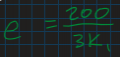
1609043125363.png

So all is well... on to the next questions where the following diagram is shown:

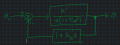
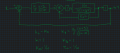
4.7 A block diagram of a control system is shown below:
1609042820728.png

I immediately recognize this, with some manipulation to have the same for as the previous question after a little manipulation:
1609042909458.png

a) if R is a step function, and the system is closed-loop stable, what is the steady-state tracking error?
Substituting all of these values into the error formula from the previous problem, I get
1609043195221.png

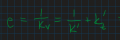
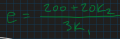
So, I decide to double check my work, solving the equation by hand, and I get this:
1609043256808.png

So now I have two equations that are giving me two answers, and I can't get the to match, when I'm pretty sure that they should. I've performed the math at least twice on each and I can't find an error in my calculations, but the values are not converging. Anyone care to help?

I've attached more detailed calculations as well.
 

Attachments

MrAl

Joined Jun 17, 2014
13,667
Hi,

I am just back from a long vacation of sorts i'll take a look at your info as soon as i can. If someone else wants to help in the mean time that's cool too.
 
Top