Every major socket set brand, ranked worst to best

Jon Chandler

Joined Jun 12, 2008
1,621
My ex-brother-in-law was manager of the hardware department (years ago, when they had hardware), and tools had a lifetime guarantee.

I guy brought in a screwdriver once, and it had obviously been beat with a hammer.

Ex-bil asked "It looks like you've been using this as a chisel."

"Oh no, I'd never do that!"

His wife was behind him trying to stifle a laugh.

"It's ok. I'll replace it. But would you rather have a chisel?"

Sheepishly, he replied "Yes."
 

SamR

Joined Mar 19, 2019
5,507
I've had one of the 10$ chinesium ratchets before when I was young and broke. Yes, it did mount sockets well and remove a lot of bolts. But it was always very sloppily loose unless under tension and the racket mechanism failed fairly quickly. It was better than nothing... I never bought a second one of them.
 

WBahn

Joined Mar 31, 2012
32,953
Cheap tools have a place, to be sure, but I don't like them. But I can tolerate them fine as long as they actually work, at least on non-demanding stuff. I remember buying a cheap set of tools -- a little packet with undersized tools in it - a pair of pliers, an adjustable wrench, a couple of screw drivers, and something else (don't recall, it was well over thirty years ago). I thought it would be good to throw in the glove compartment in case I needed something on the side of the road and didn't happen to have the tool box in the back that I normally kept there, but that had a tendency to find its way into the house when I needed something and then didn't find it's way back to the truck for weeks or months. Sure enough, had a heater hose fail and needed to remove the spring clamp. No biggie, a perfect job for a small set of pliers. The handles bend as I tried to squeeze them. So I pulled out the adjustable wrench and held it with my thumb on one side and my index and middle fingers on the other, spread a apart, and pressed with my thumb and it bent with very little effort. At that point, I just threw the whole thing in the trash.
 

WBahn

Joined Mar 31, 2012
32,953
To be honest, I don’t know if the Chinese wrench did well of not. How many kilograms should a $10 ratchet wrench withstand?

385kg is 847 pounds! I know that I couldn’t apply that much force to the handle of a ratchet drive without using a cheater—and if you are putting a cheater on your ratchet you are using the wrong tool!

I have no doubt that the more expensive wrenches have desirable qualities the cheap one doesn’t—but this test… I can’t see how the $10 wrench fares poorly here. In fact, in terms of kg per dollar, the 7x more expensive Milwaukee doesn’t even manage twice the performance.

I suppose if you wanted to know which wrench would stand the most force from a hydraulic press this would be helpful.
I've been known to put a cheater on a rachet and then stand on it to break an overtorqued bolt free. After breaking the first cheapo ratchet that I had close at hand, I went and dug out the Craftsman and did it again. It worked just fine and I still have that wrench today (and it was my dad's before that). I've also had many other cheapo wrenches over the years and most of them have failed (without being excessively abused, either).

I had a bag with tools under the jump seat in my first car (a station wagon). Just a random collection of tools that I kept there. I didn't realize that the floor of the well the jump seats were in had unplugged vent holes in the bottom that let water splash up into them, until I pulled out that bag one day and it was sopping wet. All of the cheapo tools in there were rusted beyond recovery, but all of the Craftsman tools were barely touched. More than forty years later, I still have nearly all of them.

So another factor that must be considered is what is the lifetime cost of a $10 wrench if you have to replace it three or four or more times compared to a $30 wrench that can take the abuse and still outlast me?

Of course, at my age, that calculus is a bit more iffy for tools I buy now. ;)
 

SamR

Joined Mar 19, 2019
5,507
I doubt my tools will be passed on to the kids when I check out. They seem very averse to getting their hands dirty. Of course, even I am averse to working on the cars made today... Don't think I've ever opened the hood on our Honda.
 

GetDeviceInfo

Joined Jun 7, 2009
2,274
Back in my supervisor days, I might ask to borrow a screwdriver, not to use it, but to see how the owner kept it dressed. Could you sharpen this drill bit for me, what's your measure on this shaft, what is your temp for this shrink fit, let's discuss your pending hoist. I ran into a few that had the high priced toolkits, but it didn't make them better mechanics. For me, tools are an extension of the worker, and reflect thier attitudes, which in the end, can make or break thier careers.
 

WBahn

Joined Mar 31, 2012
32,953
Back in my supervisor days, I might ask to borrow a screwdriver, not to use it, but to see how the owner kept it dressed. Could you sharpen this drill bit for me, what's your measure on this shaft, what is your temp for this shrink fit, let's discuss your pending hoist. I ran into a few that had the high priced toolkits, but it didn't make them better mechanics. For me, tools are an extension of the worker, and reflect thier attitudes, which in the end, can make or break thier careers.
Absolutely agree. Good quality tools are not equivalent to, or a substitute for, knowledge, skill, and the willingness to apply both to the job. While poor quality tools can place an upper limit on what a good mechanic can do -- though it is surprising the results that a good mechanic can achieve with even poor tools -- the best quality tools make very little difference to the results that a poor mechanic can achieve.

When I was a co-op student with NIST, we had a South Bend lathe that was made in 1906 and probably hadn't had the ways struck in fifty years. It had more than 50 mils of lash in both the carriage and the cross slide controls. Yet I could do work that was accurate to a mil on it by carefully working against the lash at all times -- and being patient and taking my time. It was certainly a lot easier and faster to get those results on the Harding, which was much newer and in better shape, but it couldn't handle the pieces that the South Bend could.
 

Thread Starter

nsaspook

Joined Aug 27, 2009
16,362
We called it handling the slop factor. The best can handle predictable slop because it's a deterministic equation to solve. Poor or worn tools that have reliable deviance from high quality standards are still usable with skill.
The problem is you never know when the nature of that slop will change to chaotic and ruin the compensation factor solutions during random slop deviance from high quality. That's unacceptable (causing rework and spoilage) to those with the skills to detect it, and a source for undetected errors for those without the skills to understand what's happening.
 

Ya’akov

Joined Jan 27, 2019
10,262
I've been known to put a cheater on a rachet and then stand on it to break an overtorqued bolt free. After breaking the first cheapo ratchet that I had close at hand, I went and dug out the Craftsman and did it again. It worked just fine and I still have that wrench today (and it was my dad's before that). I've also had many other cheapo wrenches over the years and most of them have failed (without being excessively abused, either).

I had a bag with tools under the jump seat in my first car (a station wagon). Just a random collection of tools that I kept there. I didn't realize that the floor of the well the jump seats were in had unplugged vent holes in the bottom that let water splash up into them, until I pulled out that bag one day and it was sopping wet. All of the cheapo tools in there were rusted beyond recovery, but all of the Craftsman tools were barely touched. More than forty years later, I still have nearly all of them.

So another factor that must be considered is what is the lifetime cost of a $10 wrench if you have to replace it three or four or more times compared to a $30 wrench that can take the abuse and still outlast me?

Of course, at my age, that calculus is a bit more iffy for tools I buy now. ;)
Once again, doing a proper cost-benefit analysis will necessarily result in different outcomes for different requirements. There are many people who will never get more utility from the $70 drive than that $10 drive—for a variety of reasons.

For many people, tools are a rarely used but sometimes important thing. Having a socket set that doesn't break when being used for ordinary tasks—ones that are likely to be in the legitimate purview of an otherwise non-technical homeowner for example—is probably useful to a majority of such people.

But, if such a person encounters the need to break a bolt free that is so badly frozen a cheater bar is needed—they shouldn't be using the tool they bought for the overwhelming majority of applications. A cheap breaker bar (for example) will still be less expensive than a drive that can tolerate a length of pipe as a helper. And even better is a box wrench the right size.

I would argue that no drive should really be used with a cheater—though I recognize that 1) some can tolerate it; and 2) the expedient is often called for given the cost of scaring up a proper solution as long as it is reasonably certain the wrench won't be damaged.
 

WBahn

Joined Mar 31, 2012
32,953
We called it handling the slop factor. The best can handle predictable slop because it's a deterministic equation to solve. Poor or worn tools that have reliable deviance from high quality standards are still usable with skill.
The problem is you never know when the nature of that slop will change to chaotic and ruin the compensation factor solutions during random slop deviance from high quality. That's unacceptable (causing rework and spoilage) to those with the skills to detect it, and a source for undetected errors for those without the skills to understand what's happening.
Agreed. In any kind of production environment (and I use that term pretty broadly here), that South Bend would either have been reconditioned or gotten rid of. But this was in a very small satellite machine shop (two lathes, a mill, a drill press, and a work bench) that was used by the researchers themselves to do one-off jobs, such as developing a new measurement cryostat. NIST also had a very well equipped and maintained machine shop staffed by professional machinists (and only they could touch those machines). But using them was expensive and had huge lead times. It also required very detailed drawings of exactly what you wanted, because you submitted the drawings with a work order and wouldn't hear from them until they delivered the finished item. If they had to confer with you, it really threw a monkey wrench into the time line. Whereas in the satellite shop we could wing it and design and build things as we went, which is sometimes the only way to go when you don't yet know what will and what won't work. In that kind of environment, you can afford to deal with the slop and risk having to rework something (which you were probably going to have to do some of anyway just because things you didn't take into account until you had physical parts in front of you).
 

WBahn

Joined Mar 31, 2012
32,953
Once again, doing a proper cost-benefit analysis will necessarily result in different outcomes for different requirements. There are many people who will never get more utility from the $70 drive than that $10 drive—for a variety of reasons.

For many people, tools are a rarely used but sometimes important thing. Having a socket set that doesn't break when being used for ordinary tasks—ones that are likely to be in the legitimate purview of an otherwise non-technical homeowner for example—is probably useful to a majority of such people.

But, if such a person encounters the need to break a bolt free that is so badly frozen a cheater bar is needed—they shouldn't be using the tool they bought for the overwhelming majority of applications. A cheap breaker bar (for example) will still be less expensive than a drive that can tolerate a length of pipe as a helper. And even better is a box wrench the right size.

I would argue that no drive should really be used with a cheater—though I recognize that 1) some can tolerate it; and 2) the expedient is often called for given the cost of scaring up a proper solution as long as it is reasonably certain the wrench won't be damaged.
Agreed. In the case of this frozen bolt, there was no way to get a box or end wrench on it, only a socket -- and I forgot until now that I broke the cheapo socket itself (which acted like a fuse and protected the wrench) and switched to a Craftsman socket (which acted like a penny used in place of the fuse, leaving the wrench to be the new weak link). I didn't have a breaker bar available, or I would most certainly have gone for it first.

As we used to say on the flight line: Sometimes ya gotta do whatcha gotta do.

I would add an additional caveat to your final sentence above: OR, unless you are willing to accept the risk of damaging the wrench. In the situation I was in, I was more than willing to accept that risk.
 

Ya’akov

Joined Jan 27, 2019
10,262
I've had one of the 10$ chinesium ratchets before when I was young and broke. Yes, it did mount sockets well and remove a lot of bolts. But it was always very sloppily loose unless under tension and the racket mechanism failed fairly quickly. It was better than nothing... I never bought a second one of them.
Of course that is not a real category—there is no standard called "$10 Chinese Ratchet Drive". There is a an enormous variability in the quality of such tools. And, the person for whom such a drive would be appropriate will be a very occasional user in non-demanding circumstances who may not be able to afford anything better.

I have found several examples of cheap Chinese tools that were quire competitive with brands made in the US at much lower cost. But again it is all about requirements. If you need a pickup truck to haul trash bags to the dump once a week a turbo-diesel crew cab extended bed 4x4 dually is not a "better" truck than a basic RWD F150.

"Better" can only be understood run context.
 

Thread Starter

nsaspook

Joined Aug 27, 2009
16,362
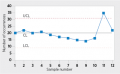
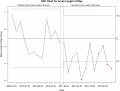
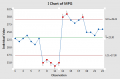
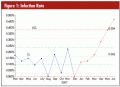
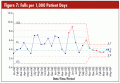
Junk tool types using random SPC charts.
1744532255920.png
1744532318170.jpeg
The flyers. Nice and, then, off the handle.


1744532554685.png
1744532447575.png
The jumper. Some days are better than others.


1744532634463.gif
The drifter. Up in smoke.

1744532753181.gif
The settler. A little rough at the start but it settled right in.
 

Thread Starter

nsaspook

Joined Aug 27, 2009
16,362
Knipex is nice but sort of oddball in the hand feel. Maybe a little too ergonomic for some hands.

1744992591527.png
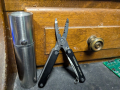
I use the LEATHERMAN squirt Es4 daily as my carry tool. I will miss my flight if I forget to check it in a bag.

The flashlight is a COAST A15.
https://coastportland.com/collections/led-flashlights/products/a15
Cut through the clutter. The A15 embodies the ideal combination of hassle-free, minimalist design and high performance lighting. Cased in an easy-cleaning, smooth stainless steel body, this sleek and stylish flashlight shines through darkness with a fixed BULLS-EYE™ Spot Beam that delivers 330 lumens at a distance of 131 meters (429 feet). One set of batteries provides 21 hours of continuous light. Constructed of top-grade materials, the A15 is storm proof and dust resistant—so that you can stay bright no matter what comes your way.
I specify this flashlight (and others from COAST instead of the cheap junk for China) for guys that work on high vacuum chambers. The lens and battery o-ring seals have bee test by me to -6 torr vacuum with no contamination leaks other than small air streams.
Used for inspection lighting deep inside working (test wafers) vacuum chambers with view windows with zoom cameras.
 
Top