Electricity backup DIY solution

nsaspook

Joined Aug 27, 2009
16,322
So here’s what I’ve found:

I can buy a set of 3 deep cycle batteries (for about 180US$, with a charger included). These have a capacity of 14 Ah, which would be 168Wh (correct?). 168 times 3 would give me about 500Wh, which I think should be enough to run a fridge for a couple of hours continuously. However, I intend to use a timer, and run the fridge for 5 minutes every 30 minutes. That way the fridge’s contents should stay cool enough (to be tested), if i don’t open the door all the time. From a turbine, I can’t reasonably expect more than 50-100 Watts, but it would generate that amount more or less 24/7. I think that could be enough to not drain the batteries, even during a longer blackout, if I use them as described, for short intervals.


I don’t know if a hybrid inverter can work with two power sources simultaneously, but if it can, I might get a turbine AND a small solar panel.

Price wise, with just a turbine, it would cost me about 500US$, maybe a little more , but less than thousand (the battery, a turbine plus a hybrid inverter).


What do you think? Does that seem like a ‘good idea’?


Cheers.
You will be disappointed by your backup system. A practical battery based system is just not going to be cost effective over a generator.

A reliable system with reserve power for emergencies and the types of batteries needed for repeated deep cycling are expensive..
https://forum.allaboutcircuits.com/...c-controlled-battery-array.32879/post-1438996
 

Rich2

Joined Mar 3, 2014
254
How big are these batteries ? I just looked at a set of 3 deep cycle batteries (price about 180 US$). According to the ad, they only have 12Ah, which could maybe run a fridge for an hour, if I’m lucky. So I wonder how big an 80 Ah battery is, for example compared to a car battery? Also, even with these 12Ah batteries, if I add a timer, and only run the fridge for 5 minutes every 30 minutes, and the turbine (or solar panels) keep on charging, I think I should be fine.
Here it is, dimensions will be in the description:

https://www.tayna.co.uk/leisure-batteries/exide/es900/
 

Ian0

Joined Aug 7, 2020
13,131
Check the specs carefully before you buy batteries, and don't buy the wrong ones.
Lead acid are still cheaper than Lithium for equivalent number of cycles. At the end of their life lead acid batteries have a scrap value, lithium have a disposal cost.
There are batteries for emergency supplies, generally intended to spend the majority of their 12 year life on float charge and then very occasionally operate the lights whilst the building is evacuated - don't buy that sort - their cycle life is poor.
Avoid "leisure" batteries - they claim to be for cyclic use, but if they are cycled once a day while people are on holiday in a caravan for a fortnight a year, then 140 cycles = 10 years and it looks like they have a long life, but they don't - about 300 cycles.

Then there are real cyclic use batteries - tubular plate batteries for fork lifts which will do 2500 cycles, and similar in a more recognisable format from companies like Rolls.
https://www.rollsbattery.com/catalog/


Check the number of cycles on the data sheet and decide how much you can invest and how often you are prepared to replace them. If it is not stated, don't buy them. Don't discharge them below 50% unless you really have to (although the tubular plate type claim that they can be discharged down to 25% with no ill effects).

Do you know a company that hires out fork-lifts? If so they might have some lightly used second hand batteries.
 

debe

Joined Sep 21, 2010
1,417
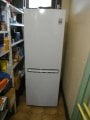
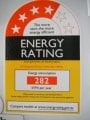
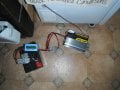
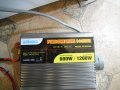
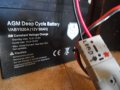
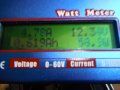
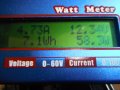
This is how i run my fridge in power outages. The secret is to use an Inverter fridge as they draw very little power. This fridge draws about 50Watts when running & about 12W when powered down, & 145W when defrosting. The battery is a 50Ah AGM Gopher battery $100 AUS. Pure Sine Wave inverter $90 AUS. This fridge will run easily of a 300W inverter. This is good for about 6Hrs running, if its going to be longer i use a 800W pure sine wave generator.1.JPG2.JPG3.JPG4.JPG5.JPG6.JPG7.JPG8.JPG9.JPG
 

Ian0

Joined Aug 7, 2020
13,131
This is how i run my fridge in power outages. The secret is to use an Inverter fridge as they draw very little power. This fridge draws about 50Watts when running & about 12W when powered down, & 145W when defrosting. The battery is a 50Ah AGM Gopher battery $100 AUS. Pure Sine Wave inverter $90 AUS. This fridge will run easily of a 300W inverter. This is good for about 6Hrs running, if its going to be longer i use a 800W pure sine wave generator.View attachment 261658
It makes me wonder. . .
An inverter drive has a DC link. The incoming mains is first rectified then the probably stepped up to about 400V with a boost converter which does the power factor correction.
Has anyone tried powering an inverter drive fridge with DC directly into the DC link? (I know it will need quite a few batteries)?
Or will it work if DC is connected straight to its supply lead? After all, the first component is a rectifier. I can't think that a PFC boost converter is too worried whether the incoming waveform is a rectified sinewave or real DC.
 

debe

Joined Sep 21, 2010
1,417
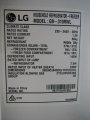
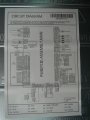
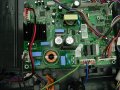
You are probably right in your assumption. But at $800 AUST approx for the fridge & its still under warranty, i will pass on that at this stage. Heres the circuit & pict of the main board. I do have a SMPS which steps up 12V DC to 350V DC @ 80Watts which will run a 240V appliances such as LCD TVs.LG INVERTER FRIDGE.1.JPGLG INVERTER FRIDGE.2.JPG
 

Thread Starter

KurtVD

Joined Nov 2, 2019
21
Thank you, I had to Google the term inverter compressor. From what I read, it seems that the difference is that it can run the compressor at lower speeds, which in turn should save energy, and presumably make the compressor live longer.
One thing about it: does it also allow the compressor to start up without needing a lot of energy? Mine, according to my amp meter (clamp style) uses about 100-120 Watts in normal operation, but over 300 at startup, if only for a couple of seconds. Is that different with an inverter fridge?
This is how i run my fridge in power outages. The secret is to use an Inverter fridge as they draw very little power. View attachment 261665
 

Ian0

Joined Aug 7, 2020
13,131
Thank you, I had to Google the term inverter compressor. From what I read, it seems that the difference is that it can run the compressor at lower speeds, which in turn should save energy, and presumably make the compressor live longer.
One thing about it: does it also allow the compressor to start up without needing a lot of energy? Mine, according to my amp meter (clamp style) uses about 100-120 Watts in normal operation, but over 300 at startup, if only for a couple of seconds. Is that different with an inverter fridge?
Yes. It controls the startup. At low loads it can run at lower speeds for longer periods which is more efficient that stopping and starting. Basically, the induction motor in the compressor has been replaced by a so-called "brushless DC motor" which we all know is an AC synchronous motor, with electronic speed control.
So if you hadn't seen the point of my conversation with @debe, at some point in the electronics there is a DC supply, which could possibly be replaced by batteries, saving quite a bit of power which would otherwise be lost stepping voltages up and down, and changing them from DC to AC to DC and back to AC again; but if you supply the appliance by connecting batteries to the DC link don't hope that the manufacturer will honour the guarantee!
 

Thread Starter

KurtVD

Joined Nov 2, 2019
21
I have no illusions about the cost being higher, if I wanted it to be as cheap as possible, i would either continue using the diesel generator that’s here from the previous owner, or get a gasoline generator (because the diesel one is incredibly loud, i can’t stand it more than 5-10 minutes).
I am prepared to spend more, but it obviously depends how much.Also I would love to use wind and/or solar, because both of these i have in abundance (on a relatively quiet day, the wind is blowing at 15-20 kph, and in the 30’s on a windy day).
You will be disappointed by your backup system. A practical battery based system is just not going to be cost effective over a generator.
A reliable system with reserve power for emergencies and the types of batteries needed for repeated deep cycling are expensive..
https://forum.allaboutcircuits.com/...c-controlled-battery-array.32879/post-1438996
 
There have been many responses so far, and all of them seem to be intended to give helpful advice.
I would like to offer an opinion which is based on my experience in converting a school bus into a motor home. Initially I used four solar panels, each rated at 12 volt, 80 watts, to provide power for LED lighting and a 12/24 volt compressor fridge. In practice, I found that these panels did not generate enough power. After upgrading to four solar panels rated at 130 watts each, I did not have a problem. With regard to batteries, I believe that lead-acid batteries will probably give better value for money than Lithium batteries. It is also important that the batteries can hold enough power for those times when there has been less than average sunshine. With regard to the issue of car starter-batteries compared to deep-cycle batteries, I believe that deep-cycle batteries should be your choice. I used two batteries of 120AH each, connected in series, to power the refrigerator at 24 volts, which I had been told would allow the fridge to work more efficiently than it would at 12 volts. I am not sure of what differences in efficiency may occur between 12 volt or 24 volt operation.
There is an important matter to consider when connecting batteries in series, or in parallel, which is quite important, and not related to 12 or 24 volt operation. It would be wonderful if batteries would just continue to function for many years, but unfortunately they do have finite lifetimes. For reasons which I do not understand, two batteries which work as part of a "team" - whether in parallel or in series - may have very different life spans, even though they have contributed equally during their working lives. If connected in series, the output voltage of the combined batteries will drop, but if connected in parallel the faulty battery will immediately drain power from the good battery, and lead to the early failure of the good battery. It is possible to obtain low cost digital volt-meters, and I found it very helpful to be able to monitor the batteries easily, at a glance, by having a separate volt-meter connected to each battery. In the motor home, the vehicle electric system was 24 volts (with two 12 volt batteries), and this is the reason why I chose to have a 24 volt auxiliary system. I could then also use the vehicle charging system to assist in charging the auxiliary system. It was very helpful to see at a glance the voltage of each of the four batteries.
 

Ya’akov

Joined Jan 27, 2019
10,235
Since RVs (Recreational Vehicles) depend on battery power for a large percentage of the time, there is a lot of information about choosing them in that community. I have seen some excellent videos on YouTube practically comparing AGM lead-acid batteries to LiFePo4 (Lithium Iron Phosphate) batteries.

Since cost is not your main concern, investigating the LiFePo4 batteries certainly seems worth the time. There is no doubt they are more costly than the PbSO4 chemistry options that are also lighter, which higher energy density and longer service life. They do require a more sophisticated charge controller, I believe, but it’s a solved problem.

Generally speaking small wind turbines do not make economic sense compared to other ways to generate power, but again you are looking for a solution to emergency power, not economic parity or improvement over the mains. So if you have persistent wind, it certainly seems a good generation option. In combination with solar, I doubt you would ever find yourself without power either being generated contemporaneously or in the form of the charged batteries.

You are in a luxurious position to consider cost as a secondary constraint because one of the hardest things about building a system like this is the economic justification and trade offs. It could be fun, Look to the RV industry for a lot of information.
 

Ian0

Joined Aug 7, 2020
13,131
I'd say that the only reason to choose Lithium is weight, and that doesn't apply to a static installation.
One advantage you have over the caravan people is the option of tilting the solar panels to the optimum angle, and positioning them away from shade. You might get more out of the solar panels than if they were fixed horizontally to the roof of a vehicle.

If you size lead acid batteries for a maximum discharge to 50%, then they are still cheaper than lithium operating over the whole charge cycle. That gives you an emergency reserve, so that in persistently overcast (or still) weather, you can discharge down to 25%

Interesting to note that the relative prices for electricity and "red" diesel in the UK are now at parity. Any further increases in electricity prices will make it cheaper to run a diesel generator than to buy electricity from the grid.
 

Ya’akov

Joined Jan 27, 2019
10,235
I'd say that the only reason to choose Lithium is weight, and that doesn't apply to a static installation.
One advantage you have over the caravan people is the option of tilting the solar panels to the optimum angle, and positioning them away from shade. You might get more out of the solar panels than if they were fixed horizontally to the roof of a vehicle.

If you size lead acid batteries for a maximum discharge to 50%, then they are still cheaper than lithium operating over the whole charge cycle. That gives you an emergency reserve, so that in persistently overcast (or still) weather, you can discharge down to 25%

Interesting to note that the relative prices for electricity and "red" diesel in the UK are now at parity. Any further increases in electricity prices will make it cheaper to run a diesel generator than to buy electricity from the grid.
Cost not being the primary concern, LiFePo4 beats AGM in battery life (so less maintenance) and capacity by volume (less space). They can also be charged much faster. So, it’s not just weight, which, even in a static installation can be a consideration, there are other things.

On a cost basis, the longer battery life of the LiFePo4 makes them more competitive with AGM than at first glance, but the TS said he is not looking for the cheapest solution. While he didn’t say “cost is no object”, some of the features of the lithium chemistry batteries may be worth the cost to him.
 

Ya’akov

Joined Jan 27, 2019
10,235
But not tubular plate. 2500 cycles down to 25%
You mean like Hawker Energy Cyclon? I do like the Cyclons very much. I used to troll the hamfests buyng them cheap as alarm system pulls. They were among the SLA batteries. Alarm companies would put the Cyclons into the alarm boxes but maintain them on the same schedule as the SLAs. Many if not most of the SLAs were toast, but I never bought a Cyclon I couldn’t charge and use to near its rated capacity.

They are an option, to be sure. I would include them based on their ruggedness and the fact that you can charge them in about 25% of the time compared to conventional AGMs make them very attractive.
 

Ian0

Joined Aug 7, 2020
13,131
Tubular plate refers to the flooded battery used in Forklifts. They are available in standard sizes from about 80Ah to 1600Ah.
You can replace them a cell at a time if a cell fails, which reduces maintenance costs.
The also don't have a BMS to get upset about peculiar waveforms ,they are difficult to break, and don't explode. Maximum charge current is C/5, which may be a problem for the smaller ones.
 

Ya’akov

Joined Jan 27, 2019
10,235
Tubular plate refers to the flooded battery used in Forklifts. They are available in standard sizes from about 80Ah to 1600Ah.
You can replace them a cell at a time if a cell fails, which reduces maintenance costs.
The also don't have a BMS to get upset about peculiar waveforms ,they are difficult to break, and don't explode. Maximum charge current is C/5, which may be a problem for the smaller ones.
Are you familiar with the Cyclon cells? Really nice batteries.
 

Ian0

Joined Aug 7, 2020
13,131
Are you familiar with the Cyclon cells? Really nice batteries.
Yes. I've used them. Incredible output current for their size. They have a MUCH higher internal pressure than a standard VRLA for the recombination.
I've also used a type which looked like an orange brick. I forget the make, but they were also quite indestructible. I was led to believe that the military used them in guided missiles, though why one might need a rechargeable battery in a guided missile did rather puzzle me.
 

Ya’akov

Joined Jan 27, 2019
10,235
Yes. I've used them. Incredible output current for their size. They have a MUCH higher internal pressure than a standard VRLA for the recombination.
I've also used a type which looked like an orange brick. I forget the make, but they were also quite indestructible. I was led to believe that the military used them in guided missiles, though why one might need a rechargeable battery in a guided missile did rather puzzle me.
In case they miss! Duh.
 
Top