Electricity backup DIY solution

Thread Starter

KurtVD

Joined Nov 2, 2019
21
Hi,

I live in an area where electricity is a problem, meaning power outages occur frequently, maybe 1-3 times a week. Usually it’s just hours, but sometimes it can take a couple of days until it is restored. This is unlikely to get better soon, and it’s not really a problem (for me), other than the fridge and freezer. I would love to have something less noisy than a diesel or gasoline generator, and it should have enough capacity to run the fridge and freezer for a few hours. I know there are portable battery solutions that aim to replace generators, but these are quite pricey if you need something that can do more than charge a few smartphones and laptop computers. So I had this idea and wondered if that sounds feasible and economically advantageous:

If I connect ten car batteries in series, that would give me about 120–130 Volts, which is the voltage I need. According to Wikipedia, an average car battery has about 500 Watt hours, and a fridge uses 100-200 watts. So even I don’t use deep cycle batteries (apparently, a normal car battery can safely only be discharged about half, on a regular basis), I would still have enough capacity for 1-2 hours.

Here’s my thinking: with this setup, I could simply wire the batteries in series and connect the fridge directly, without the need for an inverter. As for charging them up, I would at first use a simple car battery charger. Question: could I connect the batteries in parallel, and have them wired in series at the same time? My idea was that if they’re connected in parallel, I could use a normal car charger and charge them all simultaneously. Is that doable?

As a later step, I was thinking about getting a small wind turbine, since I live just by the beach, and the wind is blowing strong almost 24/7. But that wouldn’t make a difference to the wiring, there would just be a wind turbine (and maybe an inverter) instead of the charger.


What do you think?
 

dendad

Joined Feb 20, 2016
4,637
You will probably get into strife as most fridge motors need AC to run, and DC will burn them out.
That is something you will need to check.
And you could charge them in parallel, and discharge is series, but not at the same time.

Have a look at these...
1645675920006.png

https://www.ebay.com/ search for "Hybrid Inverter"
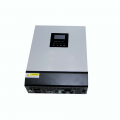
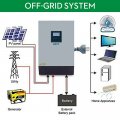
They are available in various sizes. Maybe a 48V version (4 car batteries), solar charged and able to charge the batteries from mains or a generator as well.

Probably cheaper than 10 car batteries.
 
Last edited:

crutschow

Joined Mar 14, 2008
38,504
I could simply wire the batteries in series and connect the fridge directly
I'd be surprised if the fridge can operate on DC.
could I connect the batteries in parallel, and have them wired in series at the same time?
Nope, that would short them out.
You could switch them between series and parallel with a DPDT switch or relay for each battery.
 
Last edited:

Thread Starter

KurtVD

Joined Nov 2, 2019
21
Thank you, I completely forgot about the AC/DC issue once I started thinking about the idea. My first idea was to purchase a fridge than can run on low (12-24) DC voltage as well as from the plug (120 AC). But if I do that, there would be no need to obtain 120V, and I don’t need 10 batteries.
Regarding the link you sent: I understand that this type of inverter will charge the batteries either from the mains or an alternative power source (some are specifically made for solar & wind, they should work perfectly with a small turbine). I don’t understand if these inverters also provide output (to run the fridge )? The specifications don’t mention any type of output voltage, so I would need a second device for that?
You will probably get into strife as most fridge motors need AC to run, and DC will burn them out.
That is something you will need to check.
And you could charge them in parallel, and discharge is series, but not at the same time.

Have a look at these...
View attachment 261440

https://www.ebay.com/ search for "Hybrid Inverter"
They are available in various sizes. Maybe a 48V version (4 car batteries), solar charged and able to charge the batteries from mains or a generator as well.

Probably cheaper than 10 car batteries.
 

Ian0

Joined Aug 7, 2020
13,131
You really do need a deep cycle battery. Even operating no lower than 50%, a car battery is unlikely to give more than 100 cycles.
See if you can find some tubular plate batteries of the type used in fork-lifts. You might be able to get some second-hand.
Spend more on solar panels and less on batteries. After all, the more the sun shines, the more cooling you need! It’s colder at night, so you don’t need to store so much power.
 

dendad

Joined Feb 20, 2016
4,637
I don’t understand if these inverters also provide output (to run the fridge )? The specifications don’t mention any type of output voltage, so I would need a second device for that?
HybridInverterSetup.jpgHybridInverterSpecs.jpg
No, just the one unit.
Make sure you select a 120V or 240V as your devices need. And the power output enough to start the fridge compressor as that can be pretty high.
 

Thread Starter

KurtVD

Joined Nov 2, 2019
21
Thank you,
I’m not yet set on what type of battery I’m going to get, if I can find a li-ion battery for a good price, I would certainly prefer that.

I intend to use just one small wind turbine to start with, and see if that’s enough. Wind has the advantage of working at night, and where I am, it’s rare that there’s no wind.

You really do need a deep cycle battery. Even operating no lower than 50%, a car battery is unlikely to give more than 100 cycles.
See if you can find some tubular plate batteries of the type used in fork-lifts. You might be able to get some second-hand.
Spend more on solar panels and less on batteries. After all, the more the sun shines, the more cooling you need! It’s colder at night, so you don’t need to store so much power.
]
 

Thread Starter

KurtVD

Joined Nov 2, 2019
21
Why does your electricity fail so often? Mine fails maybe every 15 years during a very bad hurricane.
The neighborhood here has always had power outages, I don’t know why exactly. Also, it’s what you would probably call a ‘developing country’, so it’s not that rare around here…
 

Ian0

Joined Aug 7, 2020
13,131
Thank you,
I’m not yet set on what type of battery I’m going to get, if I can find a li-ion battery for a good price, I would certainly prefer that.

I intend to use just one small wind turbine to start with, and see if that’s enough. Wind has the advantage of working at night, and where I am, it’s rare that there’s no wind.


]
But what is the average wind speed? Most turbines are rated to give the quoted power at wind speeds of 45-50km/h.
Power varies with the cube of wind speed, so power at 25km/h is only an eighth of the rated power.
 

Thread Starter

KurtVD

Joined Nov 2, 2019
21
Yes that would indeed power the house, and there would still be enough power left for my entire neighborhood haha.
The house is in a neighborhood that wasn’t connected to the utilities until a few years ago, and since the beginning it has been sketchy. So nobody here has lots of appliances, and even though it’s warm or even hot 10 months outof 12, nobody uses an air conditioner.
Like for example in my house , other than the fridge, I only have a few lightbulbs that need electricity, and maybe occasionally a table fan, though usually with the window open, there’s enough airflow (it’s very windy here, I’m like 50 meters from the beach)
How much are you willing to spend for the convenience?

This could run your whole house:
https://www.generac.com/all-products/clean-energy/pwrcell
 

Thread Starter

KurtVD

Joined Nov 2, 2019
21
Oh, thank you for this piece of information, I didn’t know that.
After looking it up, I would say it’s usually around 20-25 km/h (like today it’s apparently 18, and it feels relatively quiet.
I’ve looked up a random, inexpensive turbine , and it’s rated wind speed is 11.5 m/s (for 500w), which is close to 50 kph (30mph).
So a 500w turbine would only produce about 60-70 Watts at half that speed?

Edit: in the meantime I’ve read through some of the reviews, and the most complaints are concerning the power generated, which seems very low compared to the advertised value. I guess these people didn’t know about the required wind speed either, and i looked up turbines for home use, which means they most likely install them at ground level. There are not many places where you get wind speeds of up to 30 mph at ground level…

However I do get a lot of sunshine as well, would I be getting more with a single solar panel? I have checked out a panel (1.1m X 0.67meters), and it says it will produce 130 Watts. How realistic is this number? Given that the wind here blows almost all the time, I could run a turbine 24 hours a day, versus 10-11 hours of solar (I’m close to the equator, so I get about 10 hours of sunlight during the entire year).
Given that there’s not much difference, which one is easier to maintain? Or, which one would you use, if you can expect a similar result?
But what is the average wind speed? Most turbines are rated to give the quoted power at wind speeds of 45-50km/h.
Power varies with the cube of wind speed, so power at 25km/h is only an eighth of the rated power.
 
Last edited:

Ian0

Joined Aug 7, 2020
13,131
You can easily tell if someone is trying to cheat you with solar panels. The efficiency is about 20% and the sun shines at a convenient 1kW/m^2, so you will get 200W per square metre.
You really need a 10m tower to get the best out of a wind turbine, and any trees or building >5m in the vicinity will ruin the airflow with turbulance.
Turbines are not the most reliable of things, especially compared to a solar panel!

How many cloudy days to you get? Do you get fog? or pollution? You might find an on-line solar calculator for your area. In a British summer we get 4kWh for every 1kW of installed solar, but we do get 16 hours of daylight - so much that early morning and late evening the sun is shining on the back of the panels.
 
Last edited:

Rich2

Joined Mar 3, 2014
254
For a back up system I'd go for 200w solar panel, a couple of Gel 80ah batteries in parallel, an MPPT solar regulator and a 1000w pure sine wave inverter with the UPS and mains charger built in.
Many things will run off 12v so keeping the batteries in parallel has advantages.

Our motorhome system is similar but smaller and works very well, with lower needs than a house we stay off grid 24/7 for weeks.

The Meind pure sine wave 1000w inverter is only about £100 and works very well.
 

Rich2

Joined Mar 3, 2014
254
A small freezer will pull about 7 amps through the inverter so you'd get about 18 hours run time even at 100% duty cycle with the 2 gel batteries (64ah useable each) . If it's sunny the solar will take over before the batteries get to 20%.

You'd probably manage with one battery in the summer. Our 150w panel produces 9 amps @12v in Spain.
 

Thread Starter

KurtVD

Joined Nov 2, 2019
21
How big are these batteries ? I just looked at a set of 3 deep cycle batteries (price about 180 US$). According to the ad, they only have 12Ah, which could maybe run a fridge for an hour, if I’m lucky. So I wonder how big an 80 Ah battery is, for example compared to a car battery? Also, even with these 12Ah batteries, if I add a timer, and only run the fridge for 5 minutes every 30 minutes, and the turbine (or solar panels) keep on charging, I think I should be fine.
For a back up system I'd go for 200w solar panel, a couple of Gel 80ah batteries in parallel, an MPPT solar regulator and a 1000w pure sine wave inverter with the UPS and mains charger built in.
Many things will run off 12v so keeping the batteries in parallel has advantages.

Our motorhome system is similar but smaller and works very well, with lower needs than a house we stay off grid 24/7 for weeks.

The Meind pure sine wave 1000w inverter is only about £100 and works very well.
 

Thread Starter

KurtVD

Joined Nov 2, 2019
21
So here’s what I’ve found:

I can buy a set of 3 deep cycle batteries (for about 180US$, with a charger included). These have a capacity of 14 Ah, which would be 168Wh (correct?). 168 times 3 would give me about 500Wh, which I think should be enough to run a fridge for a couple of hours continuously. However, I intend to use a timer, and run the fridge for 5 minutes every 30 minutes. That way the fridge’s contents should stay cool enough (to be tested), if i don’t open the door all the time. From a turbine, I can’t reasonably expect more than 50-100 Watts, but it would generate that amount more or less 24/7. I think that could be enough to not drain the batteries, even during a longer blackout, if I use them as described, for short intervals.


I don’t know if a hybrid inverter can work with two power sources simultaneously, but if it can, I might get a turbine AND a small solar panel.

Price wise, with just a turbine, it would cost me about 500US$, maybe a little more , but less than thousand (the battery, a turbine plus a hybrid inverter).


What do you think? Does that seem like a ‘good idea’?


Cheers.
 
Top