EHT power supply design and construction

Kind friends.

@Aleph(0) has prevailed upon me to offer these few general responses to some common inquires coming at us from 'all sides':rolleyes: I have taken the decision to frame said discussion as a 'Q & A' session -- Please note that although I composed the questions in the following, such reflect the 'mean' of the inquires paraphrased thereby.

I apologize that I haven't time at the moment for interaction beyond this highly cursory post!:(
Please know that I genuinely hope to --and anticipate-- return to significant activity in the near future! Many thanks for your splendid suggestions, insights and research on our behalf!:)

Note that Q/A Nos 1 through 6 are with reference to development of the LVPSU's inrush mitigation system.

Q1) Why would a contactor be rated for 60A 'Make' but only 6A 'Break' over a specified EMF range?

A1) Circuit interruption is with liability to 'drawing' arcs - greater current = higher arc temperatures = increased inter-contact metal ion population density -- Note that said (similar) liability is without significant consequence during circuit establishment (i.e. ''Make') - 'bounce' notwithstanding.


Q2) What could happen if 'I(break) Max' is exceeded?

A2) The separating contacts may 'draw' a 'hot' arc. At best such will decrease contact life - at worst the arc will persist at 'full open' destroying the contactor and presenting a fire hazard.


Q3) Why is the maximum 'break' rating specified in Amperes for some EMF ranges but in VARs for others?

A3) VARs are specified where the maximum 'safe' interruption current varies significantly over the specified EMF range - for instance: '720 VA - Break' implies a maximum interruption current of 6A at 120V and 3A at 240V.

Q4) May said restrictions be circumvented via paralleling of contacts?

A4) While such would increase carry current capacity it would have negligible to no effect upon switching current limitations.


Q5) Why not?

A5) Re: electromechanical devices: Precisely simultaneous 'making'/'breaking' of contacts --even within in the self-same unit-- is, for all intents and purposes, a physical impossibility --- so goes current sharing at 'switch time'...

Q6) Why is the rather low 'Break' current capacity non-objectionable Re: the LVPSU project?

A6) The contactor's sole function is that of bypassing the ballast impedance (i.e. 'making' connection) following expiration of the latency period - whereas power-down is via opening of the manually operated 'master' power switch/breaker or otherwise simultaneous de-energization of all PSU circuits...


Q7) What's an example of a practical linear induction motor?

A7) Where did that come from?:confused: I dunno... Maglev railways perhaps?...

Very best regards
HP:)
 

Thread Starter

Aleph(0)

Joined Mar 14, 2015
597
So this post is abt _ballast timer_ for LVPSU:

@Hypatia's Protege I totally like your idea of using external transistor to discharge timing cap of monostable 555 circuit within a few ms of power down for like _instant reset_ when voltage drops below preset value:)! But I have important question!

Ok so I get how timer circuit is powered by its own dedicated transformer and regulated PSU distinct from high Pwr circuit (which is totally necessary to avoid false tripping by load fluctuations and 2b independent of Variac setting):)!

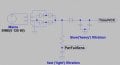
So my question is where are you planing on connecting _PwrFailSense_ lead? So u can't just sample VCC rail of timer circuit cuz it's heavily filtered and regulated which would cause huge delay between power-down and detection? So all I can think of is using xfmr with two secondaries for timer xfmr and monitoring rectified and vry lightly filtered aux secondary?

Sry abt putting cart b4 horse but crickets on this project are getting totally deafening:(!
 
Ok so I get how timer circuit is powered by its own dedicated transformer and regulated PSU distinct from high Pwr circuit (which is totally necessary to avoid false tripping by load fluctuations and 2b independent of Variac setting):)!
Correct...

So my question is where are you planing on connecting _PwrFailSense_ lead? So u can't just sample VCC rail of timer circuit cuz it's heavily filtered and regulated which would cause huge delay between power-down and detection?

--Emphasis added--

Capt. Obvious strikes again!:D

So all I can think of is using xfmr with two secondaries for timer xfmr and monitoring rectified and vry lightly filtered aux secondary?
But that would be unnecessarily burdensome to the builders!:rolleyes: I fail to see the need/desirability of multiple secondaries?:confused: -- 'Isolation' of the 'fast' and 'slow' filters via a rectifier diode (as illustrated below) is quite adequate and spares the builder the not inconsiderable 'agro' of locating a special transformer!

Simplified schematic of the inrush management circuit's PSU -- NOTE - In the interest of 'focus', noise mitigation and VCC E-regulation circuitry have been omitted...
InrushMgmtPsu.jpg

Gotta dash!

Best regards
HP:)
 

Thread Starter

Aleph(0)

Joined Mar 14, 2015
597
@Hypatia's Protege I promise to get straight down to on-topic point of this post but first u need 2 know trying to get around VPN issues by accessing web through any of your private or hired WI, MN or ON ISPs DOESN'T WORK vry well cuz of Flash requirement:mad:! So VPN has a hissy cuz _Flash IP_ is same as your ISP's _Public IP_ which clashes with VPN's DNS table!

So as example if I access Zenmate's HK servers through any of your Airstream subscriptions my _public IP_ points to Hong Kong but my _Flash IP_ points to your W. Wisconsin hub, so VPN goes into _nagathon_ with pop-ups and redirects (basically telling me to disable Flash) and won't STFU abt it:mad:!

HP now I'm going to say something! IMO me accessing web through ANY of your ISPs is a totally lame solution:rolleyes:! Cuz sites that publish visitor's routing info and staff with access to it on any site could get wrong impression from my _Flash IP_ being same as your _Public IP_ (cuz it reveals we're using same ISP). Now HP I totally get how you're saying abt not _living down_ to, like you say, _assuage secret fears of neurotic busybodies_ but I say it IS important cuz of INITIAL impressions of ppl who don't know us over long term (like new tutorial _followers_)! So if they get idea we're members of same household just high-fiving each other or a loony putting on a puppet show for kicks or whatever then like you say they're not taking us seriously which leads to lack interest or, IMO worse, hightened interest for all the wrong reasons:eek:!

So even if Flash issue can be resolved I'm still totally uncomfortable using your ISPs just on principle! So since I can still access VPN through my hired ISP that's how I'll proceed until it gets 2b more agro than it's worth! Then I'll just pay subscription for full VPN features and hope my CC# doesn't get stolen when (NOT IF:rolleyes:!) Zenmate has data breach!

So here's totally sincere disclaimer: I have no reason at all to doubt integrity of Zenmate's security! It's just that if it can happen to Equifax it can happen to ANYBODY:eek::rolleyes:!


////Here's on-topic content////

Re: LVPSU's Inrush-control (_ballast_) timer:

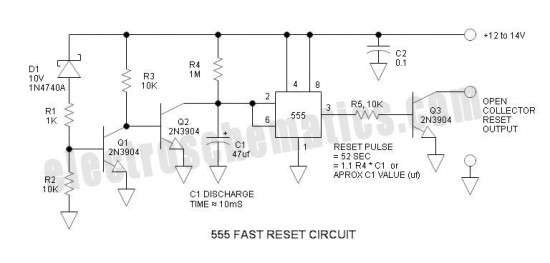
HP does timing capacitor discharge time absolutely have to be ≤ 10μs from Pfail detection? Now HP just so u know, I absolutely love your circuit cuz I say dumping ≈ 4.05mJ (Q≈900μC) in like 10μs is totally phenomenal! But I also say it's wasted on 555 circuit! So if way slower but IMO still vry fast reset time of 3ms to 5ms can work plz look at discharge circuit of timer in article HERE:cool:!

HP o/c I know in our app D1 wouldn't be connected to timer rail:eek:! So it would stay just like you have it coming from fast-filtered sample point through JFET source-follower (which I say could also be just high slew-rate OP-Amp voltage follower) buffer to prevent causing ripple by loading sample point. So since your output circuit uses opto-isolated triac to switch contactor coil, output circuit is o/c totally different. Also I totally get that D1 Zener voltage is selected based on LvCtrl range and timing cap is smaller with variable timing resistor!

So anyhow here's schematic from linked article:

So article claims full reset time of 5ms to 10ms but in my experiments it's only 3ms (that's using NTE equivalent: NTE123APs):)

HP so even though it can be literally like 1,000 times slower than your setup, unless I'm totally missing something causing need for ultra-fast reset, here's advantages of simple (linked) reset circuit:

◊Saves cost and bulk of BLF244 VHF power MOS transistor plus hassling with stripline mounting!
◊Saves cost of 2N6255 VHF BJT!
◊Saves P!$$!ng around with critical layout!
◊Doesn't force readers to study or know transmission-line theory and RF engineering just to achieve simple function of resetting a freaking timer:rolleyes:!

◊2N3904/NTE123AP are just general purpose to-92 packaged BJTs usually priced less than $1 apiece:)!
 
Last edited:

Thread Starter

Aleph(0)

Joined Mar 14, 2015
597
Ah-ha, so the old HP and Aleph are the same person is finally proven to be true?:p:D The internet doesn't ever lie, or so I've heard.
Shortbus ur2 funny:rolleyes::cool:! So anyhow being clear, problem I'm having is just that my Xplornet connection doesn't get along with free version of Zenmate VPN (by which I mean constant freezes, dropped connections and like that)! So on her advice I tried just logging on to HP's hub (which works basically like a remote access VM) then to Zenmate from there which definitely works a lot better connection-wise as long as I remember to set options on hub acct for my display type (which it doesn't store between sessions:confused::mad:)!

Only problem is hub's user authentication software insists on Flash being enabled which Zenmate doesn't like cuz Flash is like _IP leak_! So even though Flash can't dox my real IP (just IP of HP's W. WI hub that I was connecting through which she doesn't consider private anyhow) IMO it's still a major problem cuz Leaseweb won't shut up abt Flash (and I can't find any way to disable warnings) and also like I said it can create suspicion by making it look like HP and I share same connection (and depending on setting of VM's virtual NIC and display type possibly even same computer) to ppl looking on routing info:eek:! So IMO that's vry serious problem cuz in role of authors of STEM material it's vry important for ppl to take us seriously (which o/c doesn't mean always agreeing with us! Just knowing we're forthright, competent, emotionally mature adults!) Cuz if they think we're just kids playing stupid Facebook type games then we've totally lost initiative as educators:(!

So anyhow I say it's totally sick that basic privacy has 2b so complicated:mad:! Now w/o going political I just have to say IMO REAL problem with vanishing privacy is cuz most ppl (including politicians) are from big cities and so never learned to appreciate the privacy they never had opportunity to experience:(!

Shortbus so anyhow tnx for posting! Cuz I say even jokes and ribbing are way better than crickets:)!
 

shortbus

Joined Sep 30, 2009
10,049
hortbus so anyhow tnx for posting! Cuz I say even jokes and ribbing are way better than crickets:)!
Above all that I am or perceived as I'm a jokester. My grand kids call me a FOF, funny old fart.

I guess I'm either lucky or simple when it comes to the internet. I don't post any "private" information online, or do any banking online. So can't see the need for a VPN or any of that other clandestine computer stuff. But then again i'm just old and dumb any way.
 
here's advantages of simple (linked) reset circuit:

◊Saves cost and bulk of BLF244 VHF power MOS transistor plus hassling with stripline mounting!
◊Saves cost of 2N6255 VHF BJT!
◊Saves P!$$!ng around with critical layout!
◊Doesn't force readers to study or know transmission-line theory and RF engineering just to achieve simple function of resetting a freaking timer:rolleyes:!

◊2N3904/NTE123AP are just general purpose to-92 packaged BJTs usually priced less than $1 apiece:)!
@Aleph(0) -- Then it is your impression that I was seriously proposing the 'BLF244 gated shunt arrangement' as a practical solution to our 'prompt-reset' requirement? Aye yai yai!o_O -- FWIW I was merely exploring the concept -- 'puttering in my lab', as it were --- with the (albeit, to no small extent, lackadaisical) 'aim' of gauging BLF244 survivability to Ca. 40W discharge impulses -- Granted! The '555 reset problem' inspired said research 'dalliance' but...:rolleyes:

HP does timing capacitor discharge time absolutely have to be ≤ 10μs from Pfail detection?
By no means! A reset latency of 50 ms should prove quite sufficient! --- Moreover, was such stringent latency required - I'd have looked to integrated ECL prior to re-inventing the wheel, as it were...o_O:rolleyes:

So article claims full reset time of 5ms to 10ms but in my experiments it's only 3ms (that's using NTE equivalent: NTE123APs):)
Good deal!:)

So it would stay just like you have it coming from fast-filtered sample point through JFET source-follower (which I say could also be just high slew-rate OP-Amp voltage follower) buffer to prevent causing ripple by loading sample point.
---Emphasis Added---

She who would employ an IC where a single 'discrete' suffices?:rolleyes: Must be the generation gap again!:p

Well hey! I'll get back to you following physical evaluation of the applicable features Re: the linked circuit!:) --- Please understand - It's not that I doubt your results - merely dubiety as regards acceptable 'repeatability' over a range of common general purpose NPNs...

Re: Your connection drama! --- How many times must I say it? You need merely dedicate a device --and, if you're *really* paranoid-- hire a distinct ISP for exclusively non security-critical use! --- Simple as that!:rolleyes:


I guess I'm either lucky or simple when it comes to the internet. I don't post any "private" information online, or do any banking online. So can't see the need for a VPN or any of that other clandestine computer stuff. But then again i'm just old and dumb any way.
Hey @shortbus? Please cheer up!:) If you've found a way to function in this day and age sans deposition of personal info on 'the web' - you're much smarter than I (and, I daresay, 99% of Western civilization):)

As regards 'Old'? I dunno... I know I'm far from ready to term people less than 30 years my senior; 'elderly':eek::) --- Then too, if 60 is indeed the new 40 -- You're a strapping lad of 50!:cool: --- By the same token, in 17 years' time I'll be neigh-on 3 years younger than my present age!:D --- Ya gotta love the new math!:)

Very best regards
HP
 

shortbus

Joined Sep 30, 2009
10,049
Hey @shortbus? Please cheer up!:) If you've found a way to function in this day and age sans deposition of personal info on 'the web' - you're much smarter than I (and, I daresay, 99% of Western civilization):)
Not saying I'm completely of the web but as much as possible. And anyone saying they don't want there information from their credit card out there online is fooling themselves. Any time that card or a debit card is swiped the information is transferred by the web, whether you want it to or not.

I can remember filling out checks using, IIRC, a turquoise colored pen because the writing was supposedly not picked up when scanned. Cash is the only untraceable transaction, but don't even belied that anymore. Since almost every where uses security cameras.
 

Thread Starter

Aleph(0)

Joined Mar 14, 2015
597
Then it is your impression that I was seriously proposing the 'BLF244 gated shunt arrangement' as a practical solution to our 'prompt-reset' requirement?
HP I didn't know! So o/c it seemed like exactly what ur saying! Just _concept experiment_ but since u brought it up in GTM conference what was I supposed 2 think? So excuse me for taking YOU seriously:p!

She who would employ an IC where a single 'discrete' suffices?:rolleyes: Must be the generation gap again!:p
HP u can say that but in application where _foot print_ matters (which LVPSU definitely isn't) an 8-pin, hi-Z input, fast op-amp configured as follower could be better option:cool:

How many times must I say it? You need merely dedicate a device --and, if you're *really* paranoid-- hire a distinct ISP for exclusively non security-critical use!
HP let's not start all that again:rolleyes:!

Then too, if 60 is indeed the new 40 -- You're a strapping lad of 50!:cool: --- By the same token, in 17 years' time I'll be neigh-on 3 years younger than my present age!:D --- Ya gotta love the new math!:)
HP all I can say is I hope it's discontinuous function kicking in at 40 yoa cuz otherwise I'm just snot-nosed 1'st grader:(!

anyone saying they don't want there information from their credit card out there online is fooling themselves. Any time that card or a debit card is swiped the information is transferred by the web, whether you want it to or not.
Shortbus that's 4 sure! So best I can hope is encryption and security are strong enough 2 keep my info in hand of just merchant and bank! But current events say I'm living in fool's paradise:(!

Cash is the only untraceable transaction, but don't even belied that anymore. Since almost every where uses security cameras.
Shortbus it's even worse than that! So 2 see for yourself try microwaving US $20 and look what happens to Jackson's eye:rolleyes:!

Since almost every where uses security cameras.
Shortbus I have mixed feelings abt that cuz on one side it's totally egregious invasion of privacy but on other side if ur ever falsely accused of crime or whatever misconduct you'd prolly have iron-clad alibis from security, traffic or just random dashboard/WIFI cam footage:)! So I say that's silver lining of telecom/Onstar (or whatever snoop bureau) tracking your cell too:cool:!
 
Last edited:

Thread Starter

Aleph(0)

Joined Mar 14, 2015
597
The first thing I do with a new cell phone is turn off GPS. The second is to turn off WiFi.
Shortbus that's excellent idea but u know _they_ can remotely enable features w/o subscriber even knowing it! It's true that even Mic and Cam can be remotely activated basically turning phone into AV bug:eek:! Also just turning phone off is no guarantee! You totally have to put it in Faraday shield 2b sure but that's not option for most ppl cuz o/c shielded phone can't receive calls and texts plus it can take a long time to like _re-acquire_ signal after unshielding! So I say for best privacy you'd need to use cheap-o (like $40:eek:) phone on prepaid plan where u don't even need to give out your name! So that's what HP does but I'm way too much a product of my generation to be separated from my conjoined smartphone:oops::D! Anyhow even with just _dumb phone_ they still know your location based on like _triangulation_ from different _cells_ and so can vry easily build dossier based just on that plus your calls and texts:rolleyes:! Now being clear all that snooping and surveillance requires court order in most countries (including US) but if DHS or DEA or like that's in it they wave rules:rolleyes:! Also hackers and like that are risk too!

So excuse me for taking YOU seriously:p
I stopped doing that quite a while ago.:rolleyes:
Shortbus just to make sure there's not misunderstanding that was totally addressed to HP:)! So I was telling her to excuse me for assuming she was staying on-topic in GTM conference:rolleyes:! Sry if it sounded like I was picking on you:oops::confused:?

So abt taking HP (and really whole team including me) seriously; I totally admit we (by which I mainly mean HP and I) basically bit off more than we can chew now with our _offline lives_ getting way more busy and complicated than we expected:rolleyes:! But we made commitment to Tutorials so we're definitely planing on seeing them through:)! Not just to keep our word but cuz we want to for same reason we started (which is giving HV hobbyists and serious students alternative approach of concept plus hands-on projects to keep it grounded [NPI:oops:] in tangible world):)! So we definitely have major slowdowns:oops: but I totally promise we'll keep, like they say, _forging ahead_:)! Also we already have a lot done _behind scenes_ by which I mean completed projects with illustration pix for every step (so for example Balanced EHT meter, LVPSU, flyback drivers and like that):)!

So plz try 2b patient and huge thanks to everyone giving us suggestions and advice cuz we definitely listen which you'll totally see when we get back to publishing articles:)!
 

shortbus

Joined Sep 30, 2009
10,049
Shortbus just to make sure there's not misunderstanding that was totally addressed to HP:)! So I was telling her to excuse me for assuming she was staying on-topic in GTM conference:rolleyes:! Sry if it sounded like I was picking on you:oops::confused:?
Just me trying to be funny again. Not going to go down that same rabbit hole that happened before. Since there is no one here now putting a bug in my ear in PM. And he isn't doing it to you either.
 
Just me trying to be funny again. Not going to go down that same rabbit hole that happened before. Since there is no one here now putting a bug in my ear in PM. And he isn't doing it to you either.
Of course I can only guess at the identity of the 'someone' to whom you refer --and, 'equally of course', we all know my guess is correct!o_O -- Much as it pains me to concede the point, the fora certainly have been more peaceful for his absence...

Having said that, I feel it is truly unfortunate that he (and certain other long-standing, otherwise highly valuable contributors) found it impossible to 'jettison' the political rancor many of them actively strove to abolish!:confused::( -- While it's convenient (and not entirely incorrect) to dismiss them as 'casualties of the Politics Experiment' -- the fact remains that all of them are high-functioning adults - and, as such, capable of much better!:rolleyes: -- I can but hope said individuals will 'cool-off', endeavor to make peace with the fora staff (via 'standard offer' arrangements, etc.) and return to their prior patterns of constructive participation sans political agendas... --- Sadly, I don't see that happening any time soon under the present 'political climate' :(

Well, hey! @shortbus -- Please know that I'm very pleased at the apparent resumption of our 'pre-politics' rapport!:)

@Aleph(0) --- FWIW I've uped the images of my (functional but 'capital U' ugly:oops:) 're-wind' of your transformer to my blog -- inasmuch as said images alone are less than wholly self-explanatory - I'll attempt to present a 'TIHIDI' (i.e. 'This Is How I Did It') on this thread no later than this weekend.
To be clear: I do not recommend DIY fabrication of power-transformers! --- All readers are strongly advised to purchase same (as suggested and researched by @The Electrician)! --- My re-wind 'THIDI' of @Aleph(0)'s 'faux-pas' is offered for the curious, and any afflicted with abject impecunity, extreme masochism, obdurate 'DIY-ism' or all of the above!:rolleyes:

Most sincerely
HP:)

PS @theodoravain --- Whout wishing to cast stones from my conservatory:oops: - Once again! I would consider it a personal favour were you to occasionally deign to log-in such that all readers might recognize your status as an active core member of the EHT project (and, hence, regard you as a contact in said regard):cool:
 
Last edited:

shortbus

Joined Sep 30, 2009
10,049
Of course I can only guess at the identity of the 'someone' to whom you refer --and, 'equally of course', we all know my guess is correct!o_O -- Much as it pains me to concede the point, the fora certainly have been more peaceful for his absence...
He also didn't last long at ETO. When you brag about how many sites you have personally brought to their knees, that isn't too good a thing to do when mods are paying attention.

Well, hey! @shortbus -- Please know that I'm very pleased at the apparent resumption of our 'pre-politics' rapport!:)
It takes two to tango.....
 
Kind friends:

As promised, I here present the 're-wind' "This Is How I Did It' (THIDI) Re: @Aleph(0) 's Toroidal mains power-transformer.

Please note that the following is offered in response to copious (I daresay clamorous:rolleyes:) reader demand! -- Although, in this case, an acceptable result was obtained - such can hardly be recommended on time/labour investment, cost effectiveness nor anything like 'aesthetic' grounds!:oops:

The Reader is strongly advised to heed the advice (Re: Purchase of appropriate Antek product{s}) -- as elaborated upon on this thread.

Background:
Quoted below (from the above linked thread) is Aleph(0)'s description of her extraction of the transformer's 'outer' winding conductor and preparation of same:

So anyhow Here's my progress so far:
◊ Unwound old secondary with 1 meter lath shuttle.
◊ Drew wire out full length (40m+).
◊ Groomed (by which I mean _de-kinked_ and straightened) it with DIY PVC _die_
◊Folded it in half and drew pair taught and taped it to itself at 15cm intervals.

So end result is cable made from two totally parallel wires half length of original secondary:)
She then left sorting of the resultant mess to me in advance of her extended sojourn romp in Gloucestershire...:rolleyes:

But to begin:

Re: the following image - foreground to background:


1) The 'prepared' and 'shuttle-folded' secondary conductor (≈ 20m of twin #12 AWG enameled solid Cu wire) -- Note that said 'cable' exhibits sufficient torpidity as to obviate necessity of a 'shuttle form'.

2) US $20 banknote for perspective.

3) The transformer core - Inner winding and associated bunting intact. --- Note that while the inner winding was employed as the secondary in the original application, it will be repurposed as the primary -- such is a mater of convenience and of no functional significance inasmuch as the transformer's original configuration featured unity turns ratio...

4) The outer-winding's bunting.


In the interests of increased winding-to-winding electrical isolation and mitigation of liability to in-process inner-winding damage, I took the decision to prepare the core/inner winding assembly via application of additional cladding as illustrated below:

Appearance of core/inner-winding assembly following preparation via cladding with polyimide sheets secured via an over-wrap of 3M Super-88 vinyl adhesive tape, 'checked' with twin circumferentially wrapped bands of standard 'strapping tape'.


The winding jig assembly proper:

The winding jig is assembled atop a wooden 'bar stool' which being fastened to the floor.
Please note the fixed 'jaw' (left) and the adjustable 'jaw' (right) --each fashioned of so termed 2" by 2" stock (actual cross-sectional dimensions ≈ (1+7/16)" 'by' (1+7/16)" (i.e. 1.4375" square). Note also, the 3/4" bore transfixing the plywood panel and stool top. -- Important! Inasmuch as the bore accommodates the inner winding's leads at such junctures as they must extend downward - appropriate bore-to-fixed jaw spacing is imperative!


Prospective illustrating the jig's attachment to its 'bar stool" stand... --- Again, the stand must be bolted or otherwise securely attached to the floor!


Core/inner-winding assembly clamped in jig/w primary leads extending down through the bore (note the 'friction enhancing' latex block) -- Note also that 'jaw' height was chosen to be sufficient for secure clamping sans obstruction of the foramen!


Rewinding in progress -- core rotated (and re-clamped) 180° degrees relative to the above image...


Rewinding complete -- Told you it was
ugly!:oops::rolleyes:


Detail of completed re-wind -- note that the foramen is nearly choked (significance of this addressed in closing remarks).


Outer cladding consists of a full over-wrap of 3M-Super 88, 'armored' with 'Gorilla' brand duct tape.


Alternate view of the completed transformer showing a glimpse of 'the light at the end of the nearly-occluded foramen';)


Closing remarks:

First, the 'good bits':cool:

1) Despite significant dimensional alteration, the transformer is yet readily installable sans modification to its original mounting hardware/scheme...

2) No anomalous hum/vibration was perceived under load conditions productive of measured secondary currents > 400A (which being over thirteen times the recommended maximum intermittent load current) --- An observation demonstrative of the (surprising) fact that even casually applied manual winding techniques achieve acceptable conductor taughtness (and, hence stasis)...

3) Short circuit current (10 cycles /167ms) when supplied by a dedicated #2 AWG 'feeder' ≈ 2kA (Sec) --- indicative of proper coupling and acceptably low overall resistance...

4) Close pressed central foramen cladding attains temperatures of Ca. 80°C following 60 minutes' 50V@50A (Sec) (i.e. 2.5kW) operation from 16°C 'cold soak'. -- Following power-down the temp continues to increase to plateau at ≈ 105°C Ca. 17 Min following de-energization --- While I realize this is 'pushing it a bit' -- Indeed! Considering the layers of effective 'thermal insulation' provided by the cladding, I must assume that inner-winding temps may well exceed 200°C under the described condition) -- Even so, I feel such is a 'good showing' for a such a device -- especially in-light of its proposed, comparatively 'light duty' application!:cool:

5) Although the foramen is nearly choked (owing to the necessarily haphazard winding of the secondary and additional cladding) such needn't be a problem as the transformer may be adequately mounted sans a transfixing fastener! -- To any insisting upon a through-foramen tie, please be advised that 'straight-line' clearance sufficient to accommodate a 5/16" fastener remains ...

As an aside, FWIW: Although common practice with line-frequency toroids, I don't like metallic fasteners passing the foramen! --- Of course the ends must be electrically isolated! That much is trivially obvious! -- My concern is with possible inefficiencies arising from induction of eddy currents in the fastener - though I expect such are insignificant at the frequencies and fastener-diameters involved -- My 'RF sensibilities' preclude cringe-free regard of such arrangements!o_O


And the downside:

1) Requisite investment of a ridiculous amount of unpleasant, difficult and time consuming effort! -- Then too, I ask you to bear in mind that @Aleph(0) preformed at least half the task! -- The mere thought of the long hours she must have spent in an over-heated, rank barn de-kinking the conductor gives me chillso_O!

2) The cladding --while necessary to protect the inner winding from clamping/winding forces and the irregularly wound outer winding from mounting pressure-- very likely reduces effective capacity via provision of thermal insulation...

3) Acceptable functionality aside -- It's a 'right dog's dinner' to behold! - And for that amount of effort!:mad:


4) While PowerVar products seem to be an exception -- Experience has shown that most enamel insulation does not brook significant conductor manipulation! Ever attempt to un-wind a deflection yoke?:eek: -- That'd be 'par for the course' as regards the re-usability of most enameled conductors!o_O:(

Well hey! -- I apologize for the abbreviated, over-qualitative tone of this post:oops: -- Off-line life again:rolleyes:

@Aleph(0) and @theodoravain will be back later this week should you have any question (please know that either of them are at least as knowledgeable as I Re: 'line frequency' electrical equipment - theory and practice):cool: --- But again! please do yourself a favour! -- Take the advice of @The Electrician, @cmartinez, @MaxHeadRoom, @shortbus, et al and purchase a proper transformer! - Unless Antek's offerings cost in excess of 20 hours of your time - you can't go wrong!:cool:

I will return ASAP when I will compose and publish the EHT indicator THIDI:cool:

Very best regards
HP:)
 
Last edited:

Thread Starter

Aleph(0)

Joined Mar 14, 2015
597
Short circuit current (10 cycles /167ms) when supplied by a dedicated #2 AWG 'feeder' ≈ 2kA (Sec) --- indicative of proper coupling and acceptably low overall resistance...
HP I say it's definitely good 2 know dead short can't exceed surge current rating of big rectifier diodes (of like 4kA?) cuz I totally guarantee heating of windings will raise resistance lowering current dramatically in time for fast OCP (what ur calling _semiconductor fuse_?) to save the day:cool:!

And the downside:

1) Requisite investment of a ridiculous amount of unpleasant, difficult and time consuming effort!
HP OMG! That's a total understatement:eek:!

I ask you to bear in mind that @Aleph(0) preformed at least half the task! -- The mere thought of the long hours she must have spent in an over-heated, rank barn de-kinking the conductor gives me chillso_O!
HP being totally honest old stables aren't bad smelly anymore. Cuz now it's more like old oil or creosote odor but it was definitely vry warm (like 95°F w/ high dew point and vry buggy which repellent mostly prevents them from biting but they're still constantly buzzing around!) Anyhow it was just hours of boring totally depressing work for almost nothing:(!

Acceptable functionality aside -- It's a 'right dog's dinner' to behold! - And for that amount of effort!:mad:
HP I totally agree abt being way too much work and that ppl can have exactly what they want for just a few bucks instead! But being honest I say our rewound transformer turned out way better than I expected:confused:?

But again! please do yourself a favour! -- Take the advice of @The Electrician, @cmartinez, @MaxHeadRoom, @shortbus, et al and purchase a proper transformer!
OMG! Absolutely:eek:!

So only exception is if you already have two identical like 12A Xfmrs, just put secondaries in electrical parallel and primaries in parallel for 120V or series for 240V (but totally pay attention to keep phasing right for how secondaries are connected). So that way you can have 0-120V RMS @ 24A secondary also duel transformer setup can help getting around derating problems too:)!
 
To be clear: I do not recommend DIY fabrication of power-transformers!
There goes that echo you're always on about.

Ok! Let's be clear! We're NOT recommending rewinding! Without special equipment and experience garnered skill, the outcome will be a lot of work for an inferior transformer! Antek (sp?) looks like your best solution and an excellent one at that! So please let's run with it! I'd hate to see the EHTPSU courses quagmired again!
Sound familiar?:rolleyes:

PS @theodoravain --- Whout wishing to cast stones from my conservatory:oops: - Once again! I would consider it a personal favour were you to occasionally deign to log-in such that all readers might recognize your status as an active core member of the EHT project (and, hence, regard you as a contact in said regard):cool:
Sure thing! Now for pity sake tell that to the gal in your mirror and put a glazier to work on your conservatory!

Re: Tutorial business..
@HP Yeah, well.. Things are going as smoothly as can be expected during the summer months. Just a few wobbles I'd ask you and/or Julie to address. Yeah! I know! I'm the teacher here!:oops: Well I advised from the start that distance education doesn't come under my purview! Still that didn't stop me trying and won't discourage on-going participation but on some topics the lines of communication are down! For whatever it's worth, in my opinion the trouble areas are marked to a greater extent by certain readers' clinging to misnomers than by any lack of proficiency.

Here it is:

A highly vocal and disruptive minority are questioning the necessity of an isolation transformer following the variac. That is, they don't see the value of line isolation. My detailed explanation of the safety and versatility issues leaves them cold! I wish you or Julie would try to enlighten them! Frankly I'm on the verge of telling them to either use their heads or get lost! Sorry! Sometimes it doesn't seem worth the effort with people who see a bicker in everything!

While you're at it please try to aquatint them with these starkly obvious concepts! I've tried and, for the most part, failed.

1. That use of multiple paralleled filter capacitors achieve lower net ESR. I wouldn't have thought cognizance of Ohm's law was so demanding?:rolleyes:

2. Following the rectifier with a Pi section (C-L-C) filter will reduce the ripple current in the output capacitor{s} only.

3. That radiation secondary to fluctuating electric current occurs as a result of "lost field" and thus tends to increase with frequency for a given conductor (inductor) configuration. I have considered explaining it from the POV of transmitting antennae being specially designed "electromagnets" but a persistent "little voice" says I'd be wasting my time:rolleyes: Yeah, well.. I know this isn't particularly relevant to the line frequency power supply project. In another conversation I dared remind them that electromagnetic radiation could not occur in a universe where c=∞ and haven't stopped regretting it since! And hey! You don't have to tell me that similar considerations apply to emission of all electromagnetic radiation (light, bremsstrahlung, etc)! I GET IT, @HP! Well.. They don't! Maybe you can help? Please?


Reader update:
Julie ( @Aleph(0) ) is very busy vacationing (by any description):rolleyes: and @HP would have much more time to devote to her work here if people would stop using wire-bristle BBQ brushes!

So looking forward here's the "agenda":
1. Complete the LVPSU TIHIDI
2. Complete the EHT meter TIHIDI
3. Write the final chapter (Re: LOPT test circuit construction) of the current tutorial.
4. Publish the current tutorial (to AAC "Power Electronics" and ProvoSrv "IEC community.hpsworld"

5. Begin the next tutorial ("Practical LOPT Drivers: Theory, Design And Construction"). The actual name may vary..

Thanks!
 
Last edited:
There goes that echo you're always on about.
Sound familiar?:rolleyes:
What can I say? --- It is said that 'Great minds think alike, though fools seldom differ' -- Need I ask which 'shoe' fits you?:p

Sure thing! Now for pity sake tell that to the gal in your mirror and put a glazier to work on your conservatory!
Sincere thanks for your cooperation!:)

Well I advised from the start that distance education doesn't come under my purview! Still that didn't stop me trying and won't discourage on-going participation
--Emphasis Added--

Again, many sincere thanks!

That is, they don't see the value of line isolation. My detailed explanation of the safety and versatility issues leaves them cold!
--Emphasis Added--

As would an earth-referenced output/load at mains potential in the hands of a newbie (following a brief 'hot-flash', as it were);):rolleyes:

Frankly I'm on the verge of telling them to either use their heads or get lost!
Indeed! -- Having made the case for line to output isolation, merely advise 'them' --in no uncertain terms-- that the subject is closed! -- period! --- The demands of indemnity from tort --and, for that matter, basal human decency, grant equivocality no quarter where safety is at issue!

While you're at it please try to aquatint them with these starkly obvious concepts! I've tried and, for the most part, failed.
While I apologize that my 'schedule' precludes active participation for the nonce -- Please consider the following thoughts/'pointers'...

That use of multiple paralleled filter capacitors achieve lower net ESR. I wouldn't have thought cognizance of Ohm's law was so demanding?:rolleyes:
The concept of mixed impedances is intimidating to some students --most especially those weak on Trig-- It has been my observation that the Pythagorean formula is often as 'the spoon full of sugar' in such cases:)

Following the rectifier with a Pi section (C-L-C) filter will reduce the ripple current in the output capacitor{s} only.
It is my experience that those upon whom the import of formulae is somehow lost:confused: are, nonetheless, quite receptive to the ostensible 'evidence' of simulation:D -- Hence my advice that you draft rectifier⇒ filter network⇒ load arrangements, post (or otherwise publish) 'captures' of the simulation results along with the associated schematic files such that the 'troubled' reader's might take it from there - Further to that I suggest you exhibit a range of filter topologies (e.g. L-Networks, Incl. inductor input schemes [Uggg!], etc...). But by all means emphasize the importance of comprehension via appreciation of formulae -- And don't hesitate to 'shame' indolence in said regard!

That radiation secondary to fluctuating electric current occurs as a result of "lost field" and thus tends to increase with frequency for a given conductor (inductor) configuration.
I dared remind them that electromagnetic radiation could not occur in a universe where c=∞
Correct and correct again (but then you already knew as much!:D) --- But for finite velocity (CIP 'c') all of the field would return (collapse) prior to prolapse (i.e. expansion of the inversely-polarized field) following I(0)... Of course such represents a significant oversimplification inasmuch as consideration is restricted to the 'H-field' alone - but then it gets the point across:cool: - albeit a mere 'hop, skip and jump' short of a 'category 5 dumb-down':oops:
My advice? Restrict focus to the topics at hand (cip tutorial material)! -- While I sympathize with the incredible difficulty in letting over-heard misnomers, etc 'ride' - one cannot 'save the world'...

( @Aleph(0) ) is very busy vacationing (by any description):rolleyes:
Well now - in all fairness she is 'working' (well... earning) but I hear ya;)

@HP would have much more time to devote to her work here if people would stop using wire-bristle BBQ brushes!
Indeed!:rolleyes: -- It's been three so far this summer (since late May) - I expect it'll take a death (or five) to move legislation forward!:mad::( -- You will please pardon a digression upon the (broader) topic of wire brushes in general -- the worst offender (IMO) is the Dremel wire wheel -- bristles the diameter of domestic feline hair and as readily shed! Then too, as if to add insult to injury (literately), their 'stainless' composition assures persistence... Thus we have an agent exhibiting all the worst aspects/deleterious potentialities of toxins AND parasites but with the mitigating factors of neither! - Everyone please! If you must use wire brushes stay with large bristle diameters in all cases - and never-but-never use on or near food handling areas/appliances!

So looking forward here's the "agenda":
1. Complete the LVPSU TIHIDI
2. Complete the EHT meter TIHIDI
3. Write the final chapter (Re: LOPT test circuit construction) of the current tutorial.
4. Publish the current tutorial (to AAC "Power Electronics" and ProvoSrv "IEC community.hpsworld"

5. Begin the next tutorial ("Practical LOPT Drivers: Theory, Design And Construction"). The actual name may vary..

That's the plan -- What a long, strange trip it's been!o_O:oops::cool:

Very best regards
HP:)
 
Last edited:
Top