EHT power supply design and construction

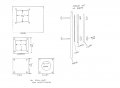
The meter on the right in the picture would still be able to be back mounted in the panel, unless I'm missing something that isn't seen in the picture, a side view would tell me more though.
For your convenience/edification I'll post alternate angle and (yikes!) disassembly views of the mAs indicator by tomorrow morning:cool:
As promised!:)

Front:


Profile:


Rear - Note the adhesive film covering the back of the scale mount plane and sealing the bezel 'joint':


Disassembled view - Note the detached sheet of adhesive film (near lower right of image):


Observations:

1) The seal 'quality' exceeds that of most HDD units for the lack of 'breathers' filtered or otherwise.
2) Although 'uneventful' removal of the mounting studs appears possible - such is moot inasmuch as the instrument was effectively 'doomed' per violation of it's hermeticity:(

Conclusion -- Reliability demands that back-mounting (where desired) is accomplished sans opening of the movement case...

Very best regards
HP:)
 

shortbus

Joined Sep 30, 2009
10,049
1) The seal 'quality' exceeds that of most HDD units for the lack of 'breathers' filtered or otherwise.
2) Although 'uneventful' removal of the mounting studs appears possible - such is moot inasmuch as the instrument was effectively 'doomed' per violation of it's hermeticity:(

Conclusion -- Reliability demands that back-mounting (where desired) is accomplished sans opening of the movement case..
I think your going overboard by using "hermetically sealed", sealed yes but only yo the point of dust exclusion. Why I say this is that it looks to have a pointer adjusting screw going right through the face of it. Liquid filled gauges are 'hermetically sealed', they have a bezel with a rubber gasket that is roll crimped when it is assembled. The plastic type gauges on junked equipment I've seen stored out side get water stains on the gauge faces over a short amount of time.
 

shortbus

Joined Sep 30, 2009
10,049
@Hypatia's Protege and @shortbus all I'm saying is if meter has like _picture frame_ trim around window (like the one HP's using in demo) the window will have to sit whole depth of trim behind back of panel which can cause visibility problems cuz of being in a recess plus covered by screen. Also since we agreed backlighting meter is nix cuz of hassles with batteries u should know that frontal illumination above room level will make it hard to see through screen cuz of scatter!

So anyhow shortbus I totally like ur idea so if it works it works:)! But I say it might be too shaded when shape of meter case doesn't let window sit flush with panel.
Have a look at my sketch. What I'm suggesting does completely away with the 'picture frame'. The panel face becomes the new picture frame. The mesh is then trapped between the back of the panel and the gauge face, no pictrue frame and no foil tape involved.
 

shortbus

Joined Sep 30, 2009
10,049
The principal objections to extraneous windings relate to said features' introduction of 'parasitic' capacitance/loading and cross-arcing/corona where brought out to pins -- And yup!... You guessed it! Removal of said pins does not solve the problem!;):mad: -- Note that the re-purposed application's greater demands in the ways of EMF, frequency and power tend to exacerbate every 'weakness'...
Not arguing with you, but still don't understand this. I'm not saying to just remove the pins, but cut and cap the wires themselves on the unwanted secondaries. Don't see how if it didn't have the problem of, " introduction of 'parasitic' capacitance/loading and cross-arcing/corona" in it's former life, how the floating winding's will effect it in the new life. Personally I'd love to have one of these transformers to take apart my self, to see if there is a better way. :)
 
Don't see how if it didn't have the problem of, " introduction of 'parasitic' capacitance/loading and cross-arcing/corona" in it's former life, how the floating winding's will effect it in the new
And again:
Note that the re-purposed application's greater demands in the ways of EMF, frequency and power tend to exacerbate every 'weakness'...
:)

Then too, the original application:
-Did not include 'open'/'floating' windings...
-Did operate at a single (or a small number of 'discrete') frequencies.
-Did not incorporate the load as a frequency determining 'element'.
-Did implement the transformer in a energy-storage (i.e. 'flyback') topology.

I'm not saying to just remove the pins, but cut and cap the wires themselves on the unwanted secondaries.
While you may be able suppress arcing and corona via 'potting' techniques such will do nothing to remedy parasitic loading owed to inter-winding capacitive coupling, widely scattered 'self resonances', compromised 'Q' and generally degraded insulation integrity...

FWIW it seems your confusion owes to conflation of RF systems with those operating from ELF though AF? --- RF -Even a mere 35kHz- is an entirely different 'animal' - believe it!;):cool:

Best regards
HP:)

PS -- Gotta run! I promise to read and respond to your comments/suggestions Re: mounting of the indicators later on today at such time as I may give it the undivided attention it deserves!:) -- Many thanks!
 
Last edited:

Thread Starter

Aleph(0)

Joined Mar 14, 2015
597
Personally I'd love to have one of these transformers to take apart my self, to see if there is a better way. :)
Shortbus tv flybacks made in last 25 years are just DSTs potted in epoxy so you'd need totally different secondary! And anyway core's cross section totally sucks for pwr handling anyhow! Also resin potted non DST flybacks (like from monitors) are total crap power-wise too:(!

Shortbus I say you need to read intro to flyback tutorial like HP suggests cuz based off your questions abt flybacks I say ur missing point that we're trying to create resource for serious reliable designs instead of novelties:cool:! Now if it was totally my call I'd just encourage skinflints to buy proper high frequency xray transformers and save themselves all the work of modifying high power AC flybacks! But based on consensus of ppl HP and JC are working with, price of over $3k apiece for HV transformers would totally chase off a lot of prospects:confused: So I know it's weird but most of them say they totally prefer doing all that work to spending a few bucks on ready to go parts:confused: Anyhow we want to meet them half way by showing them technique for reliable lab quality high current 100kV PSU (which means high current at 100kv not just high SC current:rolleyes:!) with inexpensive parts IF they're willing to do the work of rebuilding old full voltage high current flybacks:)

Don't see how if it didn't have the problem of, " introduction of 'parasitic' capacitance/loading and cross-arcing/corona" in it's former life, how the floating winding's will effect it in the new life.
Shortbus that's like saying why would someone who is only qualified to be discount house greeter on old job have problem being EE on new job w/o additional training:D? So it's just way of the world that constituent parts get less repurposeable as technologies mature and CRT display technology was no exception;)!

widely scattered 'self resonances'
HP ur right! But after this plz just genuflect and say _parasitic resonances_ I had 8 emails Fri asking for clarification of that:rolleyes:

Then too, the original application:
Did implement the transformer in a energy-storage (i.e. 'flyback') topology.
HP, tnx! cuz that's totally important for ppl to know! New application is not flyback topology! It's just resonant fwd conversion! So gaps are just anti saturation measure! HP I know you'll get to all that in driver tutorial but I say ppl should know like outline of _big picture_ in advance:)!

Have a look at my sketch. What I'm suggesting does completely away with the 'picture frame'. The panel face becomes the new picture frame. The mesh is then trapped between the back of the panel and the gauge face, no pictrue frame and no foil tape involved.
Shortbus Tnx! I say it's totally awesome:)! Cuz it spares builder lots of pissy work and makes more durable instrument too:cool:!

Shortbus plz don't get wrong impression from HP and me not being on here vry much for next few days! Cuz HP's got a lot going on overseeing construction of her new generator hse and she's roped me into helping out:rolleyes:

So just so you know all of us are vry impressed with your plans for mounting meter:)!
 

shortbus

Joined Sep 30, 2009
10,049
HP and Aleph, while I am following this, as you know, both of you keep using acronyms and abbreviation that mean nothing to a lay person. I really am trying to give practical easy to find ways of doing this. Not trying to be difficult with you.

That said, you say your after high voltage with high current. And HP said an ignition coil isn't suitable, but what type coil are you talking about? There are several types of ignition coil, the old cylindrical coils are very bad. But when GM came out with their HEI, high energy ignition, things changed. Instead of the core being a bundle of iron , with no magnetic return path, they went to the new coil, one using an E-I magnetic core. This, like a AC transformer gives a complete magnetic path. And they are also used like a flyback , that stores energy and are resonate. When driven at 12V on the primary they are capable of ~50KV output. The engines they are used in are limited by mechanical constraints to ~6000RPM, but the coils are never the hold back for higher RPM, just the rest of the engine. When running at 6000RPM, the ignition is pulsing at 24000 times a minute, in a V8. This is with the OEM ignition. Then you get into aftermarket ignitions the fire the plugs at 4 or more times for each ignition event. All without saturating the coil or break down of it.
 

shortbus

Joined Sep 30, 2009
10,049
Shortbus I say you need to read intro to flyback tutorial like HP suggests cuz based off your questions abt flybacks I say ur missing point that we're trying to create resource for serious reliable designs instead of novelties
Where is this 'intro' found? If the beginning of this thread is what you mean, it's not of any help.

Shortbus tv flybacks made in last 25 years are just DSTs
Like I said in my post above use something a lay person can know what it means. Even Google only give 'DST' as "daylight savings time".
 

Thread Starter

Aleph(0)

Joined Mar 14, 2015
597
you say your after high voltage with high current. And HP said an ignition coil isn't suitable, but what type coil are you talking about? There are several types of ignition coil, the old cylindrical coils are very bad. But when GM came out with their HEI, high energy ignition, things changed.
Shortbus you need to read introduction to tutorial! HP explains why pulse topology (which includes capacitive discharge drivers) isn't up to the job of general purpose HV PSU! Cuz HV component of output pulse is just super narrow spike to strike arc path for high current/low voltage pulse tail!

that stores energy and are resonate.
Shortbus if you study on pwr conversion topologies you'll know that's an oxymoron cuz ur confusing resonant drive with ringing on secondary:rolleyes: If u tried to use metallic iron core induction coil (which includes ignition coils) in true resonant drive topology it would saturate way b4 achieving useful HV output! It's perfect for its application but UNLIKE PPL it's born to it's station;)!

When driven at 12V on the primary they are capable of ~50KV output
Shortbus that's not the point! Now for example I have CD driven induction coil that produces over 300kV (35cm strike distance) bright white arcs but it's useless for HV PSU cuz almost all the energy in arc is at less than 15kv! The HV spike is vry narrow but it creates illusion of high power HV supply cuz once arc strikes path remains open at way lower voltage for high current to follow but mean voltage is only abt 15kV! It's same principle as xenon strobe tube that takes abt 4kV 3uA spike to trigger like 300V high current discharge:cool:! So with ignition system HV spike initiates arc through high pressure fuel mixture for way lower voltage part of pulse to drive high current through path for hot spark:cool:!

The engines they are used in are limited by mechanical constraints to ~6000RPM, but the coils are never the hold back for higher RPM, just the rest of the engine. When running at 6000RPM, the ignition is pulsing at 24000 times a minute, in a V8. This is with the OEM ignition. Then you get into aftermarket ignitions the fire the plugs at 4 or more times for each ignition event. All without saturating the coil or break down of it.
Shortbus even if you could do it at freqs of tens of kHz the proportion of energy at HV potentials would still be totally to low! That's why 250kV current mode PWM driven ferrite topology has totally disappointing HV duty cycle! So _energy storage_ pwr conversion topologies like capacitive discharge driven induction coils and current mode PWM driven ferrite xfmrs have important uses but not for high duty cycle high current EHT supplies!

I really am trying to give practical easy to find ways of doing this. Not trying to be difficult with you.
Shortbus I totally believe ur being sincere! But ignoring explanations and harping on and constantly revisiting covered ground just isn't constructive! You can know we totally care abt _lay people_ cuz repurposing flybacks is already huge (and I mean HUGE) compromise! But it can work with resonant driven big AC flybacks followed by _tappless_ full wave Cockroft Walton cascade!

Like I said in my post above use something a lay person can know what it means. Even Google only give 'DST' as "daylight savings time".
Shortbus ur right that I should have expanded Diode Split Transformer but u should know that cuz HP expanded it in her response to your (earlier) post and went to trouble of drafting a graphic to show you what they are and why they're unsuitable! Shortbus how can we communicate constructively if you don't even bother to read or remember responses:(? Cuz It's totally a two way street!

Where is this 'intro' found? If the beginning of this thread is what you mean, it's not of any help.
Shortbus it's intro to LOPT modification tutorial which answers most of ur questions abt rationale of xfmr selection and is also basically mission statement of whole series:)

Shortbus plz relax cuz we've thoroughly thought out xfrmr and PSU design aspects of projects! I've been playing with real IEC fusors since I was 10 yoa and designing/constructing synchrotrons since I was 17. HP has been playing with LINACs and radiology equipment since prehistory (sry HP:p). Which o/c doesn't mean we know everything there is to know on subject of HV but it means we have in depth theoretic and practical understanding of subject so we can definitely feel Occam's Razor at our throats guiding us to best compromise:)!

Shortbus you can know we're sincere abt feedback cuz you really helped us out with meter movement mounting (which HP wants to talk more abt when she has time to be back on here for more than quick hi/bye but she's vry happy abt your plans)! So I say we need to keep focus on areas like that where there's high potential for improvement (like physical construction and cheaper alternatives and alternate sources for tools and like that) and not waste time rehashing tested and proven areas:rolleyes:! After all the recommended flybacks are cheap and easy to find so that's not even an issue:)!
 

shortbus

Joined Sep 30, 2009
10,049
Got it, I'll butt out until I can contribute. But my questions have come from the research I've done lately that doesn't match what you two are saying. Sorry to have been a bother.
 

Jazz2C

Joined May 27, 2016
52
Hola @Hypatia's Protege! When you find time plz go ahead and finish embedding full size images on post 939. Fwiw Theo shares your opinion that the post editor exception was due to exceeding the image per post limit of 50 so no crisis! The course can be "segmented" across multiple contiguous posts. She's very definite that it's strictly an image count limit so that's sweet too! So I think the best strategy going forward is to embed the first 50 images then we'll have a look at performance across multiple platforms, connections and devices and take it from there if you're ok with that?

Plz don't feel pressured! Many of them are reading ahead just as it is! So I'll start them out with the FBs and parts funds as soon as you give the word:cool:

HP ur right! But after this plz just genuflect and say _parasitic resonances_ I had 8 emails Fri asking for clarification of that:rolleyes:
@Aleph(0) If that's a problem plz shoot me an e and I'll remove your addy from the contacts list:)
 

Thread Starter

Aleph(0)

Joined Mar 14, 2015
597
But my questions have come from the research I've done lately that doesn't match what you two are saying
Shortbus either u don't understand induction coil output waveform or u don't understand purpose of tutorials! We're not here to design Jacob's ladders, stunguns and like that cuz likes of YouTube and Instructables already have that base totally covered:rolleyes:!

We're trying to develop hobbyist accessible resource for design of rock solid dc PSUs capable of at least 3kW (100kV @ 30Ma) intermittently and 800W (100kV @ 8mA) continuously at reasonable efficiency! We're not running _College of Special Effects_ and this isn't PBS Kids:rolleyes:!

Shortbus now I have to say something! When u gave info abt d'arsonval meters and awesome advice for mounting them I thought we'd finally buried the hatchet over brawling and bickering on political threads! So now it's looking like u were spoiling for trouble from get go:rolleyes:! So when u saw we really were sincere abt wanting input after all u moved from excellent advice abt mounting meter to ridiculous suggestions of repurposing DSTs and induction coils (instead of big ac FBTs) which I say u knew better than that from outset!

Shortbus I really really hope I'm just being cynical but that's hard to believe when u basically said u didn't even know what tutorial was (by asking if top of this thread was its intro:confused:) after participating on here for like 2 years! And now u either didn't bother to thoroughly read or pretended not to understand post 1252 where HP patiently explained abt DSTs and other questions u had! Also constantly calling yourself stupid and ignorant comes off as having a chip on your shoulder! Cuz I know ur NOT stupid so I also know that u know better than expecting every suggestion u make to be adopted and pitching a hissy when one isn't:rolleyes:

Shortbus I'd be total hypocrite to object to _dumb act_ but I say _oversensitivity act_ is going too far and anyhow I say there's more to it than that:(? We all got along just fine b4 politics threads so plz just forget all that cuz hard feelings over petty disagreement on things beyond our control is just a total waste of everything:(
 
Last edited:

Thread Starter

Aleph(0)

Joined Mar 14, 2015
597
@Aleph(0) If that's a problem plz shoot me an e and I'll remove your addy from the contacts list:)
JC it's no problem at all! I like being in feedback loop (pun intended:cool:)! I was just giving HP hard time abt basically giving definitions where just terms are sufficient:p:D BTW it topped out at 11 requests for clarification so I take that as positive sign of big readership:)
 
Fwiw Theo shares your opinion that the post editor exception was due to exceeding the image per post limit of 50 so no crisis! The course can be "segmented" across multiple contiguous posts. She's very definite that it's strictly an image count limit so that's sweet too! So I think the best strategy going forward is to embed the first 50 images then we'll have a look at performance across multiple platforms, connections and devices and take it from there if you're ok with that?

--Emphasis Added--


'Tis all 'peachy' with me!:cool:

Hola @Hypatia's Protege! When you find time plz go ahead and finish embedding full size images on post 939.
I'll try to get at it sometime this week...o_O -- Please see your home email for my litany of rationalizations:oops:

So I'll start them out with the FBs and parts funds as soon as you give the word:cool:
Let's plan that for the first Tuesday in Oct (i.e. 10/3) - that I might have time to 'chart' some semblance of a coherent course...

The plastic type gauges on junked equipment I've seen stored out side get water stains on the gauge faces over a short amount of time.
Agreed! They're certainly not weatherproof and, hence, not 'air tight'! -- A useful insight indeed inasmuch as it eliminates (non-condensing) humidity as the cause of my difficulties...

I think your going overboard by using "hermetically sealed", sealed yes but only yo the point of dust exclusion.
So it would seem... Though I'm bound to say I be more comfortable knowing the precise cause of my difficulties? -- I can but guess it owed to admittance of dust or, perhaps, to damage of the mechanism during disassembly/reassembly...
In any event I am now convinced the movements may be safely opened provided practice of adequate cleanness and care -- Thanks!:cool:

But based on consensus of ppl HP and JC are working with, price of over $3k apiece for HV transformers would totally chase off a lot of prospects:confused:
Which brings up a vital, as of yet unresolved, point -- To wit: Determination of the maximum initial monetary outlay generally acceptable to our target demographic? @Jazz2C your input would likely be quite helpful here?:)

Shortbus I say you need to read intro to flyback tutorial like HP suggests cuz based off your questions abt flybacks I say ur missing point that we're trying to create resource for serious reliable designs instead of novelties:cool:
Where is this 'intro' found? If the beginning of this thread is what you mean, it's not of any help.
@shortbus? What's up with that?:confused: Granting that it's a bit 'buried' at the moment -- Having followed this thread as long as you have you cannot possibly expect us to believe you ignore the existence of the tutorial post (as your question/remark clearly implies)? :confused:

pulse topology (which includes capacitive discharge drivers) isn't up to the job of general purpose HV PSU! Cuz HV component of output pulse is just super narrow spike to strike arc path for high current/low voltage pulse tail!
Correct! - That said, I'd argue that 'shoulder' (as opposed to 'tail') better describes the pulse geometry in question... @shortbus please be advised that typical output pulsewidth Re: capacitive discharge ignition systems ≈ 50μs (≈ 1% of which 'sees' greater than 70% peak output EMF) Hence, for a 50kV system, the '≥35kV interval' ≈ 500ns (that's nano seconds)!

Thus it is that while said topology is well applied to ignition systems, flash lamps, 'plasma switching', etc (and, rarely, modest current EHT systems) -- it is utterly unsuited to high 'EHT duty cycle' applications...

For all that they make neat toys!:)

<14cm (120kV peak) Arc> Here the (differentially connected) coils are driven by a 'phase-chopped' 200Hz, 100V, 500W bipolar ramp generator:


Very best regards
HP
 

shortbus

Joined Sep 30, 2009
10,049
You guy's seem to be the ones with a 'chip on your shoulders'. I hold no grudges over our past arguments. But to keep assuming that's what is going on is not the case. My questions on different ways of doing this are/were truly just trying to understand what could be done to help find easier ways of getting this to work, a different way. Not to start an argument, and definitely not to have abuse heaped on me.

I know this isn't for "toys". And also know that you don't hold all the answers to ways a steady high frequency high voltage can be made. Your saying that an ignition coil isn't capable is from my perspective of doing it just wrong. While what I've done is to you a 'toy' and not "scientific" in a laboratory sense I have made one work giving sparks of ~1.5 inches for as long a time as I wanted. Using a electric motor to drive an old distributor taking the lead from the coil to a spark gap. Seeing a the spark at the plug it's self is not the be all end all of an ignition system. It's (spark plug) is also controlled by the distributor cap and rotor, that is the limiting factor in the spark plug. The high voltage from the coil is continuous not timed like the plug. Many of the aftermarket HEI coils have ~120mS spark time per impulse not nS time that you seem to think. And this is in the output range of many amps not mA.

As far as remembering the tutorial was even in existence after over two years of this project. guess I'm guilty of that. Didn't think asking where said tutorial was located was too much to ask, but evidently it was. You two know because it's your project and you created it.

But don't worry, I won't bug you asking questions, to learn more about this whole thing, and finding other ways of doing it. Like my earlier link the gave a way of changing a DST into a non DST. That maybe would have helped some poor soul out. But I realize now it's all about how YOU do things, not about OTHER ways of getting to the same results. I just hope my asking questions keeps some one else from doing the same.

After going to the tutorial, I saw some improvements on ways of doing the tear down that may have saved people from breaking or destroying there LOPT in the process. But it seems like my ideas aren't needed because they aren't the same as yours. But que sera sera.
 
Last edited:
I hold no grudges over our past arguments. But to keep assuming that's what is going on is not the case.
Call it what you will - There's been a distinct 'antagonistic shift' in your attitude toward us following our 'tiffs' on the 'politics' threads -- Perhaps it's not personal, perhaps it's nothing to do with politics - but the fact is in plain view (via your posting history)... @shortbus should the real problem owe merely to dissatisfaction with the election outcome please rest assured that I too am less than pleased with current US leadership! -- As I see it, it was a 'crap shoot' between two equally repugnant candidates! Believe it! We're not as far apart as you might think... Note to all concerned parties: the forgoing is neither intended nor offered as political commentary!

and definitely not to have abuse heaped on me.
Nobody here is 'heaping abuse' on you!:rolleyes:

But I realize now it's all about how YOU do things, not about OTHER ways of getting to the same results
:confused:
Please reread our affirmative responses to your suggestions Re: mounting of d'Arsonval indicators -- A topic, BTW, that you seem to have lost interest in (owing, can it be, to its dearth of opportunity for pleas of 'victimhood'?:rolleyes:)

But to continue...
On the contrary! We're grateful for helpful suggestions (e.g. your technique for mounting d'Arsonval movements) and happy to patiently explain our rationale back of rejection of suggestions we find less than helpful (e.g. use of 'modern' LOPTs and ignition coils/energy-storage topologies) -- I daresay your refusal to so much as read and/or acknowledge said explanations and (if you see fit) debate same on their merits speaks rather poorly of your sincerity -- Unsupported petulant proclamations one's 'correctness' does not constitute considered disagreement - merely argumentative obduration...

HEI coils have ~120mS spark time per impulse not nS time that you seem to think. And this is in the output range of many amps not mA.
<<<The following edited for enhanced 'reader friendlessness' -- Sep 12 2017 - 14:15 UTC>>>

Very well! -- In an act of unabashed naive optimism that mere misapprehension may indeed be a factor after all -- I'll try one last time!


Note that, with reference to the following discussion, the term 'burst' (as opposed to 'pulse') more accurately describes the phenomena in question -- But there it is:rolleyes:

Ok - first off a few definitions:
-Peak pulse interval = The interval of the output pulse during which output EMF is greater than or equal to (√2/2) * peak output EMF (i.e. Eout ≥ ≈ 71% of Epeak).
Note: Although, via dubious convention, the associated thresholds are oft-termed 'half-power points' -- I'll not 'go there' inasmuch as such is tantamount to conflation of power with EMF:rolleyes:

-Gross pulse interval
= The 'duration' of an entire output pulse under nominal load (i.e. output pulse duration neglecting 'ring-off').

-Peak pulse ratio = The 'fraction' of the gross pulse interval coincident with the peak pulse interval (expressed as a percentage).

The high voltage from the coil is continuous not timed like the plug.
Incorrect -- Although certain (principally 'retro') distribution schemes sequentially switch a single coil over multiple 'plugs', the output of the coil is not continuous! -- You may readily disabuse yourself of your misapprehension via consideration of many (I daresay most) modern ignition systems wherein the 'plugs' are directly connected to the coil{s}' output{s} (e.g. 'Wasted Spark', 'Coil-On-Plug'/'Coil-Near-Plug'/'Coil-Per-Cylinder', etc...)

Note that, Re: 'classic' ID/mechanical distribution systems, the 'points' are responsible for 'inductively charging' the coil whereas the rotor/cap 'selects' the 'plugs' - each function being, of course, critical to ignition timing...

Owing to the 'nature of the beast' the peak pulse interval seldom -if ever- exceeds 1μs. In point of fact the highest performing coils (i.e. those exhibiting gross pulse intervals < 50μs) tend to exhibit peak pulse intervals of ≈ 500ns (i.e. peak pulse ratios of Ca. 1%) whereas 'softer' systems exhibit much longer gross pulse intervals (up to 350ms) but with correspondingly much lower peak pulse ratios (inasmuch as the peak pulse interval is yet < 1μs)...

I have made one work giving sparks of ~1.5 inches for as long a time as I wanted. Using a electric motor to drive an old distributor taking the lead from the coil to a spark gap
I believe you but what's your point? -- FWIW Arc strike distance is a 'function' of peak EMF -as opposed to- mean EMF...

Recall @Aleph(0)'s response?
I have CD driven induction coil that produces over 300kV (35cm strike distance) bright white arcs but it's useless for HV PSU cuz almost all the energy in arc is at less than 15kv! The HV spike is vry narrow but it creates illusion of high power HV supply cuz once arc strikes path remains open at way lower voltage for high current to follow but mean voltage is only abt 15kV! It's same principle as xenon strobe tube that takes abt 4kV 3uA spike to trigger like 300V high current discharge:cool:! So with ignition system HV spike initiates arc through high pressure fuel mixture for way lower voltage part of pulse to drive high current through path for hot spark:cool:!


And this is in the output range of many amps not mA.
Please be advised that it makes more sense to speak of arc energy in this context! -- So... even at 10 amps the energy vested in a 1μs 50kV pulse (1μs representing the upper limit of peak pulse interval practically realizable via iron core inductors) is equal a mere 0.5J...
Again, the electrical conditions during the peak pulse interval serve merely to 'strike' the arc - with vanishingly negligible contribution to arc energy...

Hey @shortbus? inasmuch as you insist that a significant portion of that 120ms pulse is at peak output EMF you must also know of a source for 'plugs' capable of withstanding spark energies of multiple tens of kJ?... Get my point?;)

Didn't think asking where said tutorial was located was too much to ask, but evidently it was.
And again you did not ask where the tutorial was located - You asked where the intro to the tutorial was located while conflating same with this thread in general...:confused:

Shortbus I say you need to read intro to flyback tutorial like HP suggests
Where is this 'intro' found? If the beginning of this thread is what you mean, it's not of any help.
:confused::rolleyes:

Like my earlier link the gave a way of changing a DST into a non DST
Sigh!:rolleyes: -- Once again the presenter was not converting a DST to a 'non-DST'! -- He was removing potted components from (otherwise) 'conventional' (albeit diminutive) LOPTs! -- FWIW Conversion of a DST to an 'AC' LOPT would entail removal of the potting material followed by removal of all integral diodes followed by 'stringing' the winding segments in series followed by re-potting followed by 'binning' of the assembly for insulation/winding damage necessarily attending depotting...o_O -- All of which you'd understand had you viewed my response to your inquiry!:rolleyes: --- BTW attempting to 'short' the diodes via electrical abuse doesn't work - they tend to fail 'open' or 'open' with modest current flow regardless of initial failure mode...

Shortbus -- Seriously! Should it be the case that you suffer from an attention/cognitive disorder I sincerely apologize!:oops::( -- Baring that, how am I to view your 'forgetful oversensitivity routine' as anything but 'soft trolling'?
We don't insist that you agree with us - merely that you extend us the courtesy of attentively reading our responses! -- We respond to your points - reciprocation of said courtesy seems little enough to ask...

After going to the tutorial, I saw some improvements on ways of doing the tear down that may have saved people from breaking or destroying there LOPT in the process. But it seems like my ideas aren't needed because they aren't the same as yours. But que sera sera.
FWIW The best way I've found involves inductive heating of the core - Unfortunately, introduction of exciter design so 'early on' would result in a woefully 'non-linear' course:( Then too the 'heat gun' expedient requires a 'knack' garnered only through long (and destructive) experience:oops: -- All of which is to say - If you know of a 'non-thermal' technique for non-destructive core extraction, lets talk!:)

But don't worry, I won't bug you asking questions, to learn more about this whole thing
While we welcome well intended questions/suggestions - we ask that you check your 'tude at the door! -- If you expect fawning capitulation to your every whim sans support or bilateral discussion of same - you've come to the wrong place...

Sincerely
HP


Last edited:

Thread Starter

Aleph(0)

Joined Mar 14, 2015
597
IMPORTANT:
To everybody who knows my gmail addy

Some puke has totally hijacked my gmail account cuz password, security questions and recovery addys are all changed so it's totally unrecoverable:mad:! PLEASE DON'T SEND ANYTHING TO THAT ADDY! Cuz you'd just be sending to hijacker!

Anyhow I'm switching everything to my dad's old yahoo addy (named for character in LOTR trilogy) so anyone who knows my gmail address and doesn't recognize which yahoo addy I mean from LOTR clue plz ask HP, JC or Theodora at their Gmail addresses!

Scuse me while I slam a liter of nitro to get my BP under control:mad:

Being clear this is NOT an AAC problem! It's totally a google problem!
 
Top