EDM - Electrical discharge machine

jpanhalt

Joined Jan 18, 2008
11,087
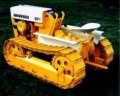
I want pictures. I bought by Baldor tool grinder (used) from an estate in Cincinnati. The deceased had made a truly scale D3, including the tracks. It was powered by a small ( 1 in^3) model engine. The niece showed me some pictures. Probably couldn't move much earth, but a marvel nevertheless.
 

perfo

Joined Aug 15, 2012
10
Thanks for the feedback chaps.

I agree maybe 155v even if double isolated may start getting into dangerous territory. If the higher voltage is only needed to break down the dielectric and get the plasma envelope open then maybe two supplies would do it, a very high resistance (so relatively safe) HV (150vdc) supply and a low voltage (20vdc) high current supply coupled with a diode may be helpful.
As for short circuiting I guess you would still need a bank of resistors to curb the max amps. In one of the many thesis’s I've read concerning EDM that there is a max energy density for different materials per cm^2 so there will always be a need to have some sort of current control if drilling 0.2 mm up to say 13 mm.
I haven't found a definitive paper on what difference the frequency makes. I like to be able to calculate things and would feel happier if I knew what I was trying to achieve. I.e. 10mm copper electrode drilling tungsten will require 20Khz at 10 amps and gap voltage of 20v etc.. most folks seem to have all parameters variable and twiddle until they get a good sizzle. I'd also like to be able to differentiate between arcing and plasma channel etching. Arcing I would imagine will gobble your electrode and produce poor results in terms of surface finish etc. Would capacitive discharge (RF detection) be able to spot it I wonder? Shorting is easy enough.
I can see the need to have less than 100% on time as getting rid of the swarf (can I call it that?) is a major part of the process. When I mentioned 100% on time what I meant was. No matter what system you have be it pulse, RC etc. the max you can deliver is your supply power so by utilizing big caps you can charge for part of the cycle and discharge for part of the cycle but you wont be able to charge more than the supply. So if 50% on / off then the most your supply can chuck in is 50%. That’s why I wondered if you could get the same results with a bigger supply power and no charge cycle at all (and thus no big caps or the complexity of charging them) just simply connecting the supply (via current limiter) direct to the electrode and chopping it in to pulses.

The question of Steppers vs Dc motor. As I’m a micro person I’d be looking at the stepper route and potentially writing a PID type controller to hunt for the perfect gap /gap voltage whatever that may be. You can program in soft start and various acceleration rates to get the tool near then hunt to sweet spot. I’ve done these things before so hope to be able to transfer to EDM when I understand it enough. The other advantage of a micro (probably a raspberry pi) is very simple PWM outputs for controlling Mosfets up to several hundred Khz and simple mark space ration adjustments. This would reduce the hardware and thus costs of the machine.. and allow things like saved set ups for if /when the right conditions for a set of parameters are found.

So, I’m tending towards Pulse type, rotating chuck with central flushing. This is maybe too optimistic as it also has mechanical difficulties like the seal between the dielectric pump and rotating electrode as the pressures could be pretty big for say a .2mm electrode.

Around 100v dc supply, 0 to 10 Amp burn current, 0 to 100Kzh frequency, 0 to 90 % duty cycle.

What actually is the golden goose here? Theoretically what are we aiming for? in terms of measurable feedback? Is it the actual gap size? The smoothness of the burn current? The smoothness of the burn voltage? The stability of the Plasma channel? I’m thinking aloud a bit but again I would like to have some knowns to head for then adjust the others rather than adjust everything. I forgot whom said it in one of the post in this thread but I totally agree, people that have bottomed this tend to keep the knowledge very close to their chest.. I’ve read loads of stuff now but still haven’t managed to fully understand what’s going on which is sorta the first step when trying to recreate something.

My biggest problem is me, I start off with the intention of making a paper airplane and end up trying to design a dream liner…

Shortbus, I’m mainly a digital electronics fella and a bit rusty with that even but if you have any questions about resistor values that I can help with then fire away (though I suspect EdmGuru maybe quicker)
 

EdmGuru

Joined Aug 21, 2018
47
Hi perfo,
I have some PDF files that I’ve had for a while on various EDM and even ECAM (electro chemical arc machining) theory and generator design, there’s even a bit in one of them on using RF detection to control the ‘burn or sizzle’ which reminds me that RF was the problem I had in a previous post about machine head reaction at higher frequencies. When I was testing the head drive by stepper motor concept I noticed that I could ‘feel’ and ‘hear’ the motor miss a step on a regular basis when the generator was on. This made me think that RF could be the problem when using the DC motor and control unit, so I replaced all the wires that carried the low voltage pulse from the pulse generator with 75 Ohm miniature coax cable and made sure that all the shielding was earthed and this made a big difference so there’s a good tip there for everyone to use shielded cable on the low voltage pulse side of your generator designs.
I’ll post the PDF files for you all to look over but some are quite detailed and will take a while to read through.
It seems that one of the PDF files is too big to upload so you'll have to search for it online yourselves it's called Process developments in electrochemical arc machining by A K De Silva.
Cheers.
 

Attachments

Last edited:

Thread Starter

shortbus

Joined Sep 30, 2009
10,050
What actually is the golden goose here?
I can give you what I know from running old machines and what the books say. ~100VDC open circuit, and 25 to 35VDC gap voltage. There is no "set" voltage for the gap that works, it all come down to size of electrode, flushing conditions and machine ram speed. That is why the gap voltage varies and is changed to suit whether a manual or CNC machine. The "sizzle" is the tell in a manual machine, a constant sizzle means things are pretty much where they belong.

say a .2mm electrode.
0.0078" electrode!!!! Can I ask what your doing? If your shooting to make a 0.0078" diameter hole, you need to figure in "over burn". That would make your electrode ~0.005" or 0.004" dia. Your going to eat your electrodes as fast as you do the work. And it doesn't take high pressure for the flush as much as it does volume. High pressure flush creates cavitation/air pockets around the electrode, no matter what size they are. Are machines didn't have gauges on the flush, but would guess it to have been less than 5PSI.

What your talking about with a rotating electrode is what we called a "hole shooter", used to make a hole to insert the wire for wire EDM. The one we had was a RC power supply not pulse. It used a stepper motor for rotation and one for down feed.

I have some where a paper on a "micro EDM", like your talking about. Some of what was in it is the base of my machine circuit. If you want I'll see if I still have it and post it for you.
 

Thread Starter

shortbus

Joined Sep 30, 2009
10,050
I expected them to have wheels, no tracks.
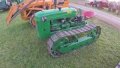
I want pictures.
The one I am building won't be a direct scale copy, but will be based on the Cletrac(Cleveland tractor company) HG or the Oliver OC3. They were the same thing but Oliver bought out Cleveland and used their models for a while. Cletrac was started by the guy that built White cars after he sold that company.

The yellow one is a Cub Cadet based one. The Green one is a Cletrac
 

Attachments

EdmGuru

Joined Aug 21, 2018
47
Hi Shortbus,
I've just found this on Wikipedia:
Small hole EDM is also used to create microscopic orifices for fuel system components, spinnerets for synthetic fibers such as rayon, and other applications.
There are also stand-alone small hole drilling EDM machines with an xy axis also known as a super drill or hole popper that can machine blind or through holes. EDM drills bore holes with a long brass or copper tube electrode that rotates in a chuck with a constant flow of distilled or deionized water flowing through the electrode as a flushing agent and dielectric. The electrode tubes operate like the wire in wire-cut EDM machines, having a spark gap and wear rate. Some small-hole drilling EDMs are able to drill through 100 mm of soft or through hardened steel in less than 10 seconds, averaging 50% to 80% wear rate. Holes of 0.3 mm to 6.1 mm can be achieved in this drilling operation.
Also this on Zdnet.com:
Engineers and scientists at Cardiff University are appearing in this year's edition of the Guinness World Records book for the smallest hole ever drilled -- at least with human-made tools. By using a process named 'electro-discharge machining' (EDM), they've drilled holes just 22 microns wide. Now they want to use another process, borrowed from nanotechnologists, to create holes with a width of only 100 nanometers. And they hope that their tools will help designers in medical and electronic sciences.
I think we've been left behind by technology! Looks like it's time for a generator redesign?:(
Cheers.
 

Thread Starter

shortbus

Joined Sep 30, 2009
10,050
Building those tracks will be a project for sure.
That is why it's taken me so long to start it. There are many, many guys on Youtube doing it, mostly from the Russian (I assume, it's mostly written in Cyrillic) area. But they make it look either impractical or to involved. Then lately I really got into researching it. There is a company, Struck, that back in my teenage days used to advertise in Popular Mechanics and such selling plans and kits to make a small dozer. They are still in business but only sell finished machines now. Their old tracks were made using as the base a CA550 agricultural chain and that was the turning point for me. With a chain some angle iron and rectangular tube it all fell in place. Struck even now gives the plans free as PDF for the first models, the ones I wanted back in the day. I got to see a Struck last year at the Burton Antique Engine Show. And that is what started me off on the journey. My wife says(and shes known me since 7th grade) I'm in my second childhood. My answer is, I never left the first. I'll know when I'm grown up, I'm going to be a fireman.
 

Thread Starter

shortbus

Joined Sep 30, 2009
10,050
Forgot to mention the big machining project for the tracks, the sprockets. Those chains are used in stuff like corn pickers and hay balers,that don't have very big sprockets. The ones for those machines are around 6 to 8 tooth. I need 24 teeth. So got 4 plates cut and am in the process of making sprockets. There are a couple of places that make custom sprockets, by plasma cutting, but none of them ever returned my emails or gave me quote, they're more into making 100s at a time. Then there isn't much information about sprocket tooth profiles, not like gear cutting. But think I have it figured out enough to make something that will work.

Biggest problem is with the statins I have to take since my heart attacks. Can't stand at a machine, or anywhere for more than about 2 hours, because of the nerve pain in my legs and back. What a guy told me when I was young is true, "getting old isn't for sissies".
 

jpanhalt

Joined Jan 18, 2008
11,087
Forgot to mention the big machining project for the tracks, the sprockets. Those chains are used in stuff like corn pickers and hay balers,that don't have very big sprockets. The ones for those machines are around 6 to 8 tooth. I need 24 teeth. So got 4 plates cut and am in the process of making sprockets. There are a couple of places that make custom sprockets, by plasma cutting, but none of them ever returned my emails or gave me quote, they're more into making 100s at a time. Then there isn't much information about sprocket tooth profiles, not like gear cutting. But think I have it figured out enough to make something that will work.

Biggest problem is with the statins I have to take since my heart attacks. Can't stand at a machine, or anywhere for more than about 2 hours, because of the nerve pain in my legs and back. What a guy told me when I was young is true, "getting old isn't for sissies".
There's a place virtually down the street from me in Parma Heights/Middleburg Heights on Brookpark toward the airport, after the GM plant but well before the Ford foundry.. I know where it is, but I don't remember its name or address. It did some laser cutting of 5/16" steel doublers and has a capacity of 5/8", as I recall. He accepts virtually any file format. I had DXF etc., but he seemed to prefer a simple pdf. I was very happy with the work and it was like $70 (minimum) total for several of them. If that will help, I will find the name for you. I assume the sprockets need to be something other than A36. I don't know what he has available, but when I said 5/16", he didn't think that would be a problem.

John
 

roong

Joined Feb 11, 2017
59
Shortbus said:
"Biggest problem is with the statins I have to take since my heart attacks"
I think you should try " Keto diet " in replace of Statin, it likely to change your life. Information on youtube.
So, Mr. perfo want to make a hole poper, Check this out. Someone did a very impressive job "
"
 
Last edited:

Thread Starter

shortbus

Joined Sep 30, 2009
10,050
I assume the sprockets need to be something other than A36.
A36 is what I'm using, since this is basically a toy. The place I ordered the steel from, after buying it, told me they cut it with a plasma cutter, figured they would have just sheared it like they used to. After paying for the square pieces they also told me they could have cut them to what I wanted for about twice the price of the bare steel. They cut with a 1/16" accuracy up to 1" thick. 1/16" is all they guarantee and the teeth have to be closer than that. The plate is 5/8". Been a while since I bought any steel, prices are about double from the last time.
 

Thread Starter

shortbus

Joined Sep 30, 2009
10,050
I think you should try " Keto diet " in replace of Statin,
I've had to take them before when still working and got off of them. Now, since the heart attacks, the insurance company says if I don't take them, and have another attack, I won't be covered for the hospital. Health care is like a hold up, they make you do what they want!
 

jpanhalt

Joined Jan 18, 2008
11,087
A36 is what I'm using, since this is basically a toy. The place I ordered the steel from, after buying it, told me they cut it with a plasma cutter, figured they would have just sheared it like they used to. After paying for the square pieces they also told me they could have cut them to what I wanted for about twice the price of the bare steel. They cut with a 1/16" accuracy up to 1" thick. 1/16" is all they guarantee and the teeth have to be closer than that. The plate is 5/8". Been a while since I bought any steel, prices are about double from the last time.
Well, a 1" sprocket ought to work. :) I was thinking more on the order of 3/8. I was amazed by the low cost and precision of laser cutting. The holes for pins were perfect and very little dressing was needed. That might be adequate for your needs. However, it would still cost more than the plasma cutting. Next week when I am in Cleveland, I will get the name and address just in case you want to investigate.

As for steel prices, I took some old culvert I had to replace to a local recycling business. The value is not trivial.
 

EdmGuru

Joined Aug 21, 2018
47
Hi Shortbus,

I've had to take them before when still working and got off of them. Now, since the heart attacks, the insurance company says if I don't take them, and have another attack, I won't be covered for the hospital. Health care is like a hold up, they make you do what they want!
You need to move over here, in the UK all health care is free! Mind you everything else is nothing to shout about.......It's not like it was back in the old days. :( I too can't conceive electrodes that small or how to mount them on an EDM?
Cheers.
 

jpanhalt

Joined Jan 18, 2008
11,087
@shortbus
I couldn't find my actual invoice where I am currently but searched on cutting services in Cleveland. I am pretty sure this is where I had the work done: https://www.repko.com/repko-laser-cutting.php

I thought it was on Brookpark (Hwy 17), but actually, it is on a named "alley" (West 164 th) and very close. I was drawn to it by a local article about its work in restoring ornamental iron on historic buildings. That was 8 years ago, but the picture on its site reminded me.
 

perfo

Joined Aug 15, 2012
10
Thanks for the PDF’s EdmGuru , I will wade through and see if they help me formulate the basics….what made you think you needed to go higher with the frequency in the first place? What was your trigger point to think “I need more hz” ?
So the sizzle seems to be the operative word, would we say that the sound of the burn is the target then? So a very directional mic and a bit of processing may be able to “hear” when the gap , frequency , volts and current are right ?
Shortbus. :-- I’ve got some idea that I can cut ply wood with a homemade water jet cutter. Plenty of youtube videos showing people ripping apart bits of wood with a power washer. So it has the energy to do it but can I get the kerf down to a sensible size and still get the throughput of water to do the job ?
There is a video on your tube with a fellow doing this with an electric power washer that then burnt out
water jet cutter electric
He then built another with a petrol jet washer (same one as I have)
Water Jet Cutter Petrol
Worked great albeit heavy on the garnet use due to only having 200 bar…
So I’m thinking could I do just ply wood without garnet by getting the right size orifice and nozzle.
Thus I would need to drill some super small holes in some hard stuff.. Maybe just using mild steel for experiments and making tungsten or tools steel job once I’ve found if it works. So I can buy bits at great expense or make my own, thus the sudden interest in EdmDrilling.
I’ve ordered the electrodes from eBay at various sizes
Hole Popping Electrodes Ebay
and I know I could build a super cheap doorbell Edm and probably get a hole in something that would do . But I enjoy building and learning so the journey is just as important as the destination.
I’ve done some rough calcs and whilst I could be way off I think with say 10 thou hole down a 300 mm electrode then I could need 800 or more PSI to get a decent flow ? This I’m not sure about this at all and hope you are right with 5 PSI as it makes it whole degrees easier.
If you have that paper on micro Edm and it covers all the technicalities then great I’d really like to see that ShortBus..
Roong :- That video looks great and is probably exactly what I need if only a true home build one was documented. That fellow does some excellent videos and the results are normally spot on but his budget stretches too far for me..Its the same guy that does the power washer water jet cutter that I mentioned above. I think the ones you’ve shown is probably something like $4000.00 and unfortunately doesn’t give any clues as to how the BaxEdm is doing its thing….
If I was running a business then $4K would probably get me a good second hand unit so not sure I’d cobble this thing together anyway.
Ah and don’t call me Mr Perfo or I’ll have to increase my fees J

Right then off to read those EdmGuru PDF’s….
 

Thread Starter

shortbus

Joined Sep 30, 2009
10,050
Thus I would need to drill some super small holes in some hard stuff.
Hi, there are guys doing the water jet thing and wire EDM. But most pick a manufacturer and get supplies for one of their machines, ready made stuff proven to work. We had wire EDMs and a single water jet cutter at work, both types of machines used ceramic nozzles. I have a sandblaster that came with hard steel nozzles that didn't last then switched to ceramic that last way longer. So you might want to look into spares for a known water jet to adapt for your project.

If you have that paper on micro Edm and it covers all the technicalities then great I’d really like to see that
I'll try to find it for you and post it. My computer files are like my workbench, messy. It wasn't so much a technical paper but how these students were approaching building one. Like a mini thesis.
 

roong

Joined Feb 11, 2017
59
Perfo: No it wont cost $4000, you just dont need that fancy XY movement, just your hand to move the part. And you just dont need that big and expensive stepper motor driver. Just cheap one from ebay....and some electronic knowledge to interface with your Rasbery pie. Everythings else such as water pump, drilling head, electrode, ceramic guide water filtering system you just buy from e-bay or Amazon. May be $600.....Also you may start with biggest electrode so you can use cheaper lower pressure water pump. Water jet is more expensive to operate, it can cut but I doubt if it can drill a very small hole or if it can cut into carbide.

Perfo , EDM guru , or any one that good in calculation might be able to help me this. Start with 1u capacitor with charge 105v at time zero... at what time will it voltage drop to 70V if I bring it to connect with 40K resistor. That is a part in my sensing circuit. It will fully charge during ON time and drop via the circuit once start OFF time. At 70 volt electrode must be retracted.

Shortbus: I ve tried these suplements, It works great for me. Coq10, Magnesium Citate and 1/2Viagra, here you can buy viagra clone for 70 cent a tablet( made in India). I just need each of those every week. Nowaday, you can't trust doctor so much. They just dont tell you how to keep healthty life style but just want to cure when your situation is bad.
EDIT: I shouldn't sugguest that viagra, it is good for relax your mind. But I now stops it because taking it for long time, might cause high blood pressure.
 
Last edited:
Top