Fuse bridged with wire on cheap electrical goods ?

Thread Starter

Rufus Chucklebutty

Joined Mar 23, 2019
70
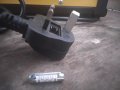
I found this fuse bridged with a wire straight out of the box on a cheapo welding machine posted from a warehouse in the UK , is this legal to sell ?
20260520_161956.jpg
 

ThePanMan

Joined Mar 13, 2020
923
Don't know what it is. It looks like a fuse but the picture is blurry. It LOOKS like it has a bridged wire on it - I know - you said so. But is it a wire or is it an indicator of some sort? Clearer pictures would be in order.

If it IS just a jumper someone put in place - if you sell it you need to clearly let the buyer know. Fail to do that and if someone gets hurt - you could be held liable for damages and/or injuries. If that's how you bought it - you definitely need to contact the seller/manufacturer.

Have you tried replacing the fuse with the correct value fuse? NOT ONE OF HIGHER AMPERAGE - YOU RISK FIRE.
 

Thread Starter

Rufus Chucklebutty

Joined Mar 23, 2019
70
Don't know what it is. It looks like a fuse but the picture is blurry. It LOOKS like it has a bridged wire on it - I know - you said so. But is it a wire or is it an indicator of some sort? Clearer pictures would be in order.

If it IS just a jumper someone put in place - if you sell it you need to clearly let the buyer know. Fail to do that and if someone gets hurt - you could be held liable for damages and/or injuries. If that's how you bought it - you definitely need to contact the seller/manufacturer.

Have you tried replacing the fuse with the correct value fuse? NOT ONE OF HIGHER AMPERAGE - YOU RISK FIRE.
I can see the picture clearly, its not great but its what I said it is, soldered wire across the fuse from the factory.
 
Last edited:

SamR

Joined Mar 19, 2019
5,494
Anaconda fuses are typically made from copper (from an Anaconda Copper Mining Co. mine) tubing or rod. It was common practice back in the day of screw in glass fuses to put a penny under the fuse to get by with until you could buy another fuse. Also copper from an Anaconda mine. From what I can tell, it looks like an indicator of some kind as it looks too neat to be a kludge. One common complaint about paper and ceramic tube fuses is that you can't tell just by looking if the fuse is blown hence a possible external indicator. It's not something we have in the US and probably because it does not meet the National Electrical Code requirements. I'd replace it.
 

Externet

Joined Nov 29, 2005
2,637
Not much more left than guessing that at the chinese kitchen table it was assembled, they ran out of fuses and your particular unit was draining more than usual, so the fuse was 'upgraded' to keep the production 'quota' of the day. It would be nice to desolder the wire and confirm the fuse is 'factory blown' :)
 

Thread Starter

Rufus Chucklebutty

Joined Mar 23, 2019
70
Not much more left than guessing that at the chinese kitchen table it was assembled, they ran out of fuses and your particular unit was draining more than usual, so the fuse was 'upgraded' to keep the production 'quota' of the day. It would be nice to desolder the wire and confirm the fuse is 'factory blown' :)
The 13 amp plug fuse has been bridged by the manufacturer because the machine ( a mig welder ) draws way more than 13 amps. Surely that is against UK regulations?
 

ThePanMan

Joined Mar 13, 2020
923
The 13 amp plug fuse has been bridged by the manufacturer because the machine ( a mig welder ) draws way more than 13 amps. Surely that is against UK regulations?
If it draws more than 13 amps when it's supposed to draw no more than 10 amps (pure guesswork here) then there's something wrong FROM THE MANUFACTURER with the circuitry. QUESTION: How do you KNOW it is drawing more than 13 amps? Question: If it is drawing more than 13 amps then do you know how many amps it's drawing?

Until that gets sorted out I wouldn't use it. And if it IS supposed to be drawing less than 13 amps but is drawing MORE than that - take it back (send it back) and go by something from a reputable manufacturer or dealer. You wouldn't keep a new car that was getting 2 miles to the gallon - would you?! You'd insist they fix it or refund your money in full!

13 amps at 240V - that's 3,120 watts. That's large scale industrial welding. Certainly not something for a home welder.
 

Thread Starter

Rufus Chucklebutty

Joined Mar 23, 2019
70
If it draws more than 13 amps when it's supposed to draw no more than 10 amps (pure guesswork here) then there's something wrong FROM THE MANUFACTURER with the circuitry. QUESTION: How do you KNOW it is drawing more than 13 amps? Question: If it is drawing more than 13 amps then do you know how many amps it's drawing?

Until that gets sorted out I wouldn't use it. And if it IS supposed to be drawing less than 13 amps but is drawing MORE than that - take it back (send it back) and go by something from a reputable manufacturer or dealer. You wouldn't keep a new car that was getting 2 miles to the gallon - would you?! You'd insist they fix it or refund your money in full!

13 amps at 240V - that's 3,120 watts. That's large scale industrial welding. Certainly not something for a home welder.
3000w is minimal in welding terms.
 

ThePanMan

Joined Mar 13, 2020
923
3000w is minimal in welding terms.
I'm not a welder. Most I know about the subject is many systems I'm accustomed to used 24V (AC or DC). Since your fuse is on the input side I suspect the high wattage doesn't seem reasonable to me. Could be wrong. So again, how many amps does your machine draw when plugged in and switched on?

My machine on 120VAC doesn't draw more than 10A. AT 10 amps that would be 1200W. The higher voltage should draw less amperage. At least that's what I think is going on with electrical systems in the European theatre running on 240VAC. That means smaller wire and less amperage for the same wattage.
 

imJosen

Joined May 21, 2026
1
That appears to be a glass cartridge fuse that has been intentionally bridged with wire, which effectively bypasses the fuse protection.

If it was shipped from the factory in this condition, it could present a significant safety concern, since the overcurrent protection may no longer function as intended.

Whether it is legally compliant would depend on the product certification and applicable UK/CE safety standards, but it would likely fail normal electrical safety expectations for consumer equipment.
 
Top