I spoted interesting thing. All power rails are ok, except +- 40V is only +- 30V how it could be? What components are making the impact on this power rail? +- 27V and +-15V are ok.
Now I get to very interesting point. Everything works fine without Q651 which is responsible for over current sensing. When I install Q651 the amplifier keeps turning on and the off, on and then off. The muting IC gets the signal of over current from that ( Q651 transistor). It keep showing over current even without power transistors. What could be the problem?
Oh Three of them are shorted. I found one interesting thing: resistors R662 and R659 shows normal resistance as they should (~560k) but resistors R668 and R665 shows only ~100k. As I understand I must change these resistors too because they act as voltage dividers for Q658 and Q659?
Are you measuring those resistors out of the circuit? If so it further supports the supposition that something dramatic happened to this amplifier - that is not a common failure mode for resistors. Do the power transistors measure OK?
If you are measuring resistors in circuit you must draw all aprallel paths for the DC to arrive at a halfway decent value. You also must consider the DC voltage from the meter that might forward bias a junction. If the reading is the same when you switch polarity .... The reading could be correct as you calculated.
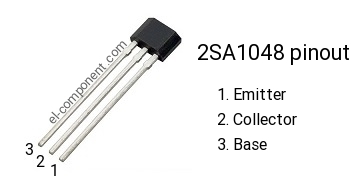
I changed shorted transistors (Q656 to Q659) but strange things happen. Without Q651 system works fine. The emitter terminal gets 27V, the base gets 27V too. But when I insert that transistor in, it turns on. How can it be if it is PNP transistor?
Is this still with all the output transistors removed?
What voltage do you get on the collector of Q651?
Is Q651 the correct type of transistor?
Is Q651 fitted the right way round?
[EDIT] Does Q651 check as a working transistor?
Is this still with all the output transistors removed?
What voltage do you get on the collector of Q651?
Is Q651 the correct type of transistor?
Is Q651 fitted the right way round?
[EDIT] Does Q651 check as a working transistor
Yes, without output transistors. The same is when I solder them in. The Q651 keeps the protection turning on. So the voltage on base and emitter climbs to 15V, the collector climbs to 5-6V and when protection is triggered drops down. I do not understand the reason. Transistot looks good. But system works stable without it. Maybe it could be the problem with current sensing resistors?
If the output transistors are removed then there can be no current in the sensing resistors. The transistors checking the voltage across the resistors are new. What is the number on the transistor, and is it connected according to the diagram above?
The current sense resistors are connected between the base and emitter of those four transistors. If the voltage across a resistor exceeds about 0.6V this turns on the transistor and pulls the base of Q651 towards 0V.
I don't know what to suggest for the next fault finding step.
They provide a path to ground for any leakage current to make sure that Q659 (and similar for Q656 - Q658) turn off properly.
Thinking of which, as those transistors were blown, did you check those diodes?

 Facebook
 Google
 GitHub
 Linkedin



 Three of them are shorted. I found one interesting thing: resistors R662 and R659 shows normal resistance as they should (~560k) but resistors R668 and R665 shows only ~100k. As I understand I must change these resistors too because they act as voltage dividers for Q658 and Q659?