Discharge circuit, dump circuit

nsaspook

Joined Aug 27, 2009
16,328
I need practice with op amp circuits, so I'll take a crack at the circuit that does just what you've said in this last post. I'm still skeptical about the overall application, just like the others, but I'll enjoy the op amp challenge, so I'll see what I can do on that. What you do with the finished circuit (assuming I'm able to come up with one) is your problem, and I assume no liability!!!
I investigated DC pwm diversion in depth to use excess power when charging batteries. What I discovered was that using the already existing AC inverter to power diversion loads like heating water was the much better solution. There was no need for high voltage/current DC switching circuits. Simple AC utility power relays, contactors and power controllers like light dimmers work just fine with a few simple on/off control signals most RE charge controllers have already for load control.
 

nsaspook

Joined Aug 27, 2009
16,328
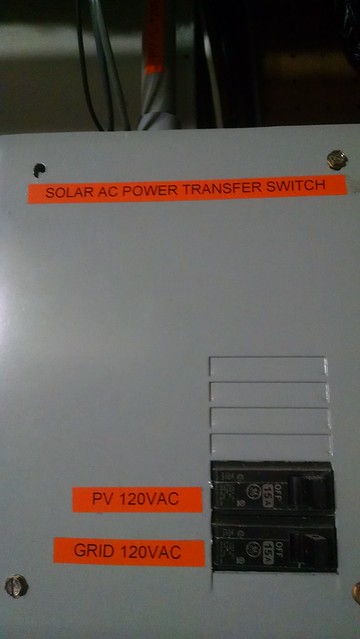
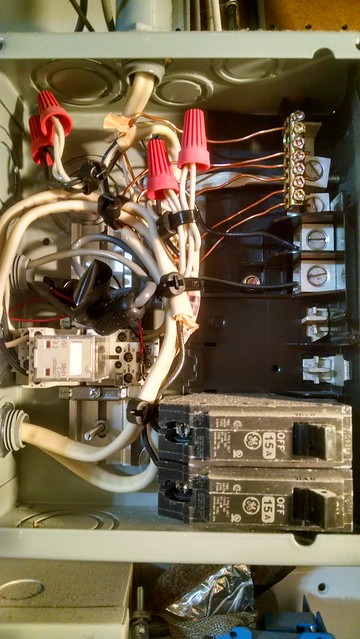
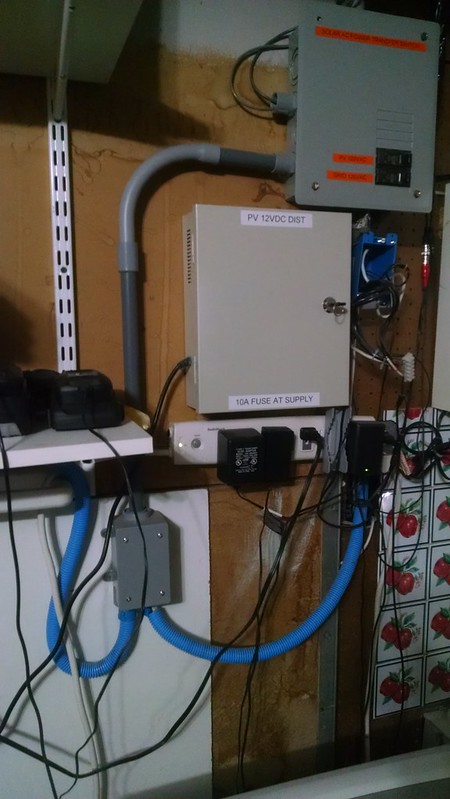
Picture of the AC side power diversion system.

Transformer isolated (from the inverter) transfer switch for diversion loads that switches (not a grid-tie) from 120VAC power sources with a simple relay controlled by the system monitor.

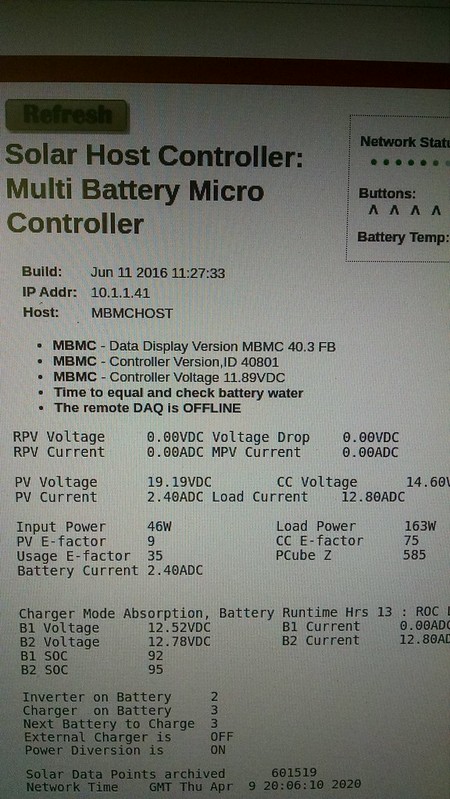
System Web interface.
Diversion load power distribution to various loads like equipment battery chargers, shop heaters, fans, lights, etc...
 
Last edited:

Thread Starter

Mrusten

Joined Dec 23, 2015
62
Picture of the AC side power diversion system.

Transformer isolated (from the inverter) transfer switch for diversion loads that switches (not a grid-tie) from 120VAC power sources with a simple relay controlled by the system monitor.


Diversion load power distribution to various loads like equipment battery chargers, shop heaters, fans, lights, etc...
that i totally understand but that wil limit me from other projects.

that why i want a pwm dc with current limit

i eaven have all required equipment to make a ac system, i have voltage sensetive relays, contactors and loads so it would be built in a few hours if i needed it
 

Thread Starter

Mrusten

Joined Dec 23, 2015
62
If you draw power from the system to "do something useful" while the batteries are charging then a voltage regulator will automatically provide that additional power without anything extra. So what you need is a voltage regulated charging system, Do you already have the solar cell system? Do you already have some sort of regulator already? And what sort of batteries? The type of batteries does make a big difference in how they should be charged.
the solar controllers charge with 100% of all the power it can draw from the solar panels.
when shut off voltage is reached the solar charge controller wil shut iteslf off

i do not want that to happen, i want to use all the power i can get.

the problem is not to charge the batteries, the charging system is working fine.

the problem is to only keep the battery voltage just below the charge controller shut off voltage.

then the discharge circuit need to self adjust to keep the battery voltage constant just under charge controller shut off voltage.

thats why i want pwm to adjust according to the battery voltage
 

MisterBill2

Joined Jan 23, 2018
27,530
the solar controllers charge with 100% of all the power it can draw from the solar panels.
when shut off voltage is reached the solar charge controller wil shut iteslf off

i do not want that to happen, i want to use all the power i can get.

the problem is not to charge the batteries, the charging system is working fine.

the problem is to only keep the battery voltage just below the charge controller shut off voltage.

then the discharge circuit need to self adjust to keep the battery voltage constant just under charge controller shut off voltage.

thats why i want pwm to adjust according to the battery voltage
That is exactly what will happen if you load the batteries to do useful stuff as the voltage approaches cutoff. The voltage will not rise as fast, and so the charger will keep feeding current into the circuit.
Of course another arrangement is to have an inverter connected to the solar panel DC output before the battery charger, and not controlled by it. That would power other functions separately from whatever the charger was doing.
With your present system what happens when you switch on some load and the battery is not at 100% charge? Can you answer that question for us.
 

nsaspook

Joined Aug 27, 2009
16,328
that i totally understand but that wil limit me from other projects.

that why i want a pwm dc with current limit

i eaven have all required equipment to make a ac system, i have voltage sensetive relays, contactors and loads so it would be built in a few hours if i needed it
It might open other possibilities from DC driven processes like electrolysis.

I will tell you from experience that AC is the best way (war of the currents) to handle excess power as it can be easily controlled, transmitted and converted to useful work. If you already have the parts build a test system and try it. The code and driver hardware for DC pwm are still in my system but I never use it now that AC dumping is operational.
 
Last edited:

Thread Starter

Mrusten

Joined Dec 23, 2015
62
That is exactly what will happen if you load the batteries to do useful stuff as the voltage approaches cutoff. The voltage will not rise as fast, and so the charger will keep feeding current into the circuit.
Of course another arrangement is to have an inverter connected to the solar panel DC output before the battery charger, and not controlled by it. That would power other functions separately from whatever the charger was doing.
With your present system what happens when you switch on some load and the battery is not at 100% charge? Can you answer that question for us.
if battery is not full and i put on some load the batteryvoltage decreases...

what you do not get is that in the circuit i want the load start at 0% pwm when the battery charge is 95%
and the pwm increase gradually as the battery voltage increases, this way the pwm output always automatically keep the battery level constant at 95%.

its a loop
 

MrAl

Joined Jun 17, 2014
13,707
if battery is not full and i put on some load the batteryvoltage decreases...

what you do not get is that in the circuit i want the load start at 0% pwm when the battery charge is 95%
and the pwm increase gradually as the battery voltage increases, this way the pwm output always automatically keep the battery level constant at 95%.

its a loop
So you want a circuit to apply a load to the battery when the battery voltage gets too high. So if you choose 240vdc then when it reaches that voltage you want the PWM to start connecting the load so the battery voltage does not get any higher. Is that right?

If so, what you are making there is a shunt regulator with limited shunt current. This is entirely possible.

There is a side issue i would want to study however. That is, the effect of applying a load to a battery repeatedly in order to regulate it's voltage. One of the effects could be reduced life of the battery. That is, reduced charge cycles before the batteries have to be replaced.
Normally a series regulator would be used for this not a shunt regulator, but if that is what you want anyway it should not be that hard to make. Just make a PWM shunt regulator.
I am sure people here can help with this, but be aware that you may be causing the battery to age faster, maybe much faster, then usual. You would want to make that determination at some point and switch to series regulation if it causes fast aging of the battery.

That said, a shunt regulator even a PWM one is not hard to make. An op amp and some transistors. There are some finer points that would kick in later such as a snubber for the transistor(s).

Right now as i am writing this i am having a good cup of coffee even though it is 1:30am here.:)
 

Thread Starter

Mrusten

Joined Dec 23, 2015
62
thanks for reply
you didnt get my full idea,
So you want a circuit to apply a load to the battery when the battery voltage gets too high. So if you choose 240vdc then when it reaches that voltage you want the PWM to start connecting the load so the battery voltage does not get any higher. Is that right?
yes that is correct, howewer pwm start at 0% at 240v and pwm end at 100% at 245v
it wil not reduce life of battery bechause the battery voltage is going to always be 240 between 240 and 245v

yes the battery wil sycle this 5 volts a little bit but that do not affect battery life much it equals to 0,078v per cell

the shunt is to limit the pwm to a sertan load, if i have a load i want to give maximum of 10A i want to be able to limit the current at that level, so eaven if the battery voltage rises the pwm duty do not rise over the sertain level that equals to the 10A mark on the output
 

Thread Starter

Mrusten

Joined Dec 23, 2015
62
So, 64 cells, then? And you say 245V will be full charge, so that would mean 3.8V per cell. Lithium batteries?
240v is a example, i want to adjust the voltage between 240 and 270v.
to keep the batteries working for long time i can only use 60% of the avalible capacity, but need to experiment with the level of charge vs functionality

lithium yes
 

MisterBill2

Joined Jan 23, 2018
27,530
So the goal is to always use every bit of the power generated from the solar cell array, and because there is a defect in the way that the battery charger functions the intention is to start taking DC power away from the charger as the battery charge approaches full. Why would you want to always charge at the maximum rate? As the battery charge goes towards full, enable the inverter running off of the solar cell to switch on and do useful work with that AC. You gain nothing by charging at the maximum rate when the charge is almost full. A lower charge rate allows for a longer battery life, and if you shorten the life of those 67 cells for no benefit then you gain nothing. Have a system that monitors the state of the battery charge and when it is up to 80% and there is still daylight time to complete the charge at a reduced rate then switch on the inverter.
 

Thread Starter

Mrusten

Joined Dec 23, 2015
62
So the goal is to always use every bit of the power generated from the solar cell array, and because there is a defect in the way that the battery charger functions the intention is to start taking DC power away from the charger as the battery charge approaches full. Why would you want to always charge at the maximum rate? As the battery charge goes towards full, enable the inverter running off of the solar cell to switch on and do useful work with that AC. You gain nothing by charging at the maximum rate when the charge is almost full. A lower charge rate allows for a longer battery life, and if you shorten the life of those 67 cells for no benefit then you gain nothing. Have a system that monitors the state of the battery charge and when it is up to 80% and there is still daylight time to complete the charge at a reduced rate then switch on the inverter.
you didnt get it i give up.

but i still need the circuit the use for it is not the problem
 

nsaspook

Joined Aug 27, 2009
16,328
The needed circuit design for a PWM driver and voltage detect with a $1 controller with maybe $15 of glue parts is trivial and might be actually capable of something useful instead of a dubious, unlikely to function as a stable load dump mainly analog design.

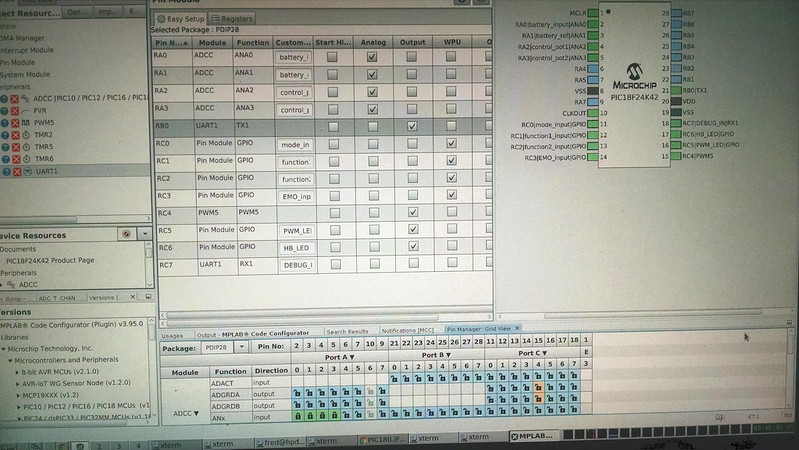
I've already mocked up for S&G a modules needed baseline version using a pic18f24k42 in 30 minutes. A measurement adc channel, a reference adc channel, a voltage programming adc channel for setting trip voltage, a few gpio outputs for status leds etc..., a few gpio inputs for mode control stop/start/hold etc , a debug serial port ... and the magical PWM output to a opto isolator to drive the DC power switcher.


MisterBill2

Joined Jan 23, 2018
27,530
Clearly the TS has a fixed idea of what his goal is, and has already stated an unwillingness to consider anything else. Just as clearly there is an issue with the charging system arrangement that is not acknowledged.
I may check back on this thread in a few months to see if wisdom has arrived.
 

nsaspook

Joined Aug 27, 2009
16,328
It seems to me the best way is to avoid tapping diversion power at the battery power system level using DC or AC.

The excess power should be tapped before the battery charging system directly from the solar panels or wind generator input buss before it travel through the charging system. This way we don't disturb the optimized charging system or microcycle (some battery current will also be sent to the diversion load) batteries at the top of charge.
http://citeseerx.ist.psu.edu/viewdoc/download?doi=10.1.1.580.4107&rep=rep1&type=pdf
All you would need (as a bare minimum) is one IN FLOAT/IN ABSORPTION signal/relay contact from the charge controller system to activate a PWM based DC or inverter AC diversion controller sensing panel/wind generator voltage to set the need load current. This eliminates the need for diversion circuit voltage trip points on the battery side as the charge controller will do its job tracking SOC and drop out of FLOAT causing diversion to stop and restart a normal charge cycle to top off the battery as demand dictates.
 
Last edited:

MrAl

Joined Jun 17, 2014
13,707
thanks for reply
you didnt get my full idea,


yes that is correct, howewer pwm start at 0% at 240v and pwm end at 100% at 245v
it wil not reduce life of battery bechause the battery voltage is going to always be 240 between 240 and 245v

yes the battery wil sycle this 5 volts a little bit but that do not affect battery life much it equals to 0,078v per cell

the shunt is to limit the pwm to a sertan load, if i have a load i want to give maximum of 10A i want to be able to limit the current at that level, so eaven if the battery voltage rises the pwm duty do not rise over the sertain level that equals to the 10A mark on the output
Hello again,

Oh ok then would you be happy using an op amp or two and a transistor or two?
The circuit would be a PWM controller that monitors current through the use of the shunt.
Did you mention what kind of shunt you are using yet?
 

Thread Starter

Mrusten

Joined Dec 23, 2015
62
i got some help elsewhere, i dont know why i write this to this forum, maybe to help other people out witch is looking for the same.

the first problem is to stepdown the battery voltage to a usable voltage.
its done with 9Mohm in series and 1Mohm to ground.
voltage wil be 24 to 27v at each extreme end

second problem is to get 0-5v based on 5v difference on the battery voltage.
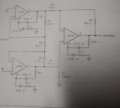
solved by this circuit:
received_889632071479758.jpeg

input at the top left wil be the 24 - 27v
input at the bottom left wil be a regulated adjustable voltage course 24-27v

this circuit wil amplify the difference between this 2 voltages so for example
the battery sit at 241v = 24,1v at the input
the regulated voltage is 24v
then there is 0,1v difference

the output wil be amplified to 1v

this 1v wil be feeding a 0-5v pwm circuit and pwm wil be on 20% duty

i wil order some parts and test it out

the next problem wil be the potential of 30v being on the 0-5v if each if the inputs are at max apart situation.
the output of the 0-5v circuit wil be a current limiting resistor, then a 5v zener to ground to make sure all voltages over 5v is pulled down to 5v.

then the next is current shunt, the current shunt wil be a regular resistor style measuring mv voltage drop across the resistor.
this circuit also need to pull down the 0-5v signal gradually if the current is more than setpoint

afther that its only igbt driver circuit and pwm circuit left to find but thats avalible

then test it all out
 
Last edited:

Thread Starter

Mrusten

Joined Dec 23, 2015
62
I wish you good luck.
Do you now see that i was asking for a simple circuit?
57 comments in this tread about ewrything else than inventing a circuit and mostly talking about a super advanced expencive task to solve, i just dont get it, we are mostly in lockdown and have alot of free time, for someone that understand circuit design it would take 5min to solve this
 
Top