Digital Scopes and burn-in

Thread Starter

Futurist

Joined Apr 8, 2025
721
Is this something I should to worry about? I have a Siglent SDS1204X HD and sometimes walk away for hours in the middle of some experiments. If the screen is still, like say some fixed sine or square wave is displayed and one leaves the unit sitting there for hours, can that damage the display over time?
 

crutschow

Joined Mar 14, 2008
38,324
I assume it has a LCD display and they are generally only have a temporary burn-in effect, the goes away after after turning the machine off for a few hours.
 

boostbuck

Joined Oct 5, 2017
1,034
"burn-in' was a result of damaged phospor coating on an electron-beam tube, usually present after some years of displaying the same image. LCD displays are a completely different technology.
 

Ya’akov

Joined Jan 27, 2019
10,226
Is this something I should to worry about? I have a Siglent SDS1204X HD and sometimes walk away for hours in the middle of some experiments. If the screen is still, like say some fixed sine or square wave is displayed and one leaves the unit sitting there for hours, can that damage the display over time?
The answer is "no".

As mentioned variously, LCD technologies cannot suffer burn-in, there is no mechanism for it. Burn-in is a result of uneven degradation of the display elements of a panel (or tube). That is, the technology involved using materials that degrade when used and a persistent image causes more degradation where that image is displayed than where dynamic content or no image is.

This is a problem for CRTs (phosphor) and OLED (and related) technologies.

LCDs (TFT, IPS, VA, ADS, &c) do not have degrading elements, but the can suffer from something confused with burn-in. While burn-in is an irreversible effect, image persistence, which does affect LCDs to varying degrees (older panels are much more susceptible), is not caused by degradation and so is reversible.

Image persistence is caused by charge build up which takes time to dissipate. This affected pixels of the LCD do not respond with equal intensity to surrounding pixels due to the presence of the charge. This charge naturally dissipates once the content changes. The time to correction and intensity of the effect is dependent on the panels construction and technology.
 

drjohsmith

Joined Dec 13, 2021
1,553
some older back lights are " fluorescent " type , which do fade with age.
most display are white led illuminated how, so much less of a fall off in brightness a d should last " forever "
 

tautech

Joined Oct 8, 2019
496
Is this something I should to worry about? I have a Siglent SDS1204X HD and sometimes walk away for hours in the middle of some experiments. If the screen is still, like say some fixed sine or square wave is displayed and one leaves the unit sitting there for hours, can that damage the display over time?
Not in my experience with dozens of these DSO's TFT touch and mouse displays sold over several years.
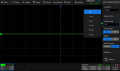
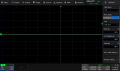
As others have advised you can wind the brightness and trace intensity down if it really worries you.
Below are settings I prefer to use.
There is also a screensaver feature that is OFF by default which you can set to what best suits you.

See screenshots:
SDS1104X_HD_PNG_1.png
SDS1104X_HD_PNG_2.png
 

rsjsouza

Joined Apr 21, 2014
424
As others have said, the burn-in on the pixels is not something common in modern TFTs (some older STN or DSTN displays had more issues, as well as modern OLEDs) but the backlight exhaustion can happen after many thousands of hours of operation. In the lab I work, I have seen quite a few 20+ year old TDS3000 series oscilloscopes with very weak backlights.

For home/hobby use, I wouldn't worry about.
 
Top