Facebook
 Google
 GitHub
 Linkedin

Using an inductor to increase the current is problematic, but you could readily use a transformer for that, as determined by the turns-ratio.
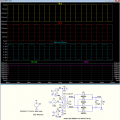
Below is the sim using an ideal 1:2 turns-ratio transformer to double the input current at the output:
The bipolar current source could be generated by switching a single current source to the transformer primary, or push-pull with a center-tapped primary, just as with a voltage converter.
Note that, as expected, doubling the output current, doubles the input voltage from the current source to the output, so the input power equals the output power.
The output is rectified by a bridge to get a unipolar output current.
Interestingly, the output current is unaffected by the diode drop, unlike the input and output voltages.
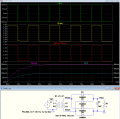
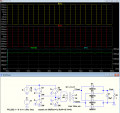
Below is the sim using an ideal 1:2 turns-ratio transformer to double the input current at the output:
The bipolar current source could be generated by switching a single current source to the transformer primary, or push-pull with a center-tapped primary, just as with a voltage converter.
Note that, as expected, doubling the output current, doubles the input voltage from the current source to the output, so the input power equals the output power.
The output is rectified by a bridge to get a unipolar output current.
Interestingly, the output current is unaffected by the diode drop, unlike the input and output voltages.