Cuk Converter Help

Thread Starter

EstelHalliday

Joined Oct 20, 2024
5
Im currently working on a project for my course (power electronics).
No one in my class knows what we are supposed to do. I could just use some direction, thank you
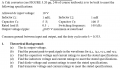
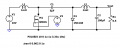
1.PNG
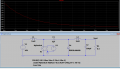
2.PNG
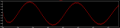
this is what I've got so far. When I check the voltage across the resistor, it looks like this.
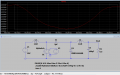
3.PNG
 

crutschow

Joined Mar 14, 2008
38,506
Never use a generic model for semiconductors in LTspice as they sometimes give flaky results.
Use the model for one of the appropriate spec'd devices for M1.

Also you output load resistor, R1, is very small.
Try a larger value.
 

ronsimpson

Joined Oct 7, 2019
4,693
Back to you. V1 rise and fall time was very large.
Chose a real diode.
Increased time to 10mS. It takes time to charge up the output capacitor.
1729446578062.png
edited-----------------
When I made these (not in spice) I used a coupled inductor. Do you want two inductors or one coupled
 

Attachments

Thread Starter

EstelHalliday

Joined Oct 20, 2024
5
Back to you. V1 rise and fall time was very large.
Chose a real diode.
Increased time to 10mS. It takes time to charge up the output capacitor.
View attachment 334027
edited-----------------
When I made these (not in spice) I used a coupled inductor. Do you want two inductors or one coupled
Im not sure, sir. The only direction I have is the assignment posted. Im very new to this. I appreciate the help very much
 

ronsimpson

Joined Oct 7, 2019
4,693
Do you have spice running?
(a) DC output voltage. Plat the output volts. It takes 10mS to get to the voltage. I extended the plot time to 20mS just to check. Do you know how to measure the voltage?

For measuring the P-P current and voltage, extend the time out to 100mS. Things are stable there.
Do you know how to measure current in L and C?
 

Thread Starter

EstelHalliday

Joined Oct 20, 2024
5
Do you have spice running?
(a) DC output voltage. Plat the output volts. It takes 10mS to get to the voltage. I extended the plot time to 20mS just to check. Do you know how to measure the voltage?

For measuring the P-P current and voltage, extend the time out to 100mS. Things are stable there.
Do you know how to measure current in L and C?
For the output voltage I go across the resistor (holding left click after placing the first probe etc) right?
I have it set to 100ms. i don't know how to measure peak to peak. something about 2% of steady state or something?
 

ronsimpson

Joined Oct 7, 2019
4,693
I zoomed in many times. You can use the mouse or the keyboard. Here is one cycle of the PWM for time. (near 100ms) And vertically about P-P ripple voltage. To be more accurate I mouse down at the peak on the left them moved the mouse to the right and down until I have selected one cycle in time and P-P voltage. At the bottom of the picture, you will see 10us (100khz) and dy=424uV.
1729459342577.png
Next, Do you know how to get a picture of the current in L1 and do the same thing.
 

MrAl

Joined Jun 17, 2014
13,704
I zoomed in many times. You can use the mouse or the keyboard. Here is one cycle of the PWM for time. (near 100ms) And vertically about P-P ripple voltage. To be more accurate I mouse down at the peak on the left them moved the mouse to the right and down until I have selected one cycle in time and P-P voltage. At the bottom of the picture, you will see 10us (100khz) and dy=424uV.
View attachment 334046
Next, Do you know how to get a picture of the current in L1 and do the same thing.
It looks like your PULSE statement is the biggest problem here. Looks like you put rise and fall times of 10 seconds each!
I changed it to:
PULSE(0 10 0 1e-9 1e-9 3.33e-6 10e-6)

and changed the diode to a high current 25 amp type Schottky diode and it seemed to work much better.
I also changed the max time of the simulation from 1ms to 20ms to see more of the wave.

The rise and fall times specify how fast the pulse goes up at the start, and how fast it falls at the end of the pulse. That's very important.

One question I have to ask though is, are you allowed to do this using a simulator or are you supposed to do some theoretical calculations, or both simulator and calculations?

Also, who drew the schematic, you or someone else? I ask because the component values are already selected so I was wondering if you selected them or someone else did. There is also no output voltage specification, which may or may not be required here as you may have to calculate and/or simulate that yourself.
 
Top